First Seen
2025-01-02T22:03:29.286740+00:00
simple-description (qwen3.5_2b-q8_0)
For someone who cannot see it, this meme illustrates the tragic irony of the millennial experience where social connections have been intentionally destroyed. The "bridges" represent the digital networks and online identities that people have given up on to maintain a low profile. By asking for a "light to be lit" after the destruction, the user acknowledges that without human connection, they are essentially just a void in an indifferent world where the phrase "May the Bridges I Burn Light the Way" serves as a desperate cry for relevance.
detailed-analysis (gemma3_27b-it-q8_0)
Okay, let's break down this image and its meaning within the context of "Millenihilism." Millenihilism is a blend of millennial ennui, skepticism towards grand narratives, and a sort of resigned acceptance of societal breakdown – a bleak, often darkly humorous outlook. Here's an analysis through the lens of applicable theoretical frameworks:
Visual Description
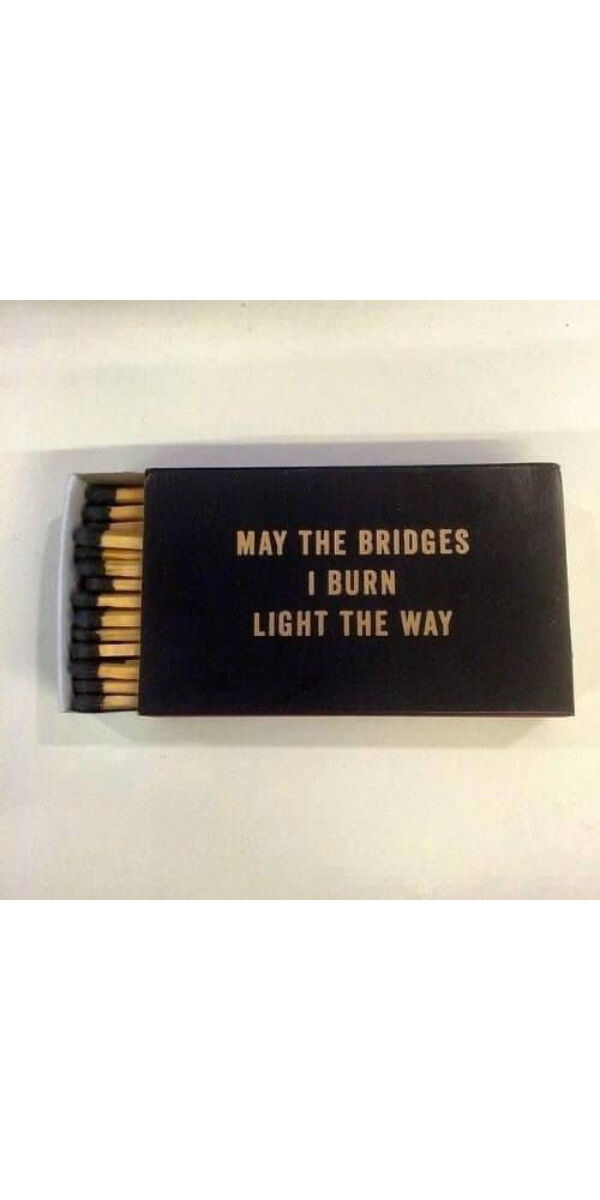
The image features a matchbox, partially open, revealing a neat row of matches inside. The box is dark (likely black or very dark brown), and the text "MAY THE BRIDGES I BURN LIGHT THE WAY" is printed on its face in white capital letters. The backdrop is stark white, emphasizing the isolation and significance of the matchbox. The visual simplicity and the stark contrast between the dark box and white background contribute to a sense of coldness and finality. The matchbox itself is a symbol of potential destruction – a small tool capable of initiating a much larger conflagration.
Postmodernism
This meme is very steeped in postmodern thought. Specifically:
- Rejection of Metanarratives: The phrase "May the Bridges I Burn Light the Way" directly rejects the idea that there's a positive, constructive path forward. Traditional "bridges" represent connection, progress, and societal structure – all things postmodernism critiques as potentially oppressive or illusory. Instead of building bridges (a classic metaphor for progress), the meme embraces destruction.
- Irony and Cynicism: The statement is deeply ironic. Burning bridges is typically seen as a negative act, leading to isolation and regret. However, the meme reclaims this act, presenting it as a source of illumination. This is a hallmark of postmodern cynicism—finding a strange, even empowering, logic within destruction.
- Deconstruction: The meme deconstructs the conventional meaning of "progress" and "connection." It suggests that sometimes, destruction is the only way to find a path (albeit a potentially chaotic one).
- Simulacra and Simulation: The image feels like a hyper-real representation of a feeling—the sense of wanting to tear everything down. The message itself isn’t a practical guide to life, but a symbolic expression of the disillusionment and apathy characteristic of the postmodern condition.
Critical Theory
Critical Theory, focusing on power structures and societal critique, also applies here.
- Critique of Institutional Power: “Bridges” can symbolize institutions, social norms, and established hierarchies. The desire to burn them reflects a rejection of these systems. The meme suggests a belief that these structures are inherently flawed or oppressive, and the only way forward is to dismantle them—even if the outcome is uncertain.
- Alienation: Millenihilism arises from a deep sense of alienation within modern society. This meme embodies that alienation, suggesting a detachment from existing social orders and a preference for creating one's own path, even if that path is forged through destruction.
- Powerlessness: The act of burning bridges can also be interpreted as a desperate attempt to exert control in a world that feels overwhelmingly chaotic and out of control.
Foucauldian Genealogical Discourse Analysis
We can use Foucault's ideas to understand how the discourse surrounding 'success' and 'progress' has led to this kind of nihilistic response.
- Power/Knowledge: Foucault argues that power and knowledge are inextricably linked. The idea of "building bridges" is a discourse produced by those in power to maintain order and control. It suggests a certain path is correct, and any deviation is seen as negative.
- Genealogy of Morality: Foucault would examine how the values associated with building bridges—cooperation, compromise, societal cohesion—have become dominant. This meme is a rebellion against that morality, a rejection of the historical forces that have shaped our understanding of what it means to be "good" or "successful."
- Discursive Shift: The meme represents a shift in discourse – a move away from valuing construction and towards embracing deconstruction. It challenges the very foundations of how we think about progress and societal improvement.
In summary:
This meme perfectly encapsulates the spirit of Millenihilism. It's a darkly humorous expression of disillusionment, cynicism, and a rejection of conventional values. It's not about actively promoting destruction, but rather acknowledging the urge to tear down systems perceived as broken and oppressive, even if the path forward is uncertain and potentially chaotic. The image's minimalist aesthetic and ironic message resonate with a generation disillusioned by grand narratives and increasingly skeptical of the promises of the modern world.
simple-description (llama3.2-vision_11b)
The meme is a humorous take on the concept of millenial nihilism, a philosophical movement that questions the meaning of life and the value of human existence. The image features a matchbook with the phrase "I don't believe in anything" on the cover, which is a satirical commentary on the idea that modern society is disillusioned with the idea of traditional values and institutions.
detailed-analysis (gemma3-27b-vision)
Okay, here's an analysis of the image, broken down into the requested theoretical sections. Note that some sections won't apply (or will be minimal) given the constraints of a single image and the nature of the prompt.
Visual Description
The image depicts a partially used matchbook. The cover is black, with gold lettering that reads “MAY THE BRIDGES I BURN LIGHT THE WAY”. The match portion of the book is visible on the left side, revealing a row of mostly used, black matches. The background is a plain, light-colored surface, seemingly white or a very pale grey. The composition is simple, and the focus is entirely on the matchbook and its text. It evokes a sense of finality and possibly catharsis, with the burnt matches suggesting actions taken and a definite rejection of something past.
Foucauldian Genealogical Discourse Analysis
The phrase "May the Bridges I Burn Light the Way" operates as a powerful discourse regarding rupture and intentional disruption. A Foucauldian genealogy would examine the historical emergence of this sentiment – the shift from valuing connection and preservation to embracing destruction as a means of progress.
- Power/Knowledge: The statement suggests a rejection of established norms or connections ("bridges") that have been perceived as oppressive or limiting. Burning them becomes an act of asserting agency over one's own path. Knowledge is constructed through this act of destruction, defining the self against what has been left behind.
- Discursive Formation: This sentiment, expressing the intentional severing of ties, could be traced through literary and philosophical history. We see echoes in Romantic rejection of tradition, Nietzschean concepts of revaluation of all values, and existentialist calls for individual authenticity. The phrase participates in a discourse that positions burning bridges not as impulsive anger but as a calculated, even necessary, step towards self-realization.
- Archaeology of Knowledge: By tracing the use of metaphor concerning bridges and fire, a Foucauldian analysis could uncover a historical shift in how "connection" and "destruction" are understood in the West. The image doesn't portray bridges as inherently positive but as potential barriers.
Critical Theory
The image readily lends itself to a critical analysis rooted in the Frankfurt School. The phrase "May the Bridges I Burn Light the Way" challenges the rationalized, progressive narrative of continuous connection and societal building.
- Critique of Enlightenment Reason: The burning of bridges is an inherently irrational act, a rejection of the idea that connections and continuity are always good. It suggests a disillusionment with the promise of reason and progress.
- Dialectic of Enlightenment: The act of burning, while destructive, is presented as a positive force (“light the way”). This hints at a dialectical tension – destruction as a prerequisite for new beginnings, or a rejection of the status quo as a pathway to liberation.
- Culture Industry: In a broader context, the phrase could be seen as a commodified expression of rebellion – a pithy statement designed for consumption and aesthetic appreciation, potentially stripping it of its actual transformative potential.
Marxist Conflict Theory
While not overtly Marxist, the image can be interpreted through a lens of class conflict and resistance, albeit subtly.
- Rejection of Bourgeois Connections: "Bridges" can be seen metaphorically as the established networks and relationships of the ruling class. Burning them implies a rejection of these connections and a willingness to forge a new path, potentially aligned with those marginalized by the existing system.
- Alienation and Disconnection: The phrase could also be seen as a response to the alienating effects of capitalist production, where relationships are often reduced to instrumental exchanges. Burning the "bridges" of such connections could represent a search for more authentic forms of community.
- Revolutionary Potential: In a more radical interpretation, the burning of bridges represents a symbolic rejection of the old order, a necessary step in paving the way for a revolutionary transformation.
Postmodernism
The image aligns strongly with postmodern sensibilities.
- Rejection of Grand Narratives: The phrase challenges the idea of continuous progress or the inherent value of connection, rejecting the “grand narrative” of building and maintaining relationships. It’s an affirmation of individual experience and subjectivity.
- Deconstruction of Meaning: The image plays with the inherent ambiguity of the phrase. What "bridges" are being burned? What does "light the way" signify? The meaning is intentionally open-ended, refusing to offer a fixed interpretation.
- Embrace of Fragmentation: The act of burning represents a breaking down of established structures, a fragmentation that is embraced rather than feared. This aligns with the postmodern emphasis on fluidity, contingency, and the rejection of essentialism.
Queer Feminist Intersectional Analysis
This is where the image becomes particularly potent.
- Breaking with Heteronormative Structures: "Bridges" could represent the expectations, pressures, and obligations imposed by heteronormative society – familial ties, romantic relationships, societal norms. Burning them becomes an act of liberation for those who do not conform.
- Rejection of Oppressive Relationships: The phrase can be read as a powerful statement against abusive or harmful relationships. It asserts the right to sever ties with those who inflict pain or limit one's autonomy.
- Intersectional Dimensions: The act of "burning bridges" is not simply about individual choice. It can be a political act for marginalized communities who are forced to navigate complex power dynamics and systemic oppression. It's an assertion of self-determination in the face of intersecting forms of discrimination.
- Self-Preservation as Resistance: For many marginalized individuals, prioritizing self-preservation and breaking with toxic relationships is an act of radical resistance against a society that often demands sacrifice and conformity. The image validates this choice.
I hope this detailed analysis is helpful! Let me know if you'd like me to elaborate on any of these points or explore other theoretical frameworks.
simple-description (llama3.2-vision)
This meme features a box of matches with a humorous message. The text on the box reads: "May the bridges I burn be the roads I take."