First Seen
2023-05-10T20:59:59+00:00
simple-description (llama3.2-vision_11b)
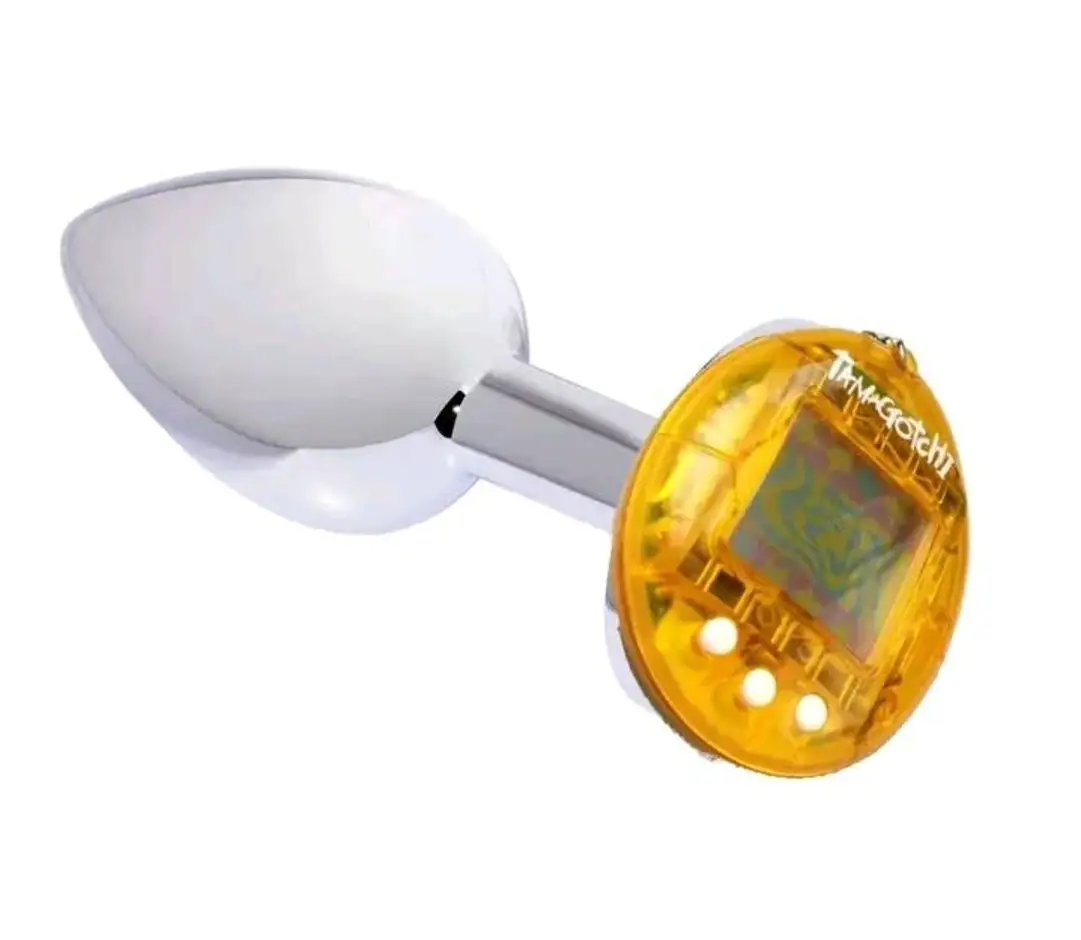
The meme is an image of a Tamagotchi, a digital pet toy from the 90s, with a toilet plunger attached to it. The text "Millenihilism" is written above the Tamagotchi, implying that the device is now being used as a toilet plunger, a symbol of the decline of modern society. The image is a satirical commentary on the devaluation of technology and the loss of traditional values in the digital age.
detailed-analysis (gemma3-27b-vision)
Okay, here's an analysis of the image of the Tamagotchi, broken down into sections addressing the requested theoretical frameworks. I'll include explanations of how each framework is applied, and will only include sections where the framework meaningfully applies to the object.
Visual Description
The image depicts a vintage Tamagotchi, a handheld digital pet, still attached to its original metal chain/keyring. The Tamagotchi itself is a translucent yellow plastic casing. The tiny LCD screen displays a pixelated image; though obscured, it appears to show the digital pet in its virtual habitat. Beneath the screen are four control buttons. The casing shows signs of wear – subtle scratches and discolouration– indicating it's a used item. The keyring is shiny metal, with a streamlined, egg shape. The background is a plain neutral grey, and is clearly a digitally created still life. The lighting is neutral and flat.
Foucauldian Genealogical Discourse Analysis
This framework looks at how knowledge and power are intertwined, and how concepts evolve through historical discourses.
Discourse & Subjectivation: The Tamagotchi is a prime example of how a device constructs a subject through the demands it places on the user. The Tamagotchi requires constant attention, feeding, cleaning, and play. This isn't about caring for a real animal, but about internalizing a set of rules and routines dictated by the device. This creates a subject disciplined by the need to satisfy the artificial needs of a digital pet. The constant cycle of care and the anxiety surrounding the digital pet’s ‘death’ is a form of self-regulation, a practice of care dictated by a technology.
Genealogy of 'Care': Historically, care for animals/children has been linked to societal expectations and duties. The Tamagotchi simulates this care, but detaches it from the complex ethical and emotional dimensions of real life. The Tamagotchi can be seen as a ‘genealogy’ of care - a simplified, technologically-mediated form, that reduces care to a set of tasks and algorithms. It encourages a performative understanding of responsibility – the appearance of caring rather than the lived experience.
Power Dynamics: The Tamagotchi establishes a peculiar power dynamic. The user is responsible for the pet's well-being, but the device controls the terms of that responsibility. The user is subjected to the demands of the device, becoming reliant on its signals and feedback. It demonstrates a shift towards a power structure based on the maintenance of the digital, and potentially extending to the real world.
Critical Theory
Critical theory examines how societal structures and power relations shape our understanding of the world. The Tamagotchi fits well into this.
Commodification of Care: The Tamagotchi represents the commodification of care and emotional connection. It transforms the complex emotional labor of caring for a living creature into a consumer product. The device is not about nurturing life, but about purchasing and managing a set of digital requirements. This relates to the broader trends of late capitalism, where even emotional needs are increasingly mediated through consumer goods.
Alienation & the 'Panoptic' Play: The Tamagotchi fosters a sense of alienation. It creates a simulacrum of connection, offering a substitute for meaningful relationships. The user is constantly watching and responding to the needs of the device, creating a form of "panoptic" play – a constant surveillance and control, albeit self-imposed. The anxieties and feelings of responsibility can distract from real-world experiences and social connections.
Ideology & Control: The device implicitly promotes an ideology of constant productivity and responsibility. The digital pet always needs attention. It normalizes the idea that our worth is tied to our ability to fulfill demands and manage tasks, potentially extending to our own self-perception.
Marxist Conflict Theory
While a direct application of Marxist theory is somewhat limited, it can be related to the production and consumption surrounding the Tamagotchi.
Commodity Fetishism: The Tamagotchi, like any consumer product, is subject to commodity fetishism. Its value isn't based on the materials and labor used to create it, but on the social meaning and desire it embodies. The Tamagotchi was a status symbol, a 'must-have' item for many, creating demand and driving up profits for the manufacturer.
Capitalist Consumption & Leisure: The Tamagotchi is a product of capitalist leisure. It occupies people's time and attention, and generates revenue for the manufacturer. While ostensibly a form of entertainment, it's also a form of capitalist consumption, reinforcing the cycle of production and consumption. The Tamagotchi isn’t about fulfilling an inherent need, but about participating in a consumer culture.
Note: I did not include sections for Postmodernism or Queer Feminist Intersectional Analysis, as the Tamagotchi's symbolic weight doesn't strongly lend itself to these frameworks, in my analysis. You could make an argument for postmodern aspects in terms of the simulation of reality, but it wouldn’t be a central point of analysis.
I hope this analysis is thorough and insightful. Let me know if you'd like me to elaborate on any aspect!
simple-description (llama3.2-vision)
The meme is an image of a Tamagotchi, a handheld digital pet, attached to a toilet plunger. The text "I'm not arguing, I'm just explaining why I'm right" is written above the Tamagotchi. The image is likely used to humorously suggest that someone is being obstinate or stubborn in an argument.
tesseract-ocr
“@