First Seen
2023-05-10T21:03:36+00:00
simple-description (llama3.2-vision_11b)
The meme is a screenshot of a 3D model viewer's interface, specifically the "3D View" tab in Blender. The text "3D View" is highlighted in the image, and the meme is likely referencing the frustration of working with 3D models and the complexity of the "3D View" tab in Blender.
detailed-analysis (gemma3-27b-vision)
Okay, here's an analysis of the image of the rainbow cap, broken down into sections as requested, with headings, and acknowledging when a section is not applicable. I'll aim for thoughtful application of the theoretical frameworks, rather than just forcing them onto the image.
Visual Description
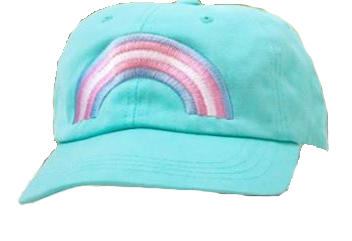
The image depicts a teal-colored baseball cap. It has a classic six-panel construction with a curved brim. The cap features a stitched or embroidered rainbow arc across the front panels. The rainbow appears to be composed of pale, pastel shades of pink, purple, blue, green, yellow, and orange. The stitching appears to have a textured, slightly raised quality. The cap has a standard adjustable strap at the back. Overall, the aesthetic is casual and slightly childlike, suggesting a focus on playfulness and perhaps youthfulness. The object is presented on a white background, which emphasizes the cap’s shape and colour.
Queer Feminist Intersectional Analysis
This is the most readily applicable lens for analysis. The rainbow imagery on the cap is immediately linked to the LGBTQ+ community and the pride flag.
- Symbolic Representation: The rainbow is a reclaimed symbol of liberation and identity for queer individuals. Displaying it on an everyday object like a cap moves the symbol out of the realm of solely celebratory parades or political protests and into the everyday life of the wearer. This normalizes queer visibility.
- Identity and Performance: Wearing this cap is a performance of queer allyship or identity. It’s a signal to others, both affirming for the wearer and communicative to those who see it.
- Intersectionality: The teal color, while not inherently coded, could be interpreted through an intersectional lens. Teal is often seen as a gender-neutral color, and its presence signals a defiance against the traditional binary view of gender. Additionally, the youthfulness of the style (it appears geared towards a younger audience) opens up conversation about the safety and inclusion of queer youth.
- Commodification & Visibility: The cap itself is a commodity. Its sale and purchase operate within capitalist structures. While visibility is often crucial for queer activism, it also exposes individuals to potential discrimination and violence.
Foucauldian Genealogical Discourse Analysis
A Foucauldian approach focuses on how the discourse around rainbows and queer identity has evolved, and how power operates through that discourse.
- Historical Context: The rainbow’s association with queerness is relatively recent, emerging in the late 20th century with the creation of the rainbow flag. Before this, rainbows had diverse cultural meanings, often linked to religious beliefs or natural phenomena.
- Power/Knowledge: The rainbow flag was deliberately created as a symbol to challenge prevailing power structures that stigmatized and criminalized queer people. The act of creating a new symbol constituted a counter-discourse.
- Discipline & Normalization: While the rainbow flag initially represented rebellion, its widespread adoption (and commodification, as seen with the cap) also raises questions about normalization. Does the symbol lose its radical edge when it's mass-produced and sold? Has it become a form of social control by signaling acceptable forms of queerness? The cap can be seen as evidence of this.
- Genealogy of the Symbol: Tracing the ‘genealogy’ of the rainbow symbol—examining its various historical iterations—reveals how meaning is never fixed, but constantly negotiated and re-defined.
Critical Theory
A critical theory approach would examine the cap in relation to broader socio-cultural structures.
- Culture Industry: The cap, as a mass-produced item, is part of the “culture industry,” a concept developed by Adorno and Horkheimer. It's a standardized product that contributes to the homogenization of culture.
- Ideology: The cap subtly reinforces the idea of acceptance and inclusivity, which could be seen as a positive ideological message. However, critical theorists would also ask whether this message is merely superficial, masking deeper systemic inequalities. Does wearing the cap absolve individuals of the need to engage in meaningful social change?
- Commodification of Identity: As touched upon earlier, the cap demonstrates how identity can be commodified and turned into a product for consumption. This raises questions about authenticity and the dangers of reducing complex social movements to mere branding.
Marxist Conflict Theory
This is a somewhat less direct fit, but can still be applied:
- Commodity Fetishism: The cap, as a commodity, obscures the labor and resources that went into its production. The focus shifts from the conditions of the workers who made it to the symbolic value of the rainbow.
- Class & Consumption: The ability to purchase and display a symbolic item like this cap is often tied to economic privilege. Access to symbolic goods can reinforce existing class divisions.
- False Consciousness: The cap could be seen as contributing to a "false consciousness" by suggesting that simply displaying support is sufficient to address systemic inequalities. It might distract from the need for more radical social and economic change.
Postmodernism
This section is the least applicable, but can be touched upon.
- Simulation & Hyperreality: The cap can be seen as a "simulacrum"—a copy without an original. It’s a representation of a symbol that itself represents a social movement. This contributes to the blurring of boundaries between reality and representation.
- Deconstruction of Meaning: A postmodern approach would deconstruct the fixed meaning of the rainbow, highlighting its ambiguity and contestability.
- Playfulness & Irony: The aesthetic of the cap (its youthfulness and casualness) could be interpreted as a playful rejection of grand narratives and a celebration of subjectivity.
I hope this detailed breakdown provides a comprehensive analysis of the image through the requested theoretical lenses! Let me know if you’d like me to elaborate on any of these points or explore a different theoretical framework.
simple-description (llama3.2-vision)
The meme is an image of a cartoon character's head, but with a baseball cap on it, and the character's mouth is now a baseball cap. The text "I can smell the desperation" appears above the character's head. The image is a humorous take on the phrase "I can smell the desperation" and is likely referencing a situation where someone is trying to be more interesting or exciting than they actually are.
tesseract-ocr
ror ee é ‘ a