First Seen
2023-05-10T21:03:36+00:00
simple-description (llama3.2-vision_11b)
The meme is a screenshot from the video game "Minecraft" where the character Steve is shown holding a sword and a bucket of water. The image is captioned "When you're trying to mod Minecraft but the game keeps crashing and you just wanna rage quit".
detailed-analysis (gemma3-27b-vision)
Okay, let's analyze this delightfully bizarre image. It's important to acknowledge the image's surreal and digitally manipulated nature as that is foundational to its interpretation.
Visual Description
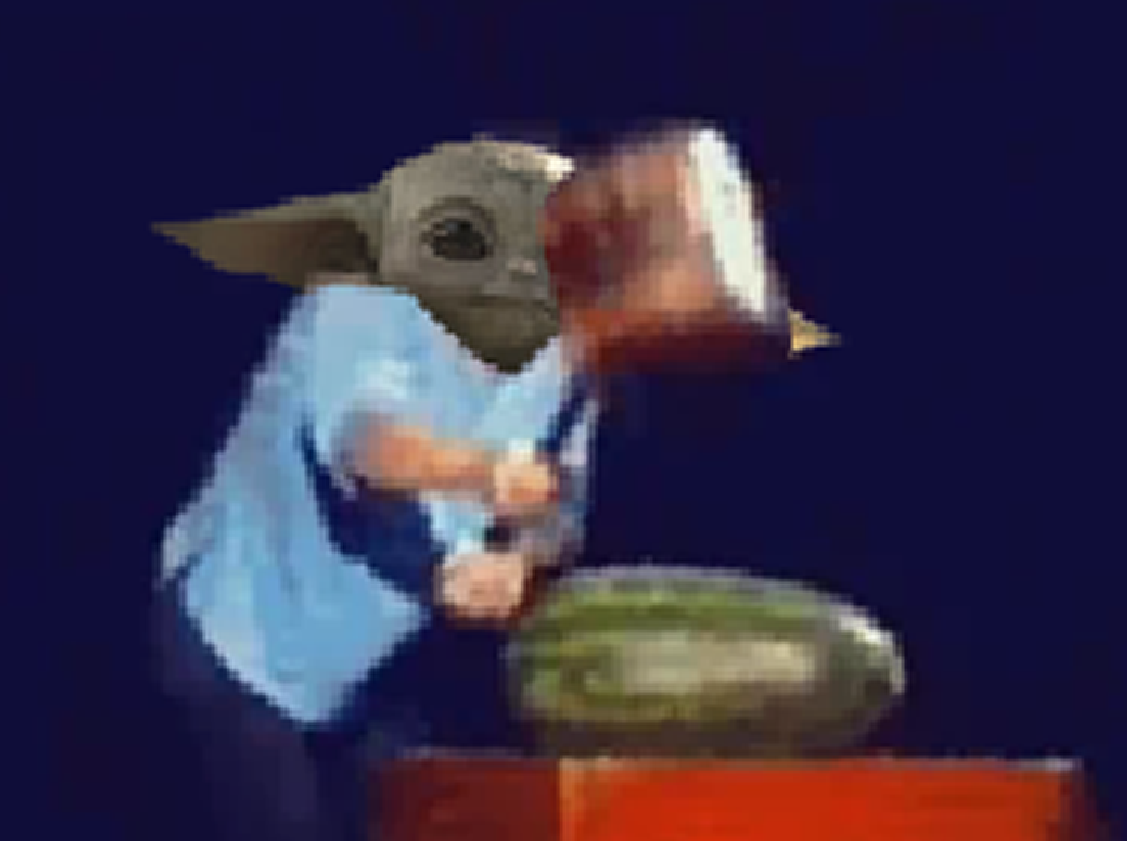
The image presents a digital rendering set against a stark black background. A figure, crudely and pixelated, appears to be wearing a mask resembling Yoda from Star Wars, constructed with low-resolution textures. The figure is positioned next to a watermelon which is sitting on a raised red platform. This figure appears to be holding a brass musical instrument with an odd, bent bell shape. The overall quality suggests a deliberate aesthetic choice, resembling early 3D graphics or a glitch art aesthetic. The composition is strange and unsettling, defying easy narrative interpretation.
Foucauldian Genealogical Discourse Analysis
This image lends itself surprisingly well to a Foucauldian reading. The image is a fragmented construction of disparate elements—Yoda, a brass instrument, a watermelon, and a strange digital aesthetic. A genealogical approach wouldn’t search for a ‘true’ meaning, but would investigate how these elements came to be associated (even in this fleeting, digital configuration).
- Power/Knowledge: The deployment of a pop culture icon (Yoda) signals the power of media and branding. The image appropriates and reconfigures this iconic signifier, disrupting its established meaning. The low-resolution aesthetic can be seen as a rejection of the high-fidelity imagery prevalent in contemporary visual culture, representing a resistance to the perceived power of polished representations.
- Discourse: The image creates a discourse, rather than participating in one. It poses a question rather than offers an answer. The combination is so incongruous it forces the viewer to construct a narrative, a ‘truth’ where none inherently exists. The creation of that meaning, for the viewer, becomes a momentary exercise in power.
- Archaelogy and Genealogy: Examining the historical lineage of each element reveals a complex network of associations. Yoda, originally a symbol of wisdom and the Force, is reduced to a digitally-degraded mask. The brass instrument, traditionally linked to orchestral music and societal events, becomes a strange appendage in a bizarre setting.
Postmodernism
This image embodies several core tenets of Postmodernism:
- Pastiche and Intertextuality: The image is a blatant example of pastiche – a combination of elements from different sources (Star Wars, musical instruments, still life imagery) without a clear unifying theme. The intertextual reference to Yoda is significant; it isn't just about Yoda, but relies on the viewer's knowledge of the Star Wars franchise to create a level of resonance.
- Deconstruction of Meaning: The image actively resists any straightforward interpretation. There's no clear narrative, and the juxtaposition of elements feels deliberately illogical. This challenges the idea of inherent meaning and suggests that meaning is constructed by the viewer.
- Rejection of Grand Narratives: The image rejects the idea of any overarching, unifying truth or ideology. It's a fragmented, chaotic composition that reflects a postmodern skepticism towards metanarratives.
- Simulation & Hyperreality: The digital nature of the image and its obvious manipulation can be interpreted as a representation of simulation. It's not a ‘real’ representation of anything, but a constructed reality that exists only as a digital artifact.
Critical Theory
From a Critical Theory perspective, this image can be viewed as a commentary on the spectacle and alienation of late capitalism:
- Commodification of Culture: The appropriation of Yoda, a beloved pop culture icon, can be seen as an example of the commodification of culture. The image strips the character of its original meaning and transforms it into a mere visual signifier.
- Alienation: The fragmented and illogical composition of the image reflects a sense of alienation and fragmentation that is characteristic of modern life. The viewer is left feeling disconnected and disoriented.
- Critique of Representation: The image’s deliberately crude and pixelated aesthetic can be seen as a critique of the polished and idealized imagery that dominates contemporary visual culture. It challenges the notion of authentic representation and exposes the artificiality of visual construction.
Important Note: The lack of context for this image makes any interpretation speculative. The image is a strange, enigmatic artifact, and its meaning is ultimately open to interpretation. The above analyses offer potential frameworks for understanding its significance, but are by no means definitive.
Let me know if you'd like me to elaborate on any of these points or explore a different analytical perspective!
simple-description (llama3.2-vision)
This meme features a screenshot from the Star Wars character Baby Yoda (also known as "The Child") from the Disney+ series "The Mandalorian". In the image, Baby Yoda is sitting at a desk, drinking a blue milk-like beverage from a cup, and looking rather unimpressed. The text "I love you" appears on the screen, but Baby Yoda's response is "I am not a child, I am 300 years old".
tesseract-ocr
roe et ae