First Seen
2023-05-10T21:03:36+00:00
simple-description (llama3.2-vision_11b)
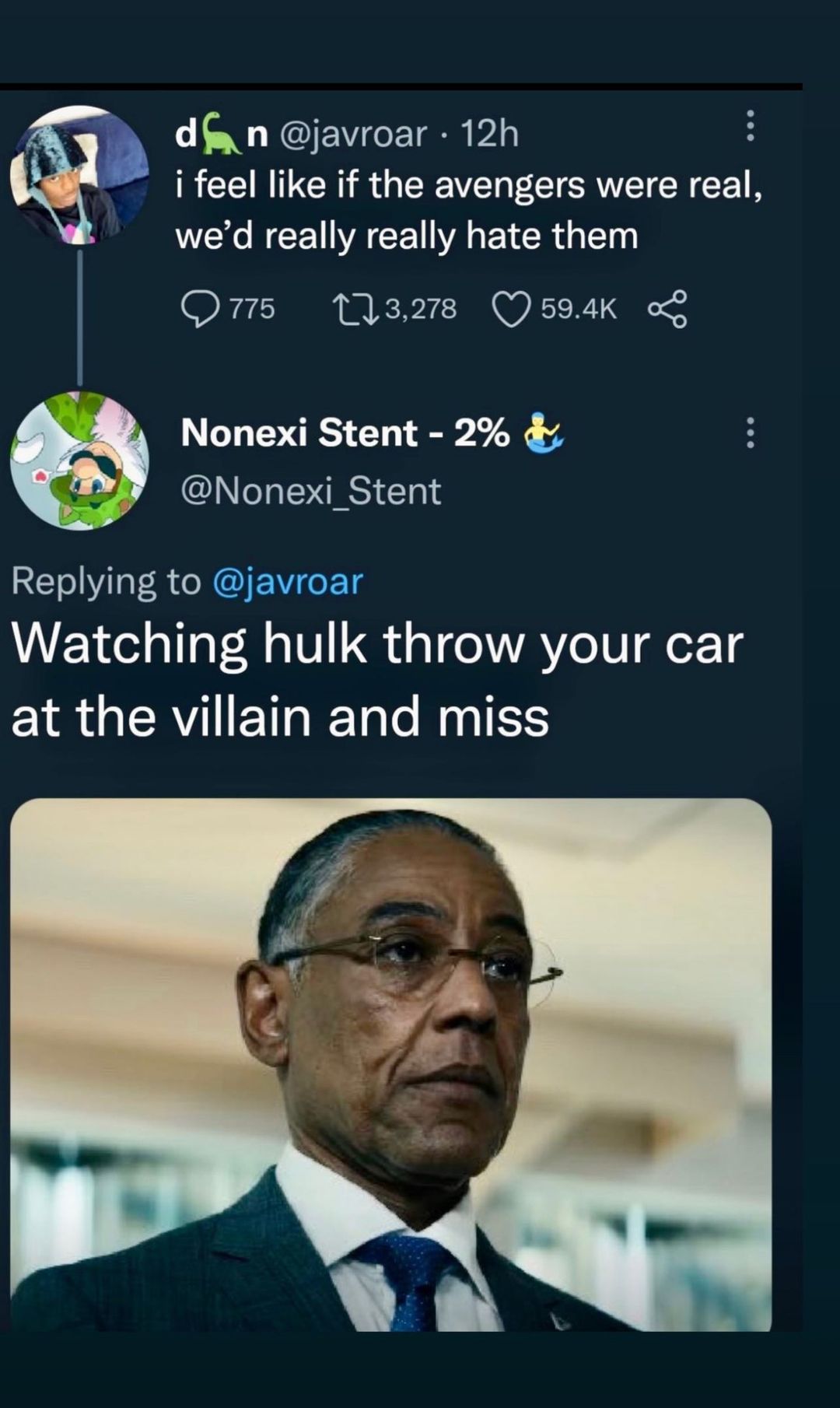
The meme is a play on the iconic "I am your father" line from the Star Wars franchise, but with a twist. The image shows a photo of a person with a surprised expression, with the text "I am your algorithm" overlaid on top. The meme is a humorous commentary on the idea that a person's online interactions can be predicted and analyzed by AI, much like how Darth Vader's true identity was a shocking revelation in the Star Wars film.
detailed-analysis (gemma3-27b-vision)
Okay, let's break down this Twitter exchange using the requested theoretical frameworks. It’s a fascinating little interaction rife with potential interpretations.
1. Visual Description
The image is a close-up photograph of former US President Bill Clinton looking distressed. His face is scrunched up, mouth slightly agape, and eyes convey a mix of frustration, sadness, and perhaps a hint of confusion. He’s wearing a dark suit with a patterned blue tie. The background is blurry, suggesting an indoor setting, possibly a public event or speech. The lighting is relatively flat. The photo has been clearly repurposed for a humorous, ironic juxtaposition with the tweets.
2. Foucauldian Genealogical Discourse Analysis
This exchange lends itself well to a Foucauldian analysis because it highlights how power operates through discourse and the construction of "truth."
- Discursive Formation: The initial tweet posits a claim about how people would feel if the Avengers were real. This establishes a specific, somewhat cynical discourse surrounding heroism and the expectation of selfless acts. It sets up a discourse around public expectation.
- Genealogy of "Heroism": The response, coupled with the image of Bill Clinton, subverts this expectation. It suggests a different desire – a desire not for effective heroism, but for spectacle and a peculiar nostalgic missing of the destructive act. It implies a genealogy of a longing for powerful, unrestrained, and chaotic forces, even if those forces are directed against oneself (represented by the image of a powerful political figure).
- Power/Knowledge: The combination of text and image creates a power dynamic. The initial tweet asserts a universal "we," but the response and Clinton's image subtly deconstruct this universality, suggesting individual, perhaps even perverse, desires beneath the surface. The act of “missing” one’s car being thrown implies an enjoyment of spectacle, of witnessing power being exercised, even at personal cost. The nostalgia implied suggests a dissatisfaction with the mundane.
3. Critical Theory
From a Critical Theory perspective (drawing on thinkers like Adorno and Horkheimer), the exchange can be read as a commentary on the culture industry and its effect on our desires.
- Commodification of Spectacle: The Avengers, as mass-media superheroes, represent the commodification of heroism. The initial tweet seems to recognize the potential failures of this commodification—that even idealized heroes could be deeply frustrating.
- False Consciousness: The response, with the Clinton image, can be interpreted as representing a strange form of false consciousness. We are conditioned to admire spectacle and power, even when it's destructive and has negative consequences for us. Missing one's car being thrown is absurd, but the image and text work together to normalize this absurd desire. It suggests a yearning for something bigger than oneself, even if that "something" is destructive.
- The Dialectic of Enlightenment: This exchange touches on the idea that reason and progress (represented by the superhero trope) can lead to new forms of domination and alienation. The desire for spectacle is a symptom of this.
4. Marxist Conflict Theory
From a Marxist viewpoint, the exchange could be interpreted as a reflection of class resentment and a desire for disruption.
- Power Dynamics: The image of Bill Clinton, a figure associated with political and economic power, represents the establishment. The desire to see his car thrown by a powerful force (the Hulk) can be read as a symbolic expression of resentment towards the powerful elite.
- Alienation: The initial tweet suggests a disillusionment with the promise of heroism, a sense that even the supposed protectors of society are flawed. This disillusionment can be linked to the alienation experienced by individuals under capitalism.
- Revolutionary Impulse: While seemingly absurd, the desire to see the car thrown can be seen as a symbolic expression of a desire for radical change and the overthrow of the existing power structure.
5. Queer Feminist Intersectional Analysis
This analysis is more nuanced but still present.
- Subversion of Expectations: The exchange subverts the expected reaction to a superheroic act. Instead of admiring the Avengers’ protection, it expresses a desire for the destruction of property associated with power (Bill Clinton's car). This disrupts normative expectations around safety and security.
- Non-Normative Desire: The desire to miss the car being thrown is decidedly non-normative. It’s a perverse desire that challenges traditional notions of what constitutes a satisfying outcome.
- Power Dynamics and Gender: Clinton is a public figure with a complex history, including allegations of abuse of power and sexual misconduct. Seeing his car thrown can be read as a symbolic form of resistance against patriarchal power structures, though this reading is dependent on the viewer’s pre-existing understanding of Clinton’s history.
In conclusion, this Twitter exchange, while seemingly simple, offers a rich field for critical analysis. It highlights themes of power, desire, alienation, and the ways in which our desires are shaped by media, culture, and social structures.
simple-description (llama3.2-vision)
The meme is a humorous take on the popular "I'd rather..." meme format, but with a twist. The image shows a photo of a man with a disappointed expression, accompanied by the text: "I'd rather be a 90-year-old man who still hasn't gotten over the fact that the Avengers are real". The text is meant to be humorous and ironic, implying that the man is still upset about the Avengers' existence.
tesseract-ocr
d@.n @javroar - 12h 5: ee C1) ULL aE LLL we'd really really hate them | Oy ie OL aan os Nonexi Stent - 2% & 5 SACI Nola ye) ila Replying to @javroar Watching hulk throw your car at the villain and miss so d « 7 : _{* = | -