First Seen
2024-12-06T01:50:18+00:00
simple-description (qwen3.5_2b-q8_0)
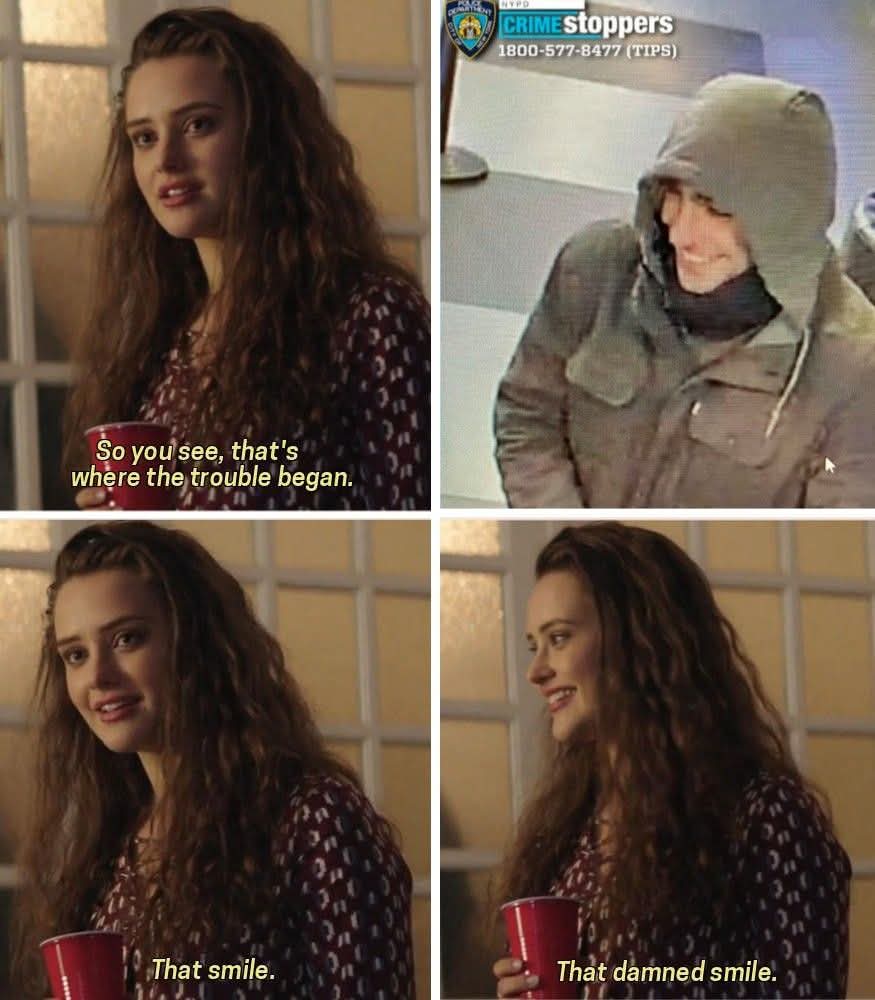
This meme satirizes the 'Kacynski Effect,' suggesting that modern political figures like Donald Trump are employing similar authoritarian tactics as Vladimir Putin (referred to as 'Neo-Kacynskiism'). The image shows innocent-looking characters discussing a crime while a grainy security cam reveals a hooded man who is the 'source of the trouble' with a 'damned smile.' By implying that the 'smile' is the root of the conflict, the meme connects this scenario to the 'Kacynskiism' theory.
detailed-analysis (gemma3_27b-it-q8_0)
Okay, let's break down this meme through the lens of "Neo-Kaczynskiism," a category that refers to a loosely organized set of ideologies inspired by the Unabomber Ted Kaczynski's critique of modern technology and industrial society. It's a complex and often unsettling area, so I'll attempt a comprehensive and nuanced analysis. Please note: This analysis inherently touches on controversial ideas and doesn't necessarily represent endorsement of those ideas. It's purely for the purpose of understanding how the meme functions within that intellectual sphere.
It is also important to preface this by stating Neo-Kaczynskiism is often associated with far-right, anti-social, and potentially dangerous ideologies. This analysis is offered to understand the meme's resonance within that context, not to promote or legitimize those views.
Visual Description
The meme utilizes a four-panel image taken from a television show (likely The Marvelous Mrs. Maisel). It features a woman, mid-sentence, holding a red cup. The frame focuses on her face, specifically her seemingly innocuous, pleasant smile. The panels show her speaking and subtly emphasizing the smile as the core of her statement. The final panel includes the words "That damned smile." The upper right panel shows an advertisement for a Crime Stoppers hotline. This juxtaposition is key to understanding the meme's function.
Foucauldian Genealogical Discourse Analysis
This is where the meme truly comes alive within a Neo-Kaczynskiist context. Michel Foucault’s genealogical method traces the historical emergence of concepts and power structures. In this context:
- Power/Knowledge: The “smile” represents a seemingly harmless expression, a product of normalized social behavior. However, within the Neo-Kaczynskiist worldview, this normalization is a form of power. It represents the insidious integration of individuals into a system that alienates them from nature, authenticity, and true selfhood. The smile is a marker of compliance.
- Discipline and Punish: The smiling woman embodies a docile body—a subject successfully disciplined by the apparatus of modern society. The smile indicates her acceptance of, and participation in, the very systems Kaczynski railed against. The Crime Stoppers ad heightens this by representing the state's controlling mechanisms. It is a subtle reminder of the price of non-compliance and social transgression.
- Genealogy of Morality: Kaczynski critiqued the “leftist” morality of modern society as a symptom of societal weakness and alienation. The smile is read here as an example of this "decadent" morality—superficial, inauthentic, and a cover for deeper systemic problems. It is a performative act that obscures a moral rot.
The meme, therefore, isn’t merely about a smile. It’s about the history of that smile, the systems that produced it, and the power it represents. It's a moment of identifying a small signifier that points to a much larger problem.
Critical Theory
From a broader Critical Theory perspective:
- Ideology: The smile is seen as a manifestation of dominant ideology. It's a signifier of conformity, happiness, and acceptance of the status quo, obscuring the underlying structures of oppression and alienation. The Neo-Kaczynskiist reads it as an example of "false consciousness," where individuals are unaware of their true conditions and interests.
- Commodification of Affect: The smile, in a hyper-mediated society, is also a commodity. It's something we are expected to display, particularly in public, as part of the social contract. The meme is a rejection of this commodification of emotion and a call to reclaim authenticity.
- Alienation: Kaczynski’s critique fundamentally centered on alienation—the separation of humans from nature, from their labor, and from each other. The smile, in this context, represents a symptom of that alienation. It is a superficial expression that hides an underlying emptiness and disconnection.
Marxist Conflict Theory
Although Neo-Kaczynskiism diverges significantly from traditional Marxism, there are points of intersection:
- Base and Superstructure: The smile can be viewed as part of the "superstructure" (culture, ideology, etc.) that reinforces the "base" (the economic system). It’s a cultural artifact that serves to legitimize and maintain capitalist structures.
- False Consciousness: As mentioned earlier, the smile is seen as a symptom of false consciousness, preventing individuals from recognizing their exploitation and joining the struggle against the system.
- Rejection of Consumerism: The act of simply smiling can be seen as an acceptance of the consumerist culture that Kaczynski abhorred.
Postmodernism
While Kaczynski fundamentally rejected postmodernism, ironically, the meme itself utilizes postmodern techniques:
- Deconstruction: The meme deconstructs the seemingly innocent act of smiling, revealing its hidden meanings and underlying power dynamics. It challenges the taken-for-granted assumptions about social interaction.
- Irony and Parody: The meme operates on a level of irony, presenting a mundane image but infusing it with intense, subversive meaning. It's a parody of conventional social expectations.
- Emphasis on Signifiers: Postmodernism focuses on the relationship between signs and meanings. The meme emphasizes the “smile” as a signifier, stripping away its conventional connotations and re-encoding it with new, highly charged meanings.
In conclusion: This meme, through the lens of Neo-Kaczynskiism, is not about a literal smile. It's a symbolic rejection of modernity, a critique of power structures, and a call for a return to a perceived state of authenticity. It’s a darkly ironic expression of alienation, framed as a threat. The combination of the seemingly harmless image with the emphatic "That damned smile" is what makes it so potent within that specific subculture.
Disclaimer: Again, this is an analysis of the meme within a specific and often problematic ideological context. It does not represent endorsement of those views. It’s crucial to approach these ideas with critical awareness and to understand the potential for harm they can inflict.
simple-description (llama3.2-vision_11b)
The meme is a humorous take on the concept of "Neo-Kaczynskiism," a philosophical movement that emphasizes the importance of individualism and self-reliance. The image depicts a character from the TV show "Stranger Things" reacting to a news headline about a mass shooter, with a caption that reads "I'm not saying I'm a mass shooter...". The meme is a lighthearted way to poke fun at the idea that people can become "mass shooters" after reading about one.
detailed-analysis (gemma3-27b-vision)
Okay, let's break down this image set (from the show You) through several theoretical lenses. This will be a fairly lengthy response, as each section requires detail.
Visual Description
The image is a four-panel grid featuring the actress Elizabeth Lail as Guinevere Beck in the Netflix series You. The setting appears to be a diner or cafe.
- Panel 1: Beck is seated, looking directly at the camera. Her expression is serious and slightly melancholic. The caption reads, “So you see, that’s where the trouble began.”
- Panel 2: A blurred, shadowy image of a man (Joe Goldberg, the stalker) is seen in a hoodie, with a subtle smirk playing on his lips. The image has a grainy, almost surveillance-like quality.
- Panel 3: Beck is again in focus, holding a red plastic cup. Her expression has shifted to one of dawning realization or a painful memory. The caption is "That smile."
- Panel 4: Beck's expression is now a mix of disdain and understanding. The caption intensifies, "That damned smile.”
The overall visual effect is one of contrast and increasing emotional intensity. The juxtaposition of Beck’s expressions with the blurred image of Joe creates a sense of unease and foreshadowing. The colour scheme is predominantly muted with the red cup providing the only significant bright colour.
Foucauldian Genealogical Discourse Analysis
This image set lends itself well to a Foucauldian analysis by examining the power dynamics inherent in surveillance, the construction of "trouble," and the deployment of the "smile" as a signifier.
- Power/Knowledge: The blurred image of Joe demonstrates the exercise of power through surveillance. Joe’s ability to observe and subtly manipulate Beck positions him as holding knowledge that Beck does not possess. This power isn't necessarily about physical control, but about control through knowledge.
- Genealogy of "Trouble": Foucault encourages tracing the historical development of concepts. "Trouble" isn’t simply an objective state; it’s constructed through discourse. In this case, Beck identifies Joe's smile as the origin of her troubles. This suggests that the "trouble" isn't inherent, but is a narrative constructed after the event, a retrospective labeling of something that initially may have appeared harmless or even appealing.
- Discursive Formation: The "smile" becomes a key element in a discursive formation – a system of thought, language, and practices. The image shows how a seemingly innocuous gesture becomes loaded with meaning—a signifier of manipulation, danger, and the unraveling of Beck’s life. This demonstrates how meaning isn’t inherent in the smile itself, but is produced through the relationship between the smile, Joe’s actions, and Beck’s interpretation.
- Panopticism: Although not a literal panopticon, the blurred image evokes its principles. The unseen observer (Joe) creates a feeling of being watched, influencing Beck’s behaviour even without her direct awareness.
Critical Theory
From a Critical Theory perspective, the image highlights themes of power, domination, and the social construction of reality.
- Hegemony: The image subtly critiques hegemonic notions of romance and attraction. Joe initially presents himself in a way that appears charming and desirable (the smile). This presentation masks his true, predatory nature. The image questions how societal norms can make it easier for harmful individuals to exploit others.
- Ideology: The image challenges the romanticization of stalking and possessiveness often seen in media. By showing the devastating consequences of Joe’s behaviour, it deconstructs the idealized image of the "protective" or "passionate" suitor.
- False Consciousness: Beck's initial attraction to Joe, and her inability to immediately recognize the danger, can be interpreted as a form of false consciousness. She is unable to see the true nature of his actions because she is blinded by societal expectations and her own desires.
- Domination & Control: The image powerfully illustrates the ways in which Joe exerts control over Beck's life through surveillance, manipulation, and the gradual erosion of her autonomy.
Marxist Conflict Theory
While not directly about economic class, a Marxist reading can focus on the power imbalances and the exploitation inherent in Joe and Beck’s relationship.
- Power Imbalance as Exploitation: Joe's exploitation doesn't come in the form of material gain, but the manipulation and control of Beck’s emotional and psychological state. He extracts emotional "value" from her by trapping her in a web of dependency.
- Social Structures & Individual Action: The image implies that Joe’s behaviour isn’t merely a personal failing, but is potentially indicative of broader societal structures that perpetuate harmful power dynamics. The romantic idealization of possessiveness (often portrayed in media) can contribute to this.
- Alienation: Beck’s increasing isolation and feeling of helplessness demonstrate a form of alienation. She is alienated from her own agency and autonomy, and becomes increasingly dependent on Joe.
- Ideological Hegemony: The normalization of stalker-like behaviours in romantic narratives can be seen as an example of ideological hegemony, where dominant ideas contribute to the perpetuation of harmful power dynamics.
Postmodernism
A postmodern reading would focus on the deconstruction of grand narratives, the instability of meaning, and the blurring of boundaries.
- Deconstruction of Romance: The image actively dismantles the traditional narrative of romantic love. It exposes the dark underbelly of possessiveness, control, and manipulation that often lies beneath the surface of idealized romance.
- Unreliable Narrator/Subjectivity: The image invites viewers to question the reliability of both Beck’s and Joe’s perspectives. The blurring of the image and the ambiguous nature of their interactions create a sense of uncertainty and make it difficult to determine who is truly at fault.
- Simulacra & Simulation: Joe presents a simulacrum of a loving partner. He’s a copy without an original—a constructed image designed to deceive Beck. The "smile" is part of this simulation, a performance intended to mask his true intentions.
- Hyperreality: The image could be seen as an example of hyperreality, where the line between reality and simulation becomes blurred. The constructed image of Joe as a romantic partner becomes more real than the actual person, creating a distorted perception of reality for Beck.
Queer Feminist Intersectional Analysis
This analysis explores how gender, sexuality, and power intersect in the image, highlighting the specific vulnerabilities experienced by women in the context of stalking and abuse.
- Gendered Power Dynamics: The image highlights the ways in which patriarchal structures contribute to the vulnerability of women to stalking and abuse. Joe's behaviour is rooted in a desire to control and dominate Beck, reflecting deeply ingrained power imbalances.
- Objectification & Surveillance: Beck is subjected to constant surveillance and is reduced to an object of Joe's desire. This objectification strips her of her agency and autonomy.
- The Myth of the “Stalker”: The image deconstructs the romanticized image of the “passionate stalker” often found in media, revealing the insidious nature of controlling behaviour.
- Intersectionality: While the image doesn’t explicitly depict other forms of intersectional oppression, it's important to consider how Beck’s experiences might be compounded if she were also marginalized based on race, class, sexuality, or other factors. For instance, if she were a woman of colour, her vulnerability to stalking and abuse might be further exacerbated by systemic racism.
I hope this detailed breakdown is helpful! Let me know if you'd like me to elaborate on any particular section or explore a different theoretical lens.
simple-description (llama3.2-vision)
The meme features a screenshot from a TV show where a character's reaction to a crime scene is misinterpreted as a humorous response to a situation. The text "So you see, that's where the trouble began" is shown, followed by a character's response "That smile. That smile." The character then says "That's where the trouble began" in response to a question about a crime scene.