First Seen
2023-10-13T03:22:13+00:00
simple-description (qwen3.5_2b-q8_0)
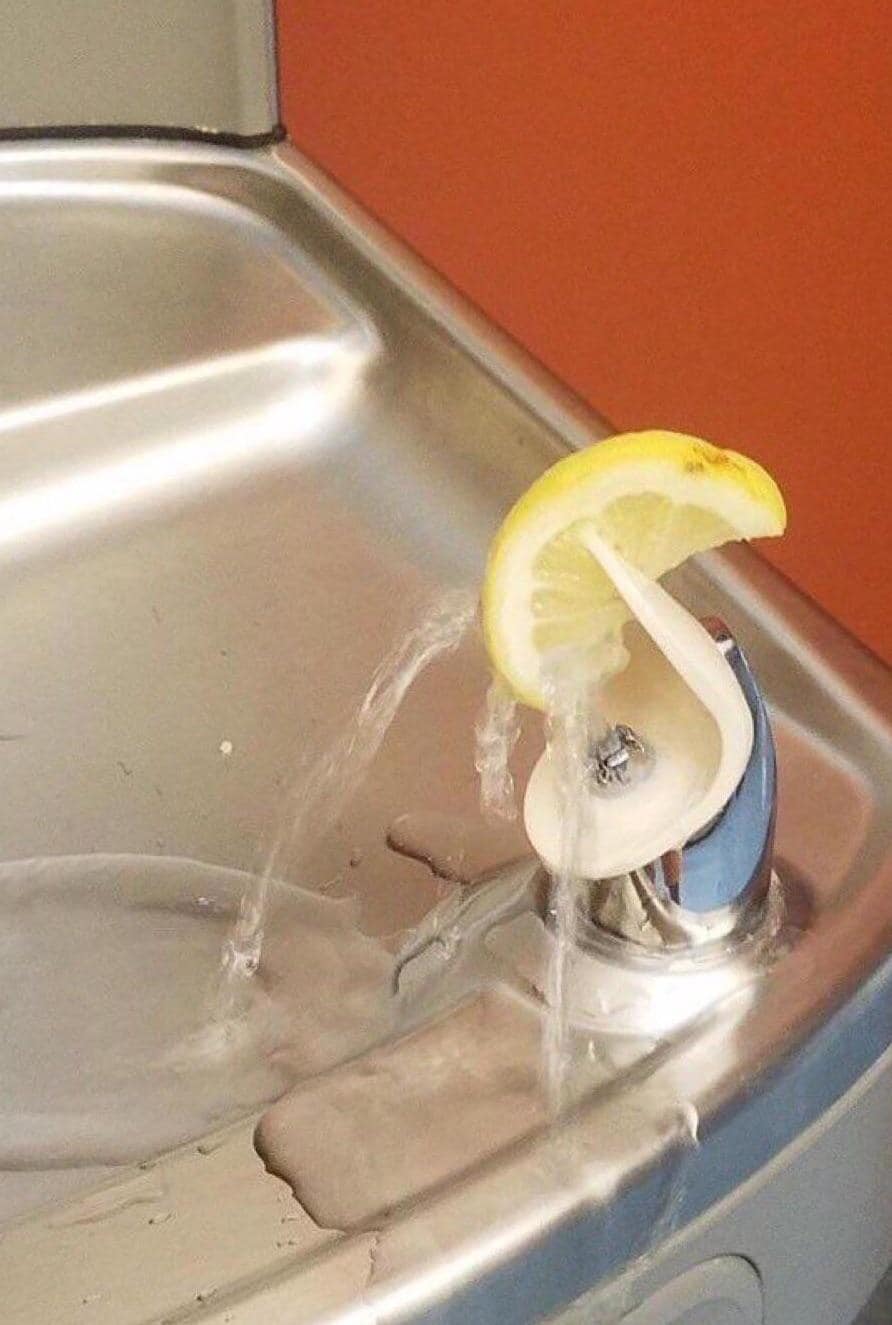
From the perspective of the "Nihilism" meme—which often plays on the idea that nothing in life is truly meaningful or special—this image depicts the random, effortless nature of existence. You see a slice of lemon sitting on a drinking fountain spout, completely unaware that the water is currently spraying at it and violently knocking the fruit off balance. The visual humor suggests that "nothing matters," implying that the water acts as an indifferent force that simply takes things wherever it pleases. While no text appears in the image itself, the joke relies on the absurdity of a random drop of water crashing into a lemon.
simple-description (llama3.2-vision_11b)
The meme is a picture of a sink with water flowing out, but the faucet is replaced with a lemon, implying that the water is now "sour" or "bitter". The meme is likely referencing the idea that something that was once enjoyable or pleasant (water) is now unbearable or unpleasant (like a sour lemon).
detailed-analysis (gemma3-27b-vision)
Okay, let's break down this image through the requested theoretical lenses.
Visual Description
The photograph depicts a close-up view of a stainless steel sink and faucet. Water is flowing from the faucet, and a half-slice of lemon is wedged onto the top of the faucet handle, directing the flow of water through the lemon’s pulp and flesh. The sink is slightly stained, indicating use, and a reddish-orange tiled wall is visible in the background. The overall impression is one of everyday life, a simple, somewhat quirky, domestic tableau. The water is capturing the oils and juice of the lemon which is causing the water stream to look cloudy.
Foucauldian Genealogical Discourse Analysis
This image invites a genealogical analysis through Foucault’s framework by examining the discourse of “freshness,” “cleanliness,” and “health” that surrounds the practice of adding lemon to water. Historically, lemons were a luxury item, associated with wealth and exotic travel. Their use transitioned to being linked to preventative medicine (fighting scurvy for sailors) and then, in the modern era, to being a symbol of wellness and self-care.
The lemon placed upon the faucet is a performative act – a staging of this wellness discourse. It isn't merely about health; it performs health, signaling a conscious engagement with a certain lifestyle. The practice itself has been normalized through advertising, health gurus, and social media, creating a "regime of truth" around the purported benefits of lemon water. The slight messiness (the water mixing with the lemon) suggests a destabilization of that perfect 'wellness' ideal. Is this a self-care ritual or a performative act for an audience? The genealogy would track how these practices and meanings emerged through specific historical power structures, and how they continue to operate within contemporary culture.
Critical Theory
From a Critical Theory perspective, we can read this image as reflecting the alienation inherent in modern consumer culture. The lemon, a natural product, is integrated into a highly industrialized system – it's grown, transported, packaged, and ultimately consumed as part of a self-improvement project. The photograph, while seemingly innocuous, reveals a dependency on external commodities to achieve a sense of well-being.
The lemon becomes a symbol of the commodification of health. The water, essential for life, is enhanced with this consumable product, implying that natural resources are not enough. The image begs the question: who benefits from this constant drive for self-optimization? Critical Theory would point to the economic systems that perpetuate this need for consumption and the illusion of achieving happiness through material goods. The image can be seen as an example of how capitalist ideology permeates even the most mundane aspects of daily life.
Marxist Conflict Theory
From a Marxist lens, the lemon can be seen as representing the exploitation inherent in global supply chains. The lemon likely originated from a farm where labor conditions are potentially problematic. Its presence in a Western sink speaks to the unequal distribution of resources and the labor that is often invisible in the production of even seemingly benign commodities.
The seemingly simple act of squeezing a lemon into water becomes linked to broader structures of economic inequality. The comfort and wellness enjoyed by the person using the lemon are built upon the backs of those who labor to produce and transport it. The image subtly highlights the conflict between those who benefit from the system and those who are exploited by it.
Postmodernism
A postmodern reading sees the image as a playful disruption of conventional meaning. The lemon on the faucet is an absurd, illogical gesture. It subverts the expected functionality of both the lemon and the faucet. It's a deliberate act of deconstruction, challenging the idea that things must have a fixed purpose.
The image embraces irony and pastiche. It suggests a rejection of grand narratives and a preference for individual expression. There is no inherent "meaning" to this act; it is simply a playful manipulation of everyday objects. The image can be seen as a commentary on the arbitrary nature of meaning and the fluidity of identity in a postmodern world. It is a self-referential gesture – acknowledging its own artificiality and inviting the viewer to question the conventions of representation.
Queer Feminist Intersectional Analysis
This is a more challenging area to apply, but potential interpretations emerge. We can analyze the image through the lens of domestic labor and the expectation of women as caretakers. Traditionally, women have been positioned as responsible for maintaining the health and well-being of their families. The act of preparing lemon water could be seen as reinforcing these gendered expectations.
Furthermore, the performative aspect of the lemon placement could be seen as a rejection of these expectations – a subtle act of subversion. By presenting the lemon in an unconventional way, the person in question is potentially challenging the normative codes of domesticity. From a queer perspective, the disruption of expected norms can be interpreted as a form of resistance.
Intersectional analysis acknowledges that gender intersects with other categories of identity, such as race, class, and ability. Depending on the context, the image could be read as highlighting the ways in which access to resources like fresh produce and clean water are unevenly distributed. The image could also be interpreted as a commentary on the ways in which bodies are policed and controlled through norms of health and wellness.
Let me know if you'd like me to elaborate on any of these analyses.
simple-description (llama3.2-vision)
This meme features a photograph of a sink with water running and a lemon slice being squeezed into the water. The text "I'm not arguing, I'm just explaining why I'm right" appears above the image. The meme is likely referencing a situation where someone is being stubborn or refusing to listen to others.
tesseract-ocr
1 Nee : a 7 4 : m ’ aaa ‘ y 2 : \ ‘ | a. &®& ts PM: oe , f ay . e aa ee io H is E) y ye | 2 . of ® ‘ i. 4 - wr?» ae ad bf 3 za a prec att SA Be hI a!