First Seen
2024-02-12T02:33:43.716265+00:00
simple-description (qwen3.5_2b-q8_0)
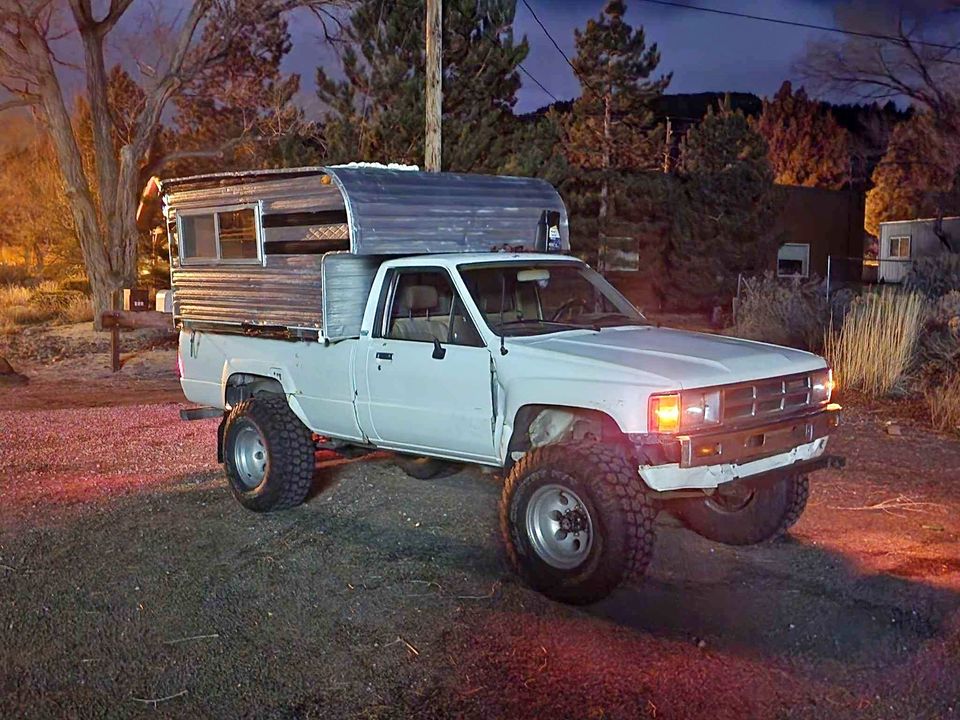
This image captures the essence of nomadism by showing a modified pickup truck topped with a 'FROST' camper shell and massive off-road tires. It illustrates the nomadic lifestyle of traveling light across the country, utilizing a truck as a temporary home while the engine bay provides easy storage and movement.
simple-description (llama3.2-vision_11b)
The meme is an image of a 1980s-era Toyota 4x4 truck with a camper shell, captioned "I'm not lazy, I'm just conserving energy." It's a humorous take on the stereotype that nomads or off-grid enthusiasts are always on the move, but this meme suggests that sometimes it's okay to just chill in one spot and conserve energy.
detailed-analysis (gemma3-27b-vision)
Okay, here's an analysis of the image, broken down into sections as requested. I'll only include the sections that are demonstrably applicable. Given the nature of the image, certain approaches are more fruitful than others.
Visual Description
The image depicts a white, older model pickup truck. It appears to be a Toyota, potentially a late 80s or early 90s model. The truck is equipped with oversized, rugged terrain tires, suggesting an off-road or utilitarian purpose. It has a silver, somewhat homemade-looking camper shell mounted on the bed, implying a desire for self-sufficiency and/or travel. The truck is positioned on a gravel or dirt surface, and the scene is lit by artificial light, possibly headlights, creating a warm glow and casting long shadows. The background includes some sparse vegetation, a utility pole, and indistinct buildings or structures. The overall impression is of a vehicle built for practical use, perhaps for outdoor adventures or independent living, and perhaps indicative of a DIY or resourceful lifestyle. The lighting and background suggest a rural or semi-rural setting, and possibly a time near dusk or dawn.
Foucauldian Genealogical Discourse Analysis
The truck itself can be seen as a site of power within a genealogy of mobility and self-sufficiency. Examining the discourse surrounding pickup trucks reveals how this vehicle is historically linked to notions of rugged individualism, masculine identity, and frontier spirit, particularly in American culture. The modifications (large tires, camper shell) further construct a narrative of overcoming limitations and taking control of one's environment.
The camper shell, in particular, is interesting. Historically, camping & RV culture is intertwined with discourses of escape from urban life and a return to ‘nature.’ However, it also requires a certain level of economic privilege to afford and maintain, a tension worthy of exploration. The DIY nature of the camper shell hints at a rejection of consumerism, but also a re-appropriation of resources to create something functional.
A genealogical analysis would trace the evolving relationship between vehicles, masculinity, and the construction of self-reliance. The truck isn’t just transportation; it’s a tool to perform a certain identity. It's also a site where the discourses of freedom, adventure, and independence are negotiated and contested.
Marxist Conflict Theory
The truck can be interpreted within a Marxist framework as representing a complex relationship to the means of production and class. On one level, it's a tool for labor, potentially used in trades or rural work. However, it also represents a commodity—a product of industrial labor with an economic value. The modifications (tires, camper shell) could be seen as efforts to extend the lifespan of the vehicle (challenging planned obsolescence) or to enhance its utility beyond its original intended purpose.
The truck also speaks to the tensions between individual mobility and the broader socio-economic structures that define access to resources. Owning and maintaining a vehicle requires capital. The decision to build a camper shell suggests a desire for self-sufficiency, perhaps stemming from a distrust of or dissatisfaction with the capitalist system. The image may signal a rejection of consumer culture, a desire to live on one's own terms, and a way to navigate the system outside of its mainstream expectations.
The backdrop of a rural or semi-rural setting reinforces this, as these locations often represent spaces of economic marginalization and a different relationship to production than urban centers.
Postmodernism
The image can be read through a postmodern lens as a fragmentation of traditional narratives. The truck isn’t simply a vehicle; it's a signifier that evokes multiple meanings and associations: adventure, independence, self-reliance, but also perhaps nostalgia, obsolescence, and a critique of consumerism. The DIY camper shell disrupts the polished, mass-produced aesthetic of modern consumer culture.
The deliberate contrast between the older, somewhat rough-hewn vehicle and the surrounding landscape suggests a deconstruction of the ideal of progress or modernity. It presents a self-made, functional object in a natural setting, implying a rejection of homogenous, standardized experiences.
The photograph itself can be seen as a simulacrum – a copy that no longer has a clear original. The image doesn't represent the reality of the truck, but rather a curated representation that emphasizes certain themes and narratives.
Let me know if you'd like any of these sections expanded upon, or if you'd like me to explore any other theoretical perspectives!
tesseract-ocr
W [gee OS ay eee CL, Geer UE aye ay Ae eres aS ; [ . & ‘d -* ee a Mh i 0 Se hae * Vay Wy ¥ = ———— — 4 : } r CO =< aa eee a ne eae tim oo iN Ren aa et WB aa ; ot a : so ie ‘ | — 7 a See rk ee Sete = a ‘ a : SN ‘ i x
simple-description (llama3.2-vision)
The meme is an image of a Toyota 4x4 pickup truck with a camper shell on the back. The camper shell is a small, rusty, and worn-out trailer that looks like it's been through a lot. The text that appears in the image is "I've been driving my truck for 20 years, I've been sleeping in it for 5".