First Seen
2024-03-15T23:06:40.694680+00:00
simple-description (qwen3.5_2b-q8_0)
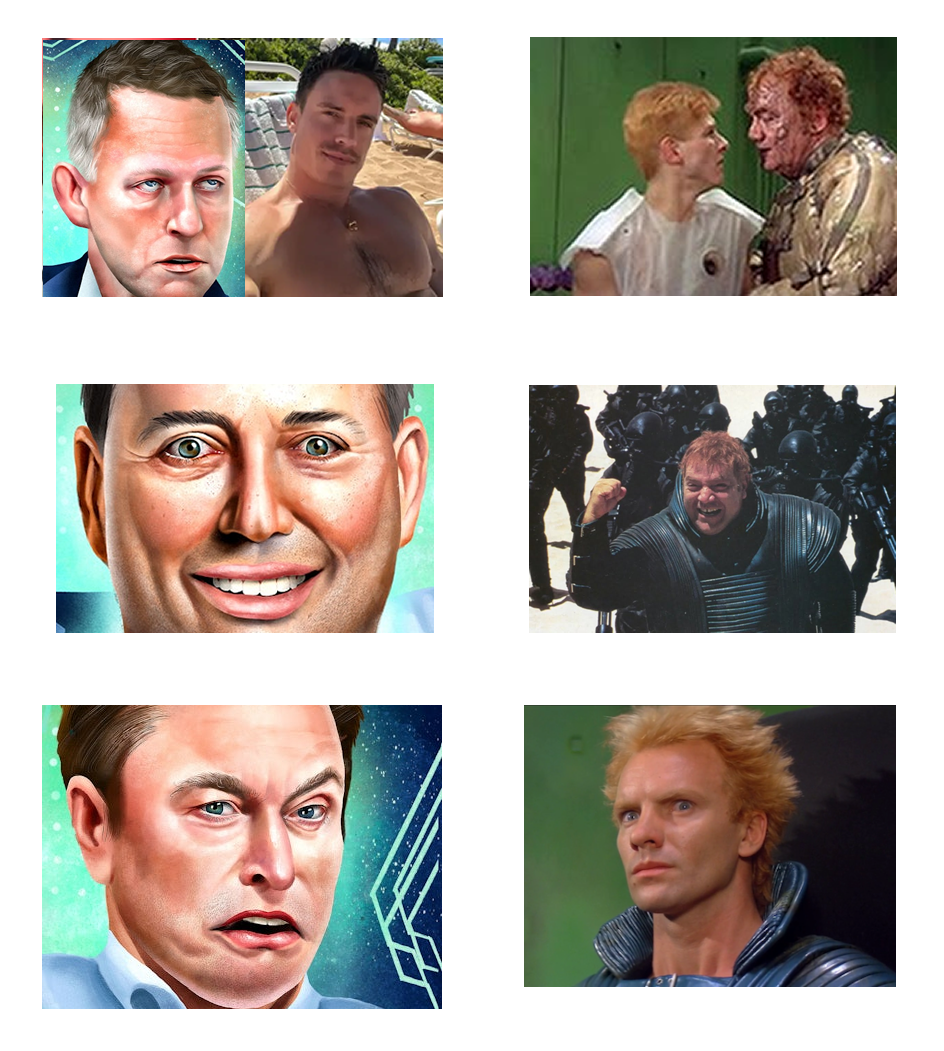
Based on the visual content provided, the meme juxtaposes hyper-realistic portraits of modern figures (like politicians and tech moguls) with science fiction characters or movie clips (like The Terminator and Hitchhiker's Guide). This contrast highlights the disconnect between human behavior in reality (politics, wealth, social media) and human behavior in science fiction (aliens, armor, dystopian futures).
The "OC" (Outsider Character) perspective likely refers to the "Human" aspect in the sci-fi context—how humans (politicians, Musk) act differently than they are portrayed as in sci-fi (aliens, Terminators). The meme serves to ground the idealized or armored existence of sci-fi characters in gritty reality, while the "Real People" images ground the sci-fi characters in a more realistic (though imperfect) human context.
The specific examples serve to contrast the gritty, chaotic reality of politics and wealth (Paul Ryan and a bodybuilder) with the idealized, armored, or alienated existence of their sci-fi counterparts (Terminators and Hitchhiker's Guide). This creates a humorous or thought-provoking juxtaposition between how humans act in the real world versus how they are depicted in media and fiction.
simple-description (llama3.2-vision_11b)
The meme is a humorous image of a person with a surprised expression, juxtaposed with a photo of David Lynch, a famous film director known for his eccentric style. The text "David Lynch is my therapist" is written below the image, implying that the person is seeking therapy from the eccentric director. The meme is likely referencing Lynch's unconventional approach to filmmaking and the idea that he might be an unconventional therapist.
detailed-analysis (gemma3-27b-vision)
Okay, here's an analysis of the provided images, broken down into sections as requested. It's important to note that applying these theoretical frameworks is interpretive. The focus will be on how these theories can illuminate the imagery and potential underlying meanings, particularly given the context of the images appearing to be of actor/personality Elon Musk.
Please note: A thorough analysis would benefit from knowing the origin/intent of this collage. Is it fan-made? An artistic statement? Knowing the context would strengthen the interpretation.
Visual Description
The images presented are close-up portraits and scene captures, all featuring Elon Musk in various roles and contexts. We see Musk:
- In a serious, concerned pose: Two images show him with a furrowed brow and a worried expression, suggesting anxiety or stress.
- As a "Greek God"/Naked: There’s a contrast to the above with an image depicting Musk shirtless, with an implied classical/idealized aesthetic.
- In Dramatic/Science Fiction Settings: Several photos place him in what appears to be a science fiction/futuristic environments, including scenes with alien-like figures.
- Exaggerated Expressions: Two images focus on extreme close-ups of Musk's face, showing a wide smile and open mouth, and the other in a state of extreme shock.
The overall effect is a jarring juxtaposition of different personas—the concerned CEO, the idealized figure, and the science fiction character. The collage’s arrangement also feels purposeful, as if it is trying to create some kind of narrative.
Foucauldian Genealogical Discourse Analysis
A Foucauldian approach focuses on how power operates through discourse – language and systems of thought. The images offer a fascinating case study.
- The Construction of "Elon Musk": The collage isn't presenting “the real” Musk, but a constructed image. Discourses around technology, innovation, wealth, and “disruptive” leadership all contribute to this construction. The images highlight the multiple, often contradictory, ways Musk presents himself.
- Power/Knowledge: Musk's power comes not only from his wealth and companies (SpaceX, Tesla, etc.) but also from the narrative he controls. These images tap into the discourse of a modern visionary/“genius,” but also hint at the vulnerability and potential failings beneath that facade. The image of Musk looking horrified suggests a loss of control.
- Genealogy of the "Tech Bro": This collage can be seen as a genealogy of a specific type of figure - the “tech bro.” A lineage that includes figures like Steve Jobs, Bill Gates, and others, a narrative of disruptive innovation and almost messianic status. This genealogy relies on and reinforces specific power structures.
- The Body as Site of Control: The shirtless image, though potentially playful, is also about controlling the image of the body. It can be argued to be about presenting the "ideal" body as a symbol of power and control.
Critical Theory
Critical Theory examines society and culture to identify and critique power structures.
- The Cult of Personality: The collage points to a ‘cult of personality’ surrounding Musk. Critical Theory would argue that this is a dangerous phenomenon, obscuring the potentially harmful consequences of his actions and policies behind a veneer of charisma and innovation.
- Commodification of the Self: Musk, as a public figure, engages in a degree of self-commodification. His persona and image are actively managed and deployed as branding for his companies. This collage could be read as exposing the constructed nature of that brand.
- Alienation & the "Future": The science fiction scenes introduce a sense of alienation. The future portrayed is one shaped by technology and the vision of a few powerful individuals like Musk. This can be seen as a critique of the potential dehumanizing effects of unchecked technological advancement.
- The Dangers of Unchecked Capitalism: Musk, as a symbol of wealth and capitalism, can be analyzed through the lens of critical theory. The collage might represent the anxieties and contradictions inherent in a system that prioritizes profit over people.
Marxist Conflict Theory
From a Marxist perspective, society is characterized by conflict between classes.
- Musk as a Bourgeois Figure: Musk is undeniably a member of the bourgeoisie – the ruling class that owns the means of production. The collage might be seen as highlighting the inherent tensions between his wealth and the working class, especially considering labor practices at Tesla and SpaceX.
- Ideological Hegemony: The positive image of Musk often presented in the media can be seen as an example of ideological hegemony – the dominance of a ruling class’s ideas that are presented as universal or natural. The collage might challenge this hegemony by juxtaposing the idealized image with a more vulnerable or troubled one.
- Alienation from Labor: The futuristic scenes, dominated by technology and potentially automated labor, could be interpreted as representing the increasing alienation of workers from the products of their labor.
Postmodernism
Postmodernism challenges grand narratives and emphasizes fragmentation, subjectivity, and the simulacrum.
- The Simulacrum: The collage itself is a simulacrum – a copy without an original. It’s a representation of a representation. This reflects the postmodern notion that reality is increasingly mediated by images and signs.
- Fragmentation of Identity: The diverse images showcase a fragmented identity. Musk isn’t presented as a coherent individual, but as a series of roles and personas.
- Loss of Authenticity: Postmodern thought would argue that “authenticity” is a constructed concept. The collage, by highlighting the constructed nature of Musk’s image, reinforces this idea.
- Irony and Parody: The collage's arrangement may possess a degree of irony or parody, questioning the seriousness with which we view public figures and their manufactured images.
Queer Feminist Intersectional Analysis (Limited application, but worth considering)
This is the least directly applicable framework, but we can still explore it:
- Masculinity and Power: Musk embodies a particular form of hyper-masculine power and ambition. A queer feminist analysis might examine how this masculinity is constructed and reinforced, and how it impacts power dynamics.
- The Gaze and Objectification: The shirtless image invites a certain gaze – one that potentially objectifies Musk. A queer feminist lens could examine the power dynamics at play in this image.
- The exclusion of marginalized groups: While the collage centers on Musk, it is important to consider the implications of his actions and policies on marginalized communities. A queer feminist perspective might analyze how his ventures perpetuate systemic inequalities.
Disclaimer: This analysis is based solely on the provided images and is necessarily interpretive. A deeper understanding would require knowing the context and intent behind the collage.
tesseract-ocr
4 Spee ra mm ‘a es BSS aN t ae os Di iN J A Ke . ey 4 / a= ei “ Ns Ah a. u p ; he " e 4 == WAS a bs i i ee) ; = en \ \ fe /A SS Sy :
simple-description (llama3.2-vision)
The meme is a screenshot of a scene from the 1984 film "Dune" starring David Lynch, featuring the character of Baron Harkon, played by David Lynch. The image shows the character's shocked and confused expression.