First Seen
2023-05-10T21:03:37+00:00
simple-description (llama3.2-vision_11b)
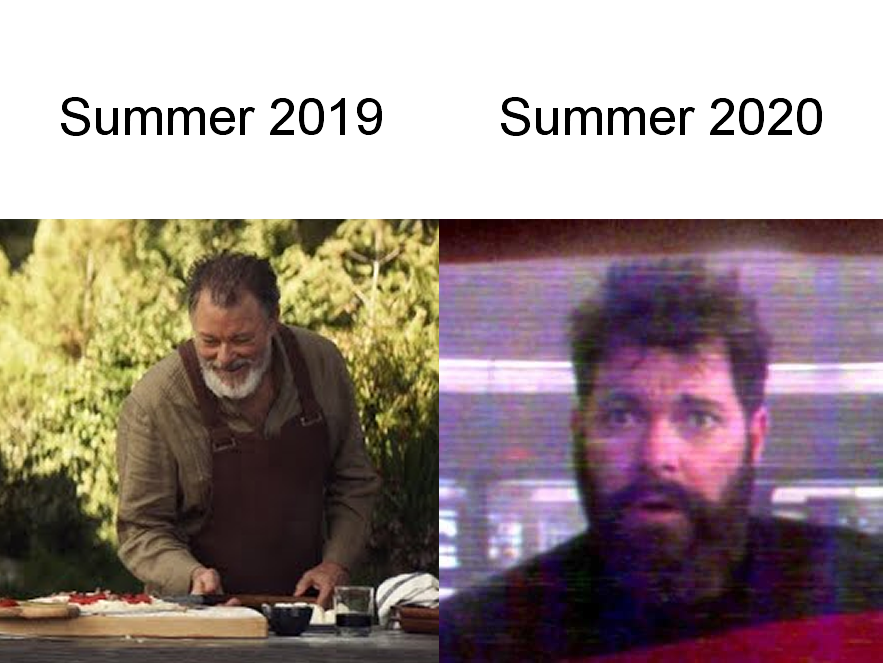
The meme is a comparison between two images of Neil deGrasse Tyson, a scientist and science communicator. The first image shows him in a more relaxed and casual setting, with a caption "Me in 2019". The second image shows him in a more formal and professional setting, with a caption "Me in 2020". The meme is a humorous take on how our lives and personalities can change over time, with a focus on the contrast between Neil deGrasse Tyson's more relaxed and casual persona in 2019 versus his more formal and professional persona in 2020.
detailed-analysis (gemma3-27b-vision)
Okay, here's an analysis of the provided image, broken down into the requested sections, acknowledging where a particular theory doesn't really apply. I'll strive to be thorough and offer interpretations based on these theoretical frameworks.
Image Overview:
The image presents a diptych – a side-by-side comparison of two photographs of chef Massimo Bottura. The first (labeled "Summer 2019") shows Bottura in a relaxed setting, seemingly outdoors, preparing food with a cheerful, engaged expression. The second (labeled "Summer 2020") is a distorted, digitally glitched portrait of Bottura looking strained and distressed. The juxtaposition implies a shift in Bottura's state of being between those two summers, likely referencing the impact of the COVID-19 pandemic.
Visual Description
- Summer 2019: Warm, natural lighting. Bottura is wearing an apron, seemingly in a kitchen garden or a similar setting, suggesting a connection to ingredients and origin. His expression is calm, attentive, and pleasant. The color palette is bright and inviting. The composition emphasizes the act of creation and nourishment.
- Summer 2020: Cool, artificial lighting. The image is distorted with digital glitches – static, color separation, and pixelation. Bottura’s expression is grim, conveying exhaustion, stress, or worry. The cool, dark color palette and the digital distortion evoke a sense of unease and disruption. The composition is close-up and unflinching, focusing on his face.
The visual contrast is stark, suggesting a significant disruption in Bottura’s experience. The distortion in the 2020 image is symbolic of the disruption caused by the pandemic.
Foucauldian Genealogical Discourse Analysis
This framework is particularly relevant. Michel Foucault's genealogical method traces the historical emergence of concepts and power relations.
- Discourse of “The Chef”: The first image embodies a specific discourse around the “chef” as an artisan, creative, and connected to nature/the origins of food. This discourse is closely tied to the rise of "farm-to-table" dining, Michelin star culture, and celebrity chefdom. Bottura, at this point, represents a continuation of this discourse.
- Disruption & New Power Relations (2020): The 2020 image represents the disruption of that discourse. The pandemic exposed the precariousness of the restaurant industry. Restaurants were forced to close or drastically adapt, chefs lost jobs, and the entire food system was strained. The digital distortion symbolizes the breakdown of established norms and the emergence of new power relations – the power of the pandemic to reshape economies, lifestyles, and industries.
- Biopower & The Body: Foucault's concept of biopower (the regulation of life and bodies) is pertinent. The pandemic directly impacted bodies (health, illness, death) and led to unprecedented regulations on social interaction, commerce, and food service. Bottura's stressed face embodies the effect of these new biopolitical forces on a key figure in the food industry.
- Genealogy of “Resilience”: One could trace a genealogy of the concept of “resilience” in the culinary world during this time. The image suggests a struggle against disruption, while many chefs and restaurants embraced new models (takeout, meal kits, etc.) embodying a "resilient" adaptation.
Critical Theory
Critical Theory, stemming from the Frankfurt School, examines social structures and power dynamics to expose systems of domination.
- Commodification of Food & Labor: The 2019 image, while seemingly idyllic, subtly points to the commodification of food and culinary expertise. The fine dining industry is built on high-end ingredients and skilled labor, both of which are subject to market forces.
- The Illusion of Control: The pandemic shattered the illusion of control over the food system. Supply chains were disrupted, restaurants were forced to adapt, and the vulnerability of the entire industry was exposed. Bottura’s distress in the 2020 image can be seen as a response to this loss of control.
- Critique of Consumer Culture: The pandemic also forced a reckoning with consumer culture and its impact on the environment. The disruption of the food system highlighted the unsustainable practices of industrial agriculture and the need for more localized and resilient food systems.
Marxist Conflict Theory
While present, this theory is less central than Foucault or Critical Theory.
- Class Conflict & Precarity: The pandemic disproportionately affected workers in the service industry (including restaurant staff). Bottura, as a successful chef/owner, likely faced different pressures than line cooks or servers. The image highlights the inherent class divisions within the food system and the precarity of labor.
- Capitalism & Crisis: The pandemic exposed the vulnerabilities of a capitalist system reliant on constant growth and consumption. The disruption of supply chains and the closure of restaurants triggered an economic crisis that affected many stakeholders.
- Control of the Means of Production: The pandemic also highlighted the concentration of control over the means of production (food supply, distribution, etc.) in the hands of a few large corporations.
Postmodernism
- Simulation and Hyperreality: The distortion in the 2020 image could be interpreted through a postmodern lens. The glitching and pixelation create a sense of unreality, suggesting that the image is a simulation of reality rather than a direct representation of it.
- Deconstruction of Meaning: The stark contrast between the two images challenges the idea of a stable, unified identity for Bottura. The image suggests that identity is fluid, fragmented, and subject to change.
- Loss of Grand Narratives: The pandemic shattered many of the grand narratives of progress and modernization. The image could be seen as a symbol of this loss of faith in overarching systems of meaning.
Queer Feminist Intersectional Analysis
This framework is the least applicable, but can still be considered:
- Labor Division & Gender: The restaurant industry has historically relied on a largely gendered division of labor, with women often relegated to lower-paying service positions. The pandemic exacerbated these inequalities, as women were disproportionately affected by job losses. While the image doesn’t directly address this, it's a relevant context.
- Care Work & Emotional Labor: Restaurants rely heavily on care work and emotional labor, both of which are often performed by women. The pandemic heightened the emotional toll on workers, as they were forced to navigate difficult customer interactions and changing safety protocols.
- Intersectionality of Vulnerability: The pandemic exposed the intersectionality of vulnerability, as marginalized groups (women, people of color, low-income workers) were disproportionately affected by the economic and health impacts of the crisis.
I've attempted to provide a comprehensive analysis of the image through these different theoretical frameworks, prioritizing the ones that offer the most relevant insights. Let me know if you'd like me to elaborate on any specific aspect or perspective.
simple-description (llama3.2-vision)
This meme is a visual comparison between two images of a man, likely a celebrity or public figure. The text above the images reads "Summer 2019" and "Summer 2020". The image on the left shows a well-groomed and put-together man, likely representing a typical summer experience. The image on the right shows a disheveled and unkempt man, likely representing the challenges and stress of the COVID-19 pandemic in summer 2020.
tesseract-ocr
Summer 2019 Summer 2020 po j ‘ ms wea 7 | ae ae swe - = i, ; 5 . be sy - . et == Ef S- Pf —_— oa al