First Seen
2023-05-10T21:03:37+00:00
simple-description (llama3.2-vision_11b)
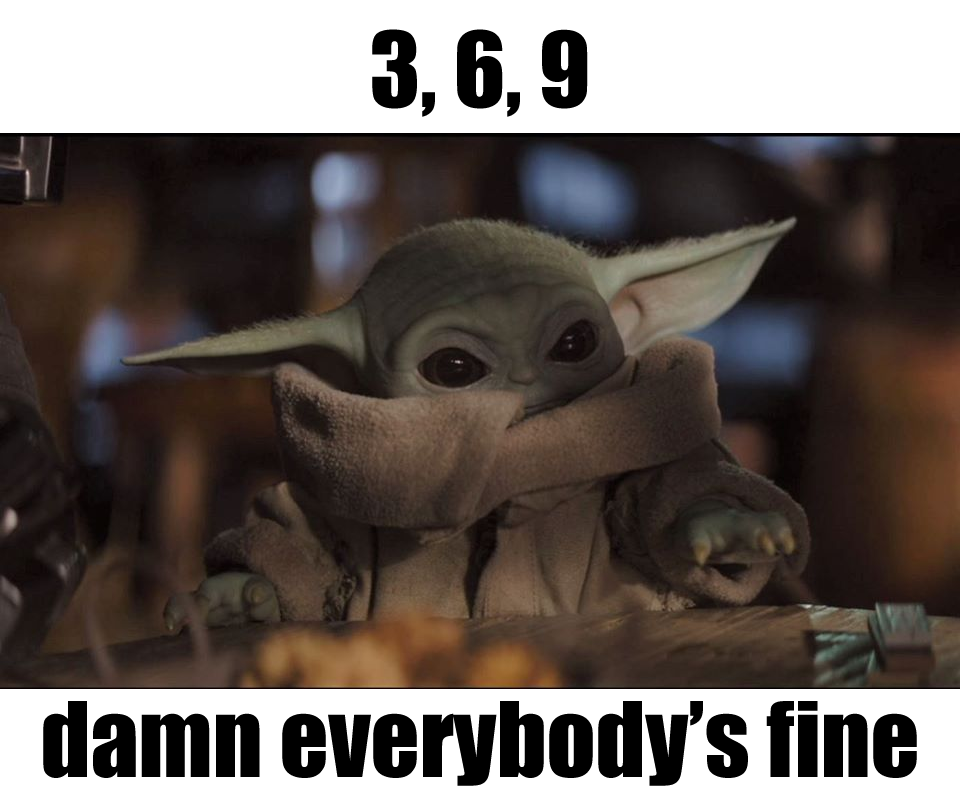
The meme is a screenshot of the character Baby Yoda from the Star Wars series, with the caption "I only have 3 legs" written above it. The image is a humorous take on the character's iconic pose, where he is sitting on a stool with only three legs, implying that he is somehow incomplete.
detailed-analysis (gemma3-27b-vision)
Okay, let's break down this image and meme through the lenses you've requested. It’s important to note this is an interpretation, and these analyses are inherently open to multiple readings.
Visual Description
The image features a close-up of "Grogu," colloquially known as "Baby Yoda," from the Mandalorian television series. He is the central figure, positioned in the foreground with a slightly melancholic or contemplative expression. The background is blurred, suggesting an interior space with warm, subdued lighting and hints of wooden structures—likely the interior of the Razor Crest or a similar setting. Grogu is depicted as a small, green, infant-like creature with large ears and prominent eyes. The lighting highlights his features, giving him a vulnerable and endearing appearance. The image is overlaid with the text "3, 6, 9" above and "damn everybody's fine" below.
Foucauldian Genealogical Discourse Analysis
The meme uses the "3, 6, 9" reference as a callback to a viral trend involving Tesla CEO Elon Musk. Musk shared a tweet about the meaning of the numbers (though his explanation is esoteric and based on numerology) and it became a meme about conspiracy theories or esoteric knowledge. This seemingly random connection to "3, 6, 9" as a signal of understanding is particularly relevant to a Foucauldian reading.
- Discourse & Power: The meme participates in the discourse surrounding The Mandalorian and its popularity. The show created a discourse of cuteness, collectability, and fan adoration around Grogu. The insertion of the "3, 6, 9" into this discourse attempts to alter its meaning.
- Genealogy of Meaning: To understand the meme, you must trace the genealogy of the "3, 6, 9" reference—it wasn’t naturally meaningful, it became meaningful through a specific online event. The meme then layers a new meaning onto Grogu, suggesting the character is linked to this seemingly random, esoteric knowledge.
- Power/Knowledge: The meme attempts to position Grogu within a different network of power/knowledge. By associating him with the esoteric "3, 6, 9" meme, it imbues him with a layer of knowingness, transforming him from simply a cute creature to a participant in a hidden, alternative discourse.
Critical Theory
A critical theory approach might analyze this meme in terms of its commentary on popular culture and its production of meaning.
- Commodification of Cutness: Grogu's image has been heavily commodified. The meme can be seen as a self-aware nod to this, juxtaposing the creature's innocent appeal with a more ironic or subversive reference. The meme acknowledges the superficiality of this commodification and presents a form of ironic commentary on it.
- Cultural Appropriation/Recontextualization: The "3, 6, 9" meme is a recontextualization of esoteric symbols or ideas. The meme appropriates this concept and applies it to a character within a highly popular franchise, creating a new layer of meaning that is divorced from its original context.
- The Role of the Spectator: The meme requires the spectator to have prior knowledge of the "3, 6, 9" trend in order to be "in on" the joke. This highlights the role of cultural literacy and shared knowledge in creating meaning.
Postmodernism
This meme is deeply rooted in postmodern aesthetics and principles.
- Pastiche/Intertextuality: The meme is an example of pastiche, blending elements from two distinct cultural contexts (The Mandalorian and the Elon Musk meme). It relies on intertextuality – the relationship between texts – to create its effect. Without knowing the context of "3, 6, 9", the meme is nonsensical.
- Irony and Playfulness: The meme's humor stems from the unexpected and illogical juxtaposition of these elements. It's playful, self-aware, and doesn't take itself seriously.
- Deconstruction of Meaning: Postmodernism often seeks to deconstruct established meanings. This meme subtly challenges the straightforward, innocent portrayal of Grogu by layering a potentially cryptic and ironic reference over it.
- Hyperreality: The meme exists as a digital artifact, divorced from any “real” meaning. It contributes to a hyperreality where simulations and signifiers take precedence over the actual thing.
In summary: The meme is a playful, ironic, and self-aware commentary on pop culture, the commodification of cuteness, and the construction of meaning in the digital age. It exemplifies postmodern principles of pastiche, intertextuality, and deconstruction, and can be analyzed through the lenses of critical theory and Foucauldian discourse analysis. It's a complex artifact that requires a degree of cultural literacy to fully understand its effect.
Please note: These interpretations are subjective and open to debate. Different readers might draw different conclusions based on their own experiences and perspectives.
simple-description (llama3.2-vision)
This meme features a photo of a character from the Star Wars franchise, Baby Yoda, with a disappointed expression. The text above the image reads "3, 6, 9" and the text below reads "I know, I know, I'm in the wrong". The meme is likely referencing a common phrase or joke, but the text above is actually a sequence of numbers that doesn't seem to relate to the joke.
tesseract-ocr
a - . f a” ’ | ‘ . E damn everybody's fine