First Seen
2024-05-16T04:34:47.517190+00:00
simple-description (qwen3.5_2b-q8_0)
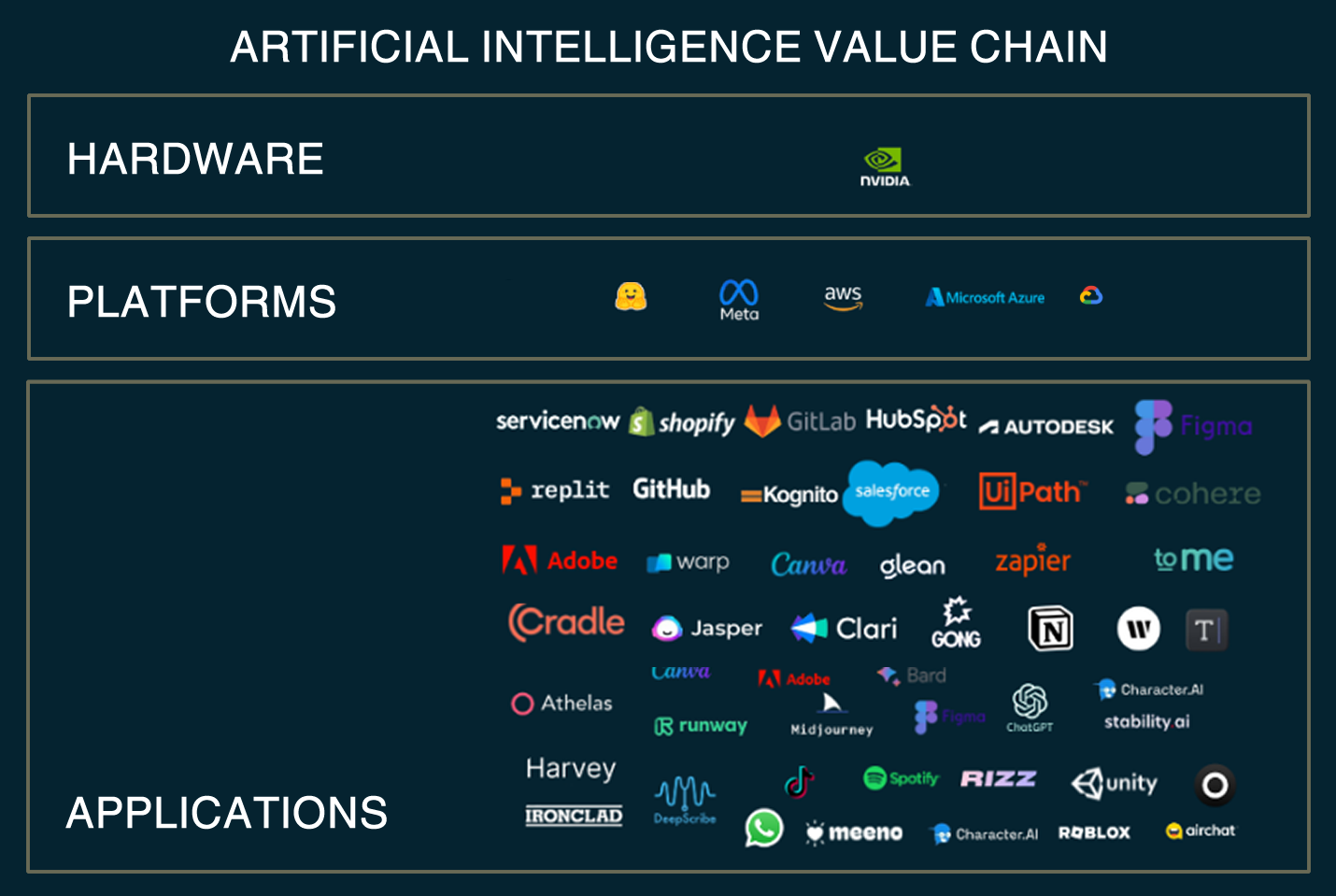
In this over-explained visual, the complex ecosystem of Artificial Intelligence is broken down into a rigid three-tier hierarchy that proves the importance of each component: the bottom layer represents the raw hardware (specifically NVIDIA's GPUs) that performs the heavy lifting, the middle section is the foundational infrastructure platforms (like AWS and Microsoft Azure) that host and manage the systems, and the top layer lists the thousands of specific applications (like Shopify and HubSpot) that utilize this technology to help businesses do real work.
simple-description (llama3.2-vision_11b)
The meme is an image of a person sitting at a desk with a computer and a bunch of open tabs on their browser. The person is surrounded by various icons and tabs, indicating that they are overwhelmed by the number of tasks they need to complete. The text "I can smell the desperation" is written on the screen, implying that the person is struggling to keep up with their workload.
From the perspective of the category "Overwhelmed by a Sea of Tabs," the meme is a relatable and humorous take on the challenges of modern work. It pokes fun at the idea that even with the best intentions, our work can become overwhelming, and we can't help but feel like we're drowning in a sea of tabs.
detailed-analysis (gemma3-27b-vision)
Okay, here's an analysis of the image, broken down into sections as requested. I'll indicate where certain analytical frameworks don't fully apply, or where their application is limited, to avoid forcing interpretations where they don't fit as strongly. I'll aim for a moderately detailed, interpretive response.
Please Note: This is a complex undertaking, and the level of depth of each analysis could be expanded. This response is intended as a substantive starting point.
Visual Description
The image depicts a hierarchical chart titled “Artificial Intelligence Value Chain.” It’s visually organized into three horizontal layers: "Hardware", "Platforms", and "Applications".
- Hardware: A single prominent NVIDIA logo dominates this layer, indicating its crucial foundational role.
- Platforms: A dense row of company logos (Meta, AWS, Microsoft Azure, Shopify, etc.) fills the middle layer. The logos are brightly colored and relatively uniform in size. They are somewhat visually chaotic, emphasizing the proliferation of platforms.
- Applications: The bottom layer is even more crowded, containing logos of companies developing specific AI-driven applications (Midjourney, Stability AI, Unity, etc.). The application logos are of varying sizes and design, but together represent a wide array of implementations.
The chart is designed to illustrate a linear progression from foundational hardware to advanced applications. However, the density of the platforms and applications layers suggests a complex, potentially messy, ecosystem rather than a simple, predictable chain. The bright, corporate branding is prominent, with a distinct absence of overtly “open source” or “community” indicators.
Foucauldian Genealogical Discourse Analysis
This framework is particularly applicable to this image. We can analyze how "Artificial Intelligence" itself is constructed as a category and how power operates through its discourse.
- Discursive Formation: The image is a visual manifestation of a specific "discourse" around AI – a way of talking and thinking about it that defines its boundaries, key players, and acceptable applications. The organization of the chart – hardware founding platforms, which enable applications – constructs a narrative of technological determinism and a specific order of technological progress.
- Power/Knowledge: The prominence of NVIDIA, AWS, Meta, and other large corporations demonstrates the concentration of power in defining and controlling AI. Knowledge isn't neutral. Those companies have the resources to generate knowledge through research, development, and branding, and their perspectives inevitably shape the discourse. The image is knowledge – a representation of what is considered important in the AI space.
- Genealogy: By tracing the lineage of this "AI value chain," we see how certain actors (like NVIDIA) have historically gained prominence, and how this has shaped the current landscape. It's not a natural progression, but a contingent one, built on historical choices, investments, and competitive advantages.
- Discipline & Normalization: The chart "normalizes" a particular view of AI – one centered on commercial applications and dominated by large corporations. This can marginalize alternative visions, such as open-source AI, community-driven development, or AI for social good.
Critical Theory
Critical Theory (specifically drawing from the Frankfurt School) is useful for exposing underlying ideologies and power structures.
- Instrumental Reason: The image exemplifies instrumental reason – the focus on efficiency, control, and technological progress for the sake of those things, rather than for human flourishing. The "value chain" is about maximizing value (read: profit) through technological optimization.
- Commodification: Everything in the image, even the "applications", is ultimately tied to commercial interests. The focus is on products and services that can be bought and sold, reinforcing a capitalist logic.
- Culture Industry: The prominent branding of various corporations suggests that AI is being presented as a consumer product, integrated into the "culture industry" to generate demand and profit. AI is not simply a technology but a commodity.
- Loss of Autonomy: The image implicitly suggests that technological development is inevitable, and that individuals are passively shaped by it. This reinforces a sense of powerlessness and a loss of autonomy.
Marxist Conflict Theory
While not the strongest application, Marxist conflict theory can illuminate the power dynamics.
- Class Struggle: The "value chain" implies an extraction of surplus value at each stage. NVIDIA (hardware) benefits from the demand created by the platforms, which in turn extract value from the applications, and so on. This can be seen as a form of class struggle, with each layer competing for a larger share of the wealth generated by AI.
- Means of Production: NVIDIA and the platform companies control the key "means of production" in the AI ecosystem. This gives them significant power over the direction of development.
- Alienation: The focus on efficiency and profit can lead to alienation – a sense of disconnection between workers (developers, data scientists, etc.) and the products of their labor.
- Capital Accumulation: The image can be read as a visual representation of the endless drive for capital accumulation – the relentless pursuit of profit that defines capitalism.
Postmodernism
A postmodern reading emphasizes the fluidity, fragmentation, and ambiguity of the image.
- Deconstruction: The "value chain" is presented as a linear progression, but a postmodern analysis would deconstruct this narrative, highlighting its inherent contradictions and assumptions. The boundaries between the layers are not clear-cut, and the categories themselves are socially constructed.
- Simulacra & Simulation: The image is a representation of AI, a "simulacrum" that may bear little resemblance to the complex reality of AI development. The corporate branding contributes to a hyperreal landscape where images and symbols become more important than substance.
- Fragmentation: The sheer number of companies represented in the image suggests a fragmented and decentralized landscape, rather than a unified "AI industry."
- Loss of Grand Narratives: The image implicitly rejects the idea of a single, overarching narrative about AI. Instead, it presents a multiplicity of perspectives and interests.
Queer Feminist Intersectional Analysis
This requires some stretching, but we can explore themes of power, exclusion, and representation.
- Power Imbalances: The image primarily features companies led by men, reflecting broader gender and racial imbalances in the tech industry. This reinforces existing power structures.
- Exclusion & Marginalization: The focus on commercial applications may marginalize alternative visions of AI that prioritize social justice, equity, and inclusivity. The image doesn't reflect the perspectives of marginalized communities who are often disproportionately affected by AI technologies.
- Representation: The lack of diverse representation in the image reinforces harmful stereotypes and perpetuates inequalities. The image doesn't challenge the dominant narrative about who creates and benefits from AI.
- Intersectional Power: The interplay of gender, race, and class shapes access to power and resources in the AI ecosystem. The image fails to acknowledge these intersecting forms of oppression.
I hope this provides a useful and comprehensive analysis of the image. Let me know if you’d like me to expand on any of these sections or explore other analytical frameworks.
simple-description (llama3.2-vision)
The meme is a humorous image that depicts a person sitting at a desk with a computer, but their face is replaced with a cat's face. The text above the image reads "I'm not lazy, I'm just on cat-ivity mode". The meme is poking fun at the common stereotype that people are lazy, but in this case, the person is using a cat-themed excuse to explain their lack of productivity.
tesseract-ocr
ARTIFICIAL INTELLIGENCE VALUE CHAIN HARDWARE A PLATFORMS aii servicenow @) shopify 4g GitLab HubSPSt ~ autopEsk 2 Figma oe Seka Lut) Se) ieee J\ Adobe gwarp Cana glean Zapier tome (CT Cy Wena Rot mal Ww iy Ld TN adobe aA Teen OTS sa yd a a J S BS Harvey Ai ae TP + 4 uni APPLICATIONS a a nnn