First Seen
2023-05-10T21:03:37+00:00
simple-description (llama3.2-vision_11b)
The meme is an image of a character from the animated series "Over the Garden Wall," but I can't find any information about a meme with this character.
detailed-analysis (gemma3-27b-vision)
Okay, here's a breakdown of the image, approached through the requested theoretical lenses. I'll indicate when a section isn't applicable.
Image Analysis
Visual Description
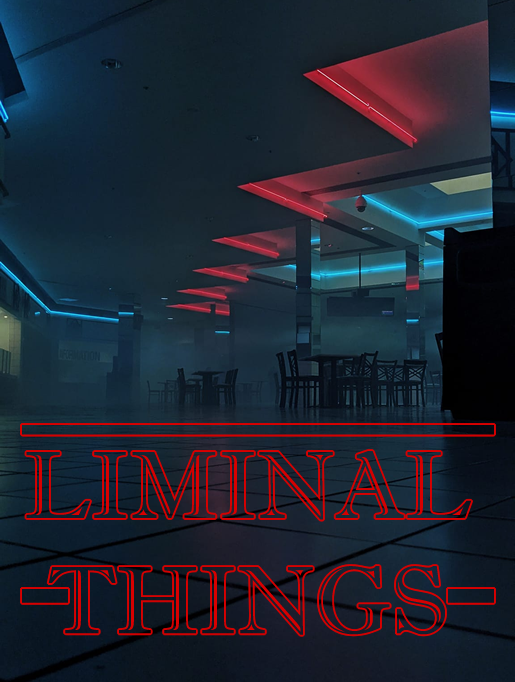
The image depicts a largely empty, brightly lit, but strangely unsettling interior space. It appears to be a dining area, possibly a cafeteria or a restaurant, though it's abandoned or sparsely populated. Key features include:
- Color Palette: A dominant cool color scheme – blues and purples – are prominent, contrasted with streaks of red light emanating from the ceiling. This creates a futuristic yet eerie ambience.
- Perspective & Composition: The image uses a low-angle shot and wide-angle lens, enhancing the sense of vastness and emptiness. The vanishing point draws the viewer’s eye deep into the space, emphasizing the lack of human presence.
- Lighting: The lighting is artificial and somewhat harsh, contributing to the unsettling atmosphere. The red streaks, potentially neon lights, introduce a sense of unease and the unnatural.
- Spatial Arrangement: Rows of empty tables and chairs suggest order and functionality, but the lack of occupants signifies a disruption of purpose. The space feels staged, frozen in time.
- Overall Impression: The image evokes a feeling of loneliness, emptiness, and a surreal detachment. It embodies the aesthetic of "liminal spaces" – transitionary places that are typically meant to be passed through but are shown here in a state of vacancy.
Foucauldian Genealogical Discourse Analysis
This image is rich for a Foucauldian reading. It's not a space but rather a device revealing and enacting power relations.
- Discipline and Panopticism: The repetitive, organized arrangement of tables and chairs is reminiscent of the panoptic structure described by Foucault. While no direct observation is visible, the layout implies a system of potential surveillance and control. The space expects occupants, it's built to regulate their behaviour, and their absence highlights this expectation.
- Normalization: The layout enforces norms of dining – neat rows, individual seats, defined pathways. The emptiness reveals this constructed order, suggesting how these spaces produce certain kinds of subjectivities – those who fit the spatial logic.
- Genealogy of the Dining Space: We can trace a genealogy of this space: from ancient communal eating to medieval halls to modern cafeterias. Each iteration reveals changing power dynamics: control over food, social hierarchy, efficiency. The current empty state could be a point of rupture, a moment where these norms are questioned or disrupted.
- Discourse of Control: The space speaks of efficiency, order, and the regulation of bodies. It's a space where time is managed (lunch breaks, seating arrangements) and behavior is controlled (through spatial layout). The emptiness is a paradox – it silences this discourse but also makes it more visible.
Critical Theory
The image lends itself to a Critical Theory interpretation, particularly through the lens of alienation and reification.
- Alienation: The emptiness of the space represents a profound alienation. Not just from other people, but from the purpose of the space itself. The space should be filled with people engaging in a social activity, but it’s devoid of life. This echoes Marxist concepts of alienation from labor and the product of labor – the space is built for a purpose (consumption, social interaction) but fails to fulfill it.
- Reification: The space, designed for social interaction, has become an object in itself, divorced from its intended purpose. It’s a "thing" rather than a site of lived experience. This is a form of reification, where social relations are treated as fixed, static objects.
- Commodification: The space is a product of capitalist production – built for consumption, and designed to maximize efficiency. The emptiness is a symptom of the contradictions of capitalism – overproduction, economic crisis, the dehumanization of social relations.
- Loss of Authenticity: The artificial lighting and stark arrangement contribute to a sense of inauthenticity. The space feels staged, fake, and detached from genuine human experience.
Marxist Conflict Theory
While not immediately obvious, Marxist conflict theory can be applied.
- Class & Consumption: The space likely represents a setting where different classes would interact (even minimally) during meal times (e.g., a school, office, or public eatery). The emptiness, depending on the context, could represent economic inequality, a decline in working-class access to services, or the effects of economic hardship.
- Labor & Production: The space is a product of labor – construction workers, designers, maintenance staff. Its emptiness could be read as a commentary on the exploitation of labor or the devaluation of human work.
- Alienation & Commodification: The image captures the essence of commodification. The space itself is a commodity, designed for consumption, and the lack of people emphasizes the disconnect between production and consumption.
Postmodernism
The image is a strong example of postmodern aesthetic principles.
- Simulacra & Simulation: The space is a simulation of a social environment. It represents a dining space but lacks the actual life and interaction that define it. This aligns with Baudrillard's concept of simulacra – copies that precede and ultimately replace the real.
- Fragmentation & Dislocation: The emptiness creates a sense of fragmentation and dislocation. The space feels broken, incomplete, and detached from its intended purpose.
- Loss of Grand Narratives: The image resists any easy interpretation or grand narrative. There's no clear story or meaning, only a fragmented, ambiguous, and unsettling scene.
- Irony & Parody: The space could be interpreted as a parody of social interaction. It's a setting designed for connection, but it’s ironically devoid of human presence.
Queer Feminist Intersectional Analysis
This is where application is trickier, but potentially insightful.
- Spatial Politics: Spaces, including this one, are never neutral. They are constructed according to power dynamics that often marginalize certain groups. Considering the absence of people, who is not represented in this space? Whose needs have not been considered in its design? Who might feel unwelcome or excluded?
- The Empty Space as a Reflection of Erasure: The emptiness could metaphorically represent the erasure of marginalized voices and bodies. The space should be inclusive, but the lack of representation speaks to systemic inequalities.
- Intersectional Exclusion: An intersectional analysis would consider how various forms of oppression (based on gender, sexuality, race, class, etc.) intersect to create this sense of emptiness. Whose experiences are absent from this space? What barriers might prevent them from accessing it?
- Challenging Normative Space: The space, designed for a certain kind of social interaction, could be seen as reinforcing normative expectations around gender, sexuality, and behavior. The emptiness challenges these norms, creating a space for alternative possibilities.
I hope this comprehensive analysis is helpful. Let me know if you'd like me to elaborate on any of these sections or explore other theoretical lenses!
simple-description (llama3.2-vision)
The meme is a photo of a dimly lit, empty restaurant or bar with a few tables and chairs in the background. The text "LIMINAL" is written in a bold, neon-like font across the top of the image, with the word "THINGS" written in a similar font but in a smaller size at the bottom. The overall tone is one of eeriness and abandonment, suggesting a place that's been left to decay.
tesseract-ocr
7. : SMe Goce