First Seen
2023-05-10T21:03:38+00:00
simple-description (llama3.2-vision_11b)
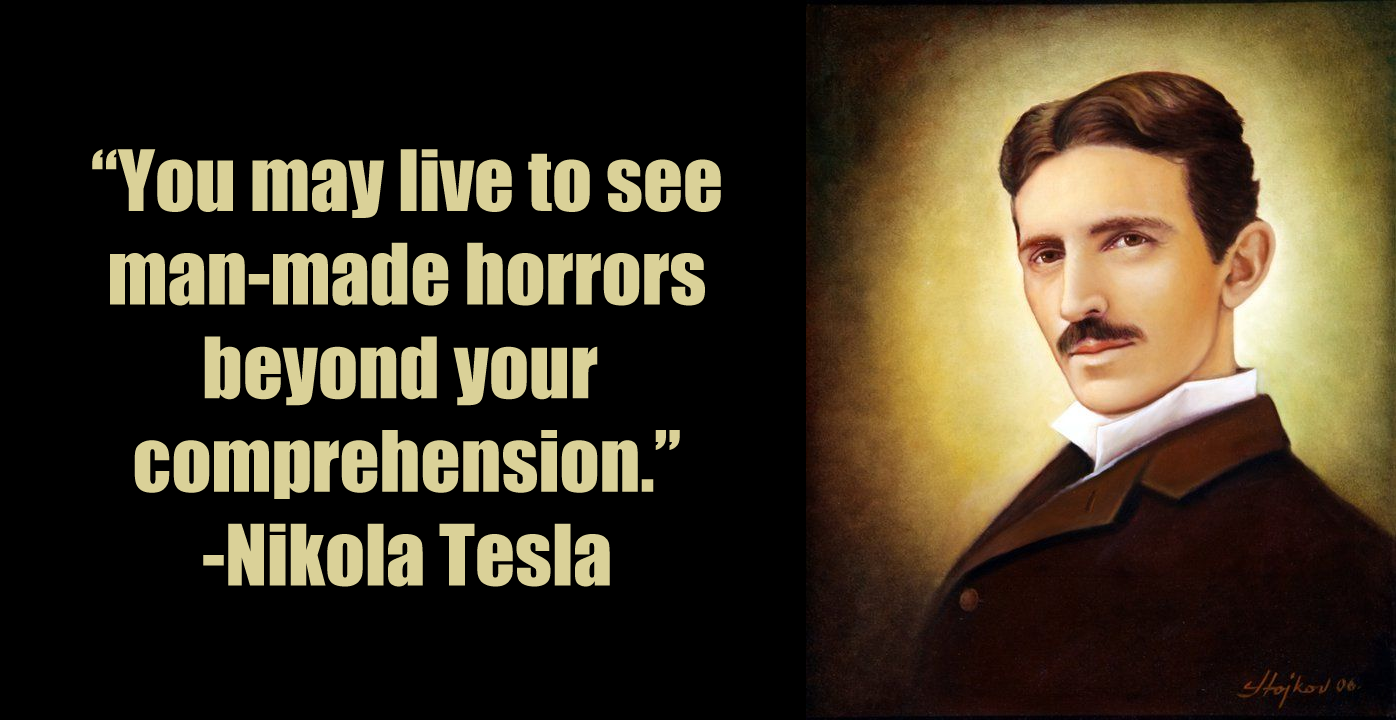
The meme is a humorous image of a famous scientist, Nikola Tesla, with a caption that pokes fun at his eccentric personality. The image is a play on the idea that Tesla was known for his unconventional and sometimes bizarre ideas, with the caption "I, Nikola Tesla, have discovered a way to harness the power of darkness and make it do my bidding!" The image is a lighthearted and humorous take on Tesla's eccentric personality, and the caption is a playful exaggeration of his interests and pursuits.
detailed-analysis (gemma3-27b-vision)
Okay, let's analyze the image of Nikola Tesla with his quote through the requested theoretical lenses.
1. Visual Description
The image is a portrait featuring Nikola Tesla, a Serbian-American inventor, electrical engineer, mechanical engineer, and futurist. He is depicted in a classic, formal style, wearing a dark suit and white shirt with a high collar. He has a neatly groomed mustache and his gaze is direct and serious. The lighting is dramatic, with strong shadows highlighting his face and creating a sense of intensity.
A black background dominates the image, making Tesla's figure stand out. A quotation, “You may live to see man-made horrors beyond your comprehension,” is printed in a large, bold, white font above Tesla’s head. Below his portrait, it identifies him as the source of the quote. A small signature appears at the bottom right corner.
The overall aesthetic is one of historical gravitas and prophetic foreboding. The image leans heavily on a romanticized and somewhat mythologized image of Tesla as a brilliant, visionary, but potentially cautionary figure.
2. Foucauldian Genealogical Discourse Analysis
Foucault would be interested in how this image constructs the discourse surrounding Tesla and "horrors".
- Power/Knowledge: The image links Tesla with a pronouncement about future horrors. This positions Tesla as a kind of prophet, giving him discursive power over the future and its potential anxieties. The image creates a narrative around him—not just a record of his existence.
- Genealogy of "Horror": Examining the "horrors" Tesla predicts requires tracing the historical shifts in what constitutes "horror". This involves analyzing how technologies (which Tesla was deeply involved with) have become entangled with anxieties about control, dehumanization, and existential threats. What constituted "horror" in Tesla's time (e.g., industrial accidents, societal upheaval) has likely morphed into new forms (e.g., nuclear war, AI, ecological disaster).
- Disciplinary Power: Tesla's prediction can be seen as contributing to a disciplinary regime. By suggesting a future of potential horrors, it implies a need for control, regulation, and surveillance to prevent these outcomes.
- The Archive: This image itself becomes part of the archive, a node in the collection of representations that construct our understanding of Tesla and the future. Its circulation contributes to the ongoing construction of this discourse.
3. Critical Theory
From a Critical Theory perspective, the image and quote highlight the potential for instrumental reason and technological progress to have unintended and negative consequences.
- Enlightenment’s Dialectic of Domination: Horkheimer and Adorno would argue that Tesla’s quote foreshadows the ways in which the pursuit of rationality and technological control (a hallmark of the Enlightenment) can ironically lead to new forms of domination and suffering. The 'horrors' are not necessarily inherent in technology, but in the social and political forces that shape its development and application.
- Commodification of Genius: The image, as a readily shareable piece of content, can be seen as part of the commodification of Tesla as a personality. His image is used to sell ideas, products, and even a certain aesthetic. This obscures the complex historical context of his work and life.
- Loss of Critical Consciousness: The simplistic presentation of Tesla’s quote, without exploring the underlying complexities, risks promoting a passive acceptance of technological progress and a lack of critical engagement with its potential risks.
4. Marxist Conflict Theory
From a Marxist viewpoint, the 'horrors' Tesla anticipates are likely tied to the inherent contradictions of capitalism.
- Technological Unemployment & Alienation: The horrors could be seen as the consequences of technologies (developed within a capitalist system) displacing labor, creating economic insecurity, and alienating individuals from their work and communities.
- The Military-Industrial Complex: The potential for technology to be used for destructive purposes (war, surveillance) is a direct consequence of the capitalist drive for profit and control.
- Class Struggle: The 'horrors' may disproportionately affect marginalized communities and exacerbate existing inequalities, thus intensifying class conflict.
- Ideological Function: The image serves as a warning, but it can also function ideologically by diverting attention from the systemic issues that drive the creation of these 'horrors'. It may suggest that the problem lies with technology itself, rather than with the social and economic structures that shape its development.
5. Postmodernism
A postmodern analysis would deconstruct the idea of a singular, objective "horror" and emphasize the subjective and culturally constructed nature of fear.
- Simulacra & Hyperreality: The image itself is a simulation of Tesla, and the quote, divorced from its original context, becomes a hyperreal signifier. The 'horrors' are not necessarily real threats, but representations that circulate in culture and shape our perceptions of reality.
- Death of the Author: The meaning of Tesla’s quote is not fixed or determined by his intention. It is open to interpretation and constantly reshaped by viewers and the context in which it is encountered.
- Fragmentation & Loss of Grand Narratives: The image reflects a sense of fragmentation and loss of faith in grand narratives (like the belief in inevitable progress). The horrors represent a breakdown of the utopian vision of technological advancement.
- Deconstruction of Binary Oppositions: The image challenges the opposition between progress and destruction. Technology, often seen as a force for progress, is revealed as having the potential to create horrors.
6. Queer Feminist Intersectional Analysis
A queer feminist intersectional reading would examine how the 'horrors' Tesla anticipates might disproportionately affect marginalized groups and are tied to intersecting systems of oppression.
- Technological Violence Against Women and LGBTQ+ Individuals: Technology can be used to perpetuate gender-based violence (online harassment, surveillance, algorithmic bias) and to reinforce discriminatory norms.
- Environmental Racism: The 'horrors' may manifest as environmental disasters that disproportionately impact communities of color.
- Algorithmic Bias & Social Control: Algorithms and surveillance technologies can reinforce existing inequalities and be used to control marginalized groups.
- The Myth of the Rational Engineer: The image potentially reinforces the myth of the rational, detached engineer (historically a male-dominated field) who is unaware of the social and ethical implications of their work. A queer feminist analysis would challenge this myth and call for a more inclusive and intersectional approach to technology design and development.
I hope this breakdown provides a comprehensive analysis of the image through the requested theoretical lenses. Let me know if you would like me to expand on any specific aspect or provide further detail!
simple-description (llama3.2-vision)
This meme features a photo of Nikola Tesla with a quote superimposed over it. The text reads: "You may live to see the dawn of man-made horrors beyond your comprehension."
tesseract-ocr
aE RS 3 Tee 7 J ’ UN | Ze POCA Le . a STC ER Gt ‘4