First Seen
2023-05-10T21:03:38+00:00
simple-description (llama3.2-vision_11b)
The meme is a humorous comparison between the early days of the internet (represented by a 1990s-style computer screen) and the current state of the internet (represented by a modern smartphone screen). The text "it was fun" implies that the early internet was enjoyable, but the current state is overwhelming and chaotic. The meme is likely a commentary on the rapid evolution of technology and the internet's impact on society.
detailed-analysis (gemma3-27b-vision)
Okay, let's break down this meme using the frameworks you've requested. This is a complex image, and the interpretations can be layered.
Visual Description
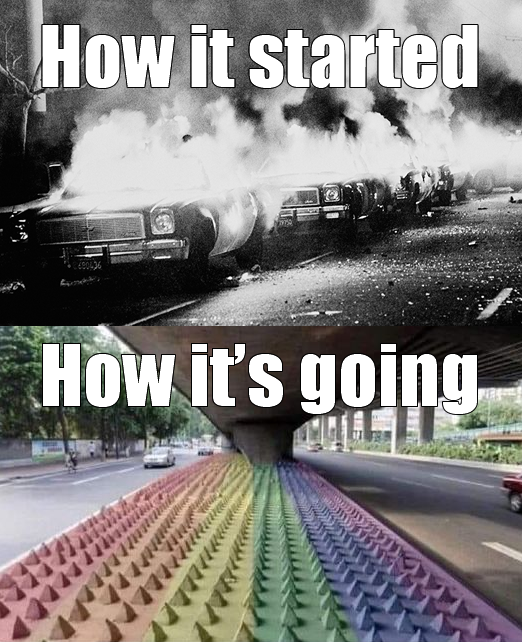
The image is a "How it started/How it's going" meme format, commonly used on social media.
- Top Panel ("How it started"): Depicts a black-and-white photograph of a train derailment, likely from the early to mid-20th century. There's significant damage, smoke, debris, and a sense of chaos. A train car appears to be overturned, and the scene suggests a catastrophic accident.
- Bottom Panel ("How it's going"): Features a colorful image of a highway tunnel decorated with rainbow-colored pride flags/banners. The scene is clean, orderly, and conveys a sense of progress and acceptance. The flags are arranged densely, lining both sides of the tunnel, creating a vibrant and affirming visual.
Foucauldian Genealogical Discourse Analysis
Foucault's genealogical approach focuses on how knowledge and power are intertwined, and how "truths" are constructed through historical discourse.
In this meme, the progression from a chaotic, destructive accident to an orderly, colorful highway speaks to a shift in discourses. The derailment represents an older discourse of accidents, danger, and perhaps, a disregard for safety (or a lack of systems to prevent such events). It can be understood as the manifestation of power structures focused on the demands of the industrial age without consideration for the consequences. The rainbow tunnel represents a shift toward discourses of acceptance, identity, and inclusion.
The "genealogy" here traces the evolution of societal norms and how those norms are expressed through material forms. The shift may suggest a re-evaluation of prior systems and a push for greater equality and visibility. Foucault would emphasize that this is not necessarily a linear progression toward "truth," but rather a shift in power/knowledge relations.
Critical Theory
From a Critical Theory perspective, this meme points to the potential for social transformation. The train derailment symbolizes the destructive aspects of an older, oppressive system – potentially industrialization, patriarchy, or other structures that caused harm. The rainbow tunnel, in turn, represents a vision of a more progressive and inclusive society.
The image suggests a rejection of old modes of control and power and a movement toward a more equitable and just social order. Critical theorists would analyze the underlying ideologies that perpetuate both the destructive and the progressive elements depicted.
Queer Feminist Intersectional Analysis
This framework offers a particularly potent reading. The train derailment can be seen as a metaphor for the historical oppression, violence, and erasure experienced by LGBTQ+ individuals and other marginalized communities.
The rainbow tunnel is a direct symbol of LGBTQ+ pride and visibility. However, the meme’s strength is in highlighting that this “going” state isn’t simply a visual makeover. It suggests an ongoing process of dismantling oppressive structures and building a more inclusive society.
The "intersection" comes in recognizing that this progress is not universally experienced. The rainbow tunnel might be visible to some, but others may still face discrimination, violence, and exclusion. The meme thus invites a critical examination of how these issues intersect and compound one another.
Marxist Conflict Theory
From a Marxist lens, the image can be seen as a reflection of class struggle and the evolution of societal power dynamics. The train derailment, as a symbol of industrial accident, could represent the exploitation of labor and the inherent dangers within a capitalist system. The chaos and destruction hint at the potential for systemic failure and the human cost of prioritizing profit over safety.
The rainbow tunnel, while appearing positive, could also be interpreted as a co-option of LGBTQ+ rights by capitalist interests. "Rainbow capitalism" (the use of LGBTQ+ symbolism for marketing purposes) often occurs without genuine commitment to dismantling systemic inequalities. A Marxist reading would prompt an analysis of who benefits from this visual shift and whether it truly challenges the underlying power structures or simply repackages them.
Postmodernism
From a postmodern perspective, the image’s juxtaposition of starkly different visual elements embraces a sensibility of fragmentation and the rejection of grand narratives. There isn't a singular, linear story of progress being told. The meme presents a collage of images that force the viewer to construct their own meaning.
The irony and ambiguity inherent in the image are hallmarks of postmodernism. The train wreck is a symbol of a past that can't be fully understood or erased, while the rainbow tunnel represents a present that is fluid, contested, and open to multiple interpretations. The meme is a commentary on the complexity of social change and the impossibility of achieving a singular, definitive “end” state.
Important Note: This is interpretive analysis. The meme’s meaning is open to debate. These interpretations are based on applying specific theoretical frameworks to the visual and textual elements presented.
simple-description (llama3.2-vision)
This meme is a humorous comparison of two contrasting situations. The top image depicts a chaotic and destructive scene, likely a war or natural disaster, with the text "How it started". The bottom image shows a peaceful and serene environment, with a road lined with flowers, and the text "How it's going". The meme pokes fun at the idea that a situation can go from chaotic to peaceful in a short amount of time.
tesseract-ocr
| ey 7. a ese aia . 6 Spins 1 = all =, 4 I~ How.its GOIng... ae P “3 ¥ : mite = ep Oj fey € EE aee Re OS & 5 > 7 j wae ‘ o> 1» De De Be BS