First Seen
2023-05-10T21:03:38+00:00
simple-description (llama3.2-vision_11b)
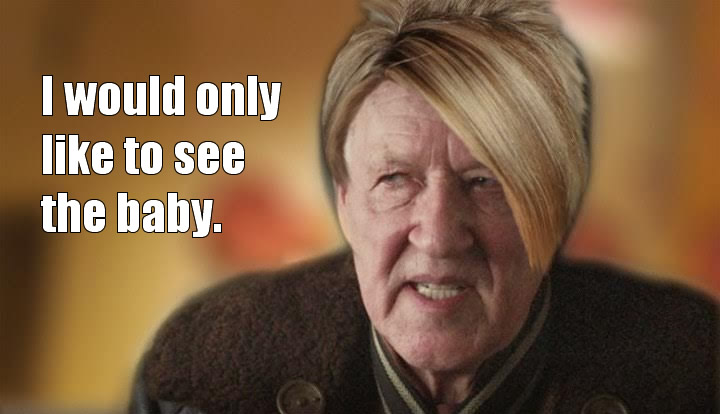
The meme is a picture of a character from the TV show "Orange is the New Black" with a caption "I would not have sex with you if I wanted to be treated like dirt." The character is known for her sarcastic and sassy personality, and the quote is a humorous take on her usual attitude. The meme is likely being used to express frustration or annoyance at being treated poorly.
detailed-analysis (gemma3-27b-vision)
Okay, let's break down this image and its accompanying phrase through the lenses you requested.
Visual Description
The image features a close-up of a woman (the actress Imelda Staunton as Dolores Umbridge from the Harry Potter series). She has pale skin, tightly coiffed blonde hair, and a stern expression. Her face is heavily shadowed, and the lighting has a warm, yellowish tone, creating a slightly unsettling and formal atmosphere. She is wearing a dark, seemingly formal outfit with visible buttons. The composition focuses entirely on her face, emphasizing her expression and drawing the viewer’s attention to it. The image has been formatted as a meme with text superimposed on the top. The phrase "I would only like to see the baby" is featured above the actress's face.
Foucauldian Genealogical Discourse Analysis
The phrase “I would only like to see the baby” when paired with Umbridge’s image, immediately invites a Foucauldian analysis of power and surveillance. The phrase itself is superficially innocuous, appearing as a request for a benign, even sweet, interaction. However, within the context of the Harry Potter narrative, it is deeply menacing.
Umbridge embodies bureaucratic control, disciplinary power, and the insidious enforcement of "normality." Her desire to "see the baby" (referring to Harry Potter as a child) isn’t about affection or concern; it’s about control and classification. It's a desire to scrutinize, categorize, and regulate a perceived deviation (Harry's magical abilities and his potential to disrupt the established order).
A genealogical approach would trace the historical development of this desire for control through surveillance. Historically, the state and other institutions (like families, schools, etc.) have always sought to "see" (monitor, observe, discipline) children to shape them into compliant citizens. Umbridge embodies a particularly brutal form of this, where surveillance is linked to the suppression of difference and the enforcement of a narrow, prejudiced vision of the ideal. The phrase exposes how seemingly gentle requests can be tools of domination.
Critical Theory
From a critical theory perspective, the image exposes the way power operates through seemingly normal social structures. Umbridge is a functionary of a deeply flawed system (the Ministry of Magic). Her desire to "see the baby" is not an individual quirk; it's a manifestation of the institutional logic that prioritizes control over individual freedom and creativity.
The image critiques the ways in which authority figures often mask their oppressive intentions behind a veneer of kindness or concern. Umbridge's politeness is a deliberate tactic to disarm and manipulate those she seeks to control. This critique resonates with broader concerns about the dangers of unchecked authority and the importance of questioning established power structures.
The phrase suggests that even seemingly benign gestures can be rooted in a desire to exert dominance and perpetuate inequality.
Queer Feminist Intersectional Analysis
Considering the character of Umbridge, and the phrase presented, there is a complex intersection of power dynamics at play. While the immediate context relates to magical abilities, the character’s broader motivations reflect a conservative, rigidly defined notion of “normalcy.” She actively suppresses anything that deviates from this narrow standard, including those who are different and those who challenge the status quo.
The desire to "see the baby" can be interpreted as a desire to control and regulate reproductive capacities. Umbridge’s actions can be seen as an attempt to erase alternative ways of being and to reinforce a patriarchal, heteronormative order.
She actively promotes biased and harmful policies which further exacerbate existing power imbalances. Her desire to control and “see” Harry functions as a parallel to the surveillance of marginalized bodies and the attempt to enforce conformity.
Note:
I’ve focused the analysis on the character and the implications of the phrase within the context of the Harry Potter narrative. The meme format itself adds another layer of interpretation, as it invites viewers to apply the phrase to various contexts beyond the original source material.
simple-description (llama3.2-vision)
This meme is an image of a woman with a shocked expression, likely from a TV show or movie. The text overlayed on the image reads: "I would only like to see the baby, not hold it, not change it, not feed it, not nurse it, not bury it."
tesseract-ocr
OCC ee ~ like tosee af Od Te f , A 7