First Seen
2024-04-27T21:01:00.843130+00:00
simple-description (qwen3.5_2b-q8_0)
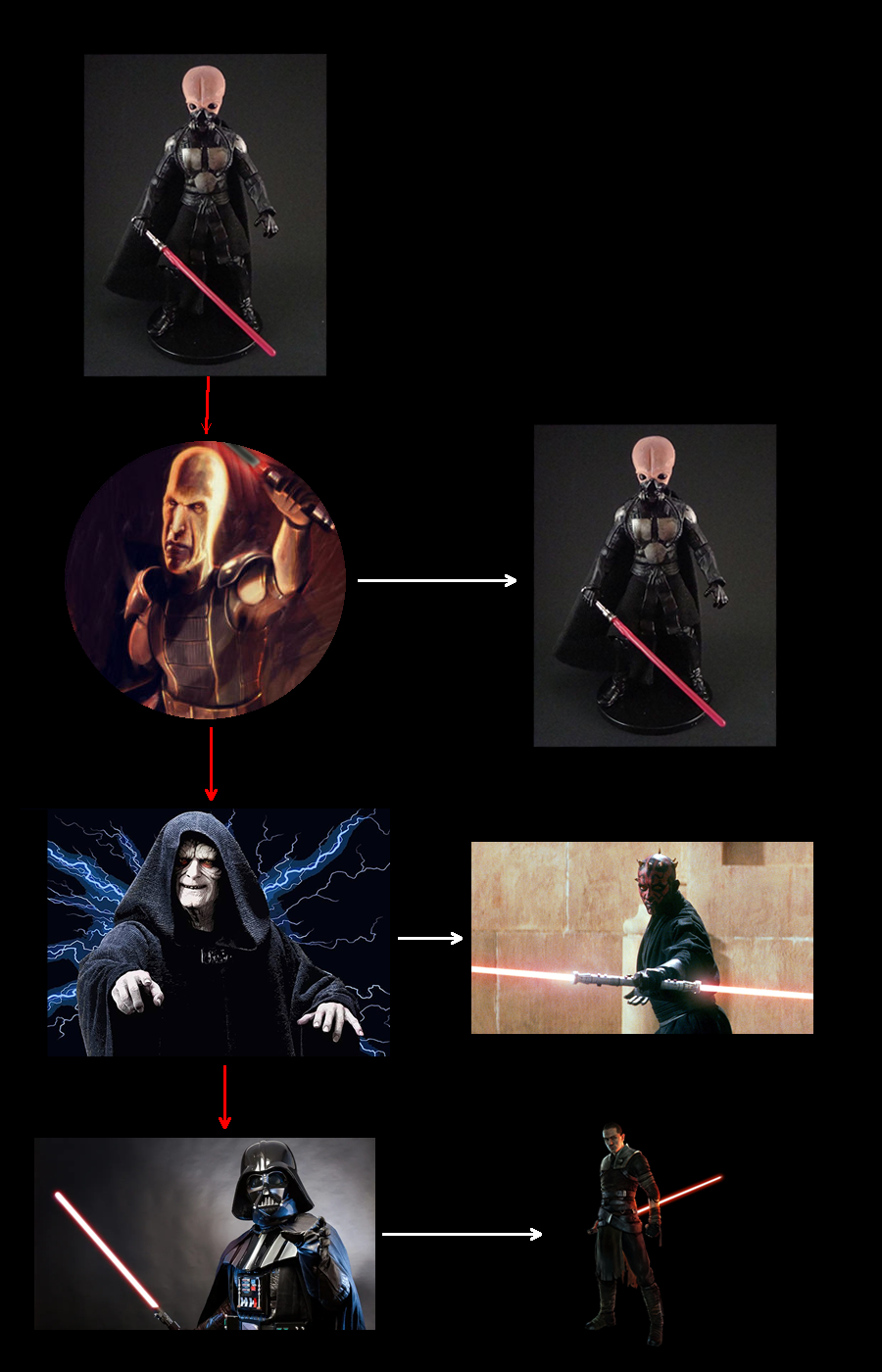
This meme illustrates a "One Last Dance" progression, where a custom "Original Character" (OC) of an alien Sith Lord transforms from a cool, iconic pose into a generic, action-ready stance. The journey begins with the alien Count Dooku and ends with a custom version that surprisingly resembles a regular Star Wars figure. The text visible in the bottom-left image reads "One Last Dance."
simple-description (llama3.2-vision_11b)
The meme is an image of a character from the Star Wars franchise, Darth Vader, but with a twist: his iconic breathing sound effect has been replaced with a sound effect from a different franchise, "DUN DUN DUN" from the TV show "The Office". The image is captioned "Darth Vader's breathing sound effect replaced with 'DUN DUN DUN' from The Office".
detailed-analysis (gemma3-27b-vision)
Okay, let's break down the image and apply those theoretical frameworks where applicable. It's important to note that applying complex theories to a visual representation requires interpretation, and there's room for multiple readings.
I. Visual Description
The image presents a visual genealogy of Sith Lords from the Star Wars universe. It's structured as a descending line, suggesting a lineage or influence. The images depict:
- Darth Plagueis: An older, imposing figure with a visibly decaying or unnatural appearance, depicted in a painted style.
- Darth Sidious (Emperor Palpatine): A cloaked, powerful figure with energy crackling around him, also rendered in a painting.
- Darth Vader: The iconic figure in his black suit and helmet, depicted in a live-action screen capture.
- Darth Maul: A figure with red tattoos, horns, and a menacing gaze depicted as a figure.
- Darth Tyrannus (Count Dooku): A noble-looking figure with a long cloak, presented as a figure.
- Darth Nihilus: A masked figure with a black cape and red lightsaber, presented as a figure.
The progression seems to highlight how power and dark side knowledge are passed down or manifested through successive generations, indicated by the descending arrows. All of the Sith wield red lightsabers, which serve as a symbol of their allegiance to the dark side. The visual format suggests a deliberate construction of a narrative of dark side legacy.
II. Foucauldian Genealogical Discourse Analysis
This image lends itself well to a Foucauldian analysis. The "genealogy" itself is not a neutral depiction of historical descent, but rather a construction of power and knowledge. Here's how:
- Discourse & Power: The image creates a discourse around Sith legacy, reinforcing their "lineage" and emphasizing a specific narrative about the dark side. This narrative legitimizes their actions and presents a constructed history.
- Archaeology of Knowledge: Each figure represents a node in the "archeology" of dark side knowledge. The image suggests that dark side power is accumulated and transformed as it moves through each figure.
- Discontinuity & Rupture: A Foucauldian approach would also focus on what's missing or suppressed in this lineage. Who wasn't included? What aspects of the dark side are excluded from this narrative? The image only shows certain Sith Lords, highlighting an intentional selection process, and implying a constructed narrative, rather than a comprehensive historical account.
- Normalization: By portraying this lineage, the image subtly normalizes the concept of passing down dark side power.
III. Marxist Conflict Theory
We can view the Sith lineage through the lens of class conflict:
- Ruling Class: The Sith Lords represent a ruling class that seeks to maintain power through domination and control, similar to a feudalistic system. They exert their influence over the galaxy, suppressing those who oppose their rule.
- Exploitation: The Sith exploit the fear, anger, and ambition of others to further their own agenda. They use their power to oppress and control the galaxy.
- Class Struggle: The Jedi Order can be seen as the opposition to the Sith, representing a force for justice and equality. The ongoing conflict between the Jedi and the Sith represents a class struggle for control of the galaxy.
- Ideology: The Sith ideology emphasizes the pursuit of power at all costs, reinforcing their dominance and justifying their actions.
IV. Postmodernism
From a postmodern perspective:
- Deconstruction: The image itself is a constructed "truth" – a narrative created for a particular purpose. A postmodern reading would question the authenticity of this lineage, arguing that it's just one interpretation among many.
- Simulation & Hyperreality: The image presents a simplified, idealized version of Sith history. It's a simulation of a lineage rather than a genuine historical record.
- Fragmented Narrative: The image doesn't present a complete, coherent narrative. It's a fragmented series of portraits, leaving gaps and ambiguities.
- Rejection of Grand Narratives: This image can be seen as a rejection of the idea of a single, universal history of the Star Wars universe. It suggests that there are multiple, competing narratives about the dark side.
In conclusion, this image is ripe for theoretical analysis. It presents a constructed narrative of power, lineage, and the dark side. The application of Foucauldian, Marxist, and Postmodern frameworks reveals how this narrative is shaped by power dynamics, social conflicts, and ideological constructions.
tesseract-ocr
Q La EA. ) iS La oe ON . ay DN. al 4 SS Aye i | " S&S on ca rigs i) fn ae
simple-description (llama3.2-vision)
The meme is an image of a character from the Star Wars franchise, Darth Vader, with a series of facial expressions in a comic strip style. The text "I used to be in love with my job" appears above a panel showing Vader's face, followed by a panel showing Vader's face with a "I'm not in love with it anymore" caption. The final panel shows Vader's face with a caption saying "I'm in love with my therapist".