First Seen
2023-05-10T21:03:38+00:00
simple-description (llama3.2-vision_11b)
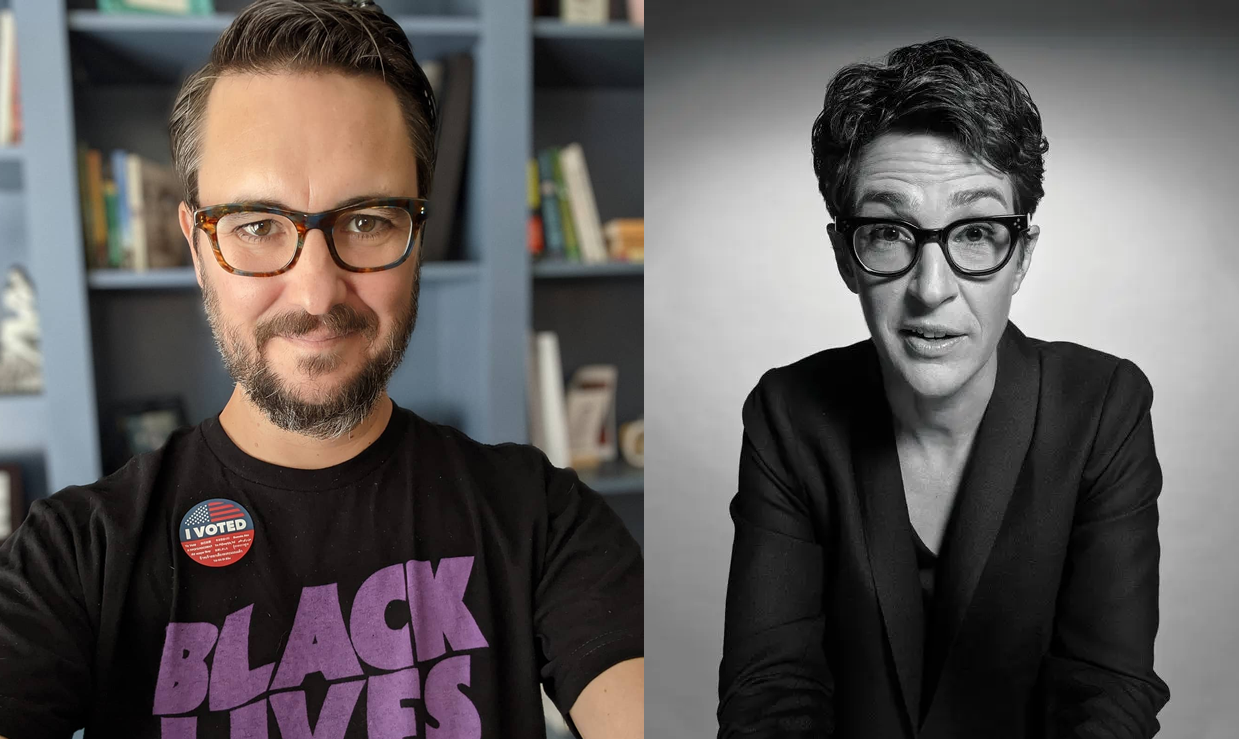
The meme is a split-screen image of a person with a "I Voted" sticker on their shirt, with the caption "I Voted" on the left and "I'm still voting" on the right. The meme is a humorous take on the idea that some people may feel the need to reassert their voting credentials after the election is over. The image is likely a photo of a person with a "I Voted" sticker, but the caption on the right is a play on words, implying that the person is still engaged in the voting process in some way.
detailed-analysis (gemma3-27b-vision)
Okay, here's an analysis of the images, broken down into sections addressing the requested theoretical frameworks, only where applicable. Given the nature of the images – portraits – some of these frameworks will be less relevant than others. I’ll clearly indicate when a section is omitted because the framework doesn’t provide substantial insight.
1. Visual Description
The images are portraits of two individuals, both visibly presenting as white and wearing glasses.
- Left Image: The individual is a man with dark hair and a beard. He is wearing a black t-shirt with the phrase “BLACK LIVES MATTER” prominently displayed in white lettering, alongside a small "I VOTED" sticker. He is positioned in front of a bookshelf filled with books, suggesting intellectual or academic engagement. The lighting is brighter, giving a casual, approachable feel.
- Right Image: The individual is also white, and also wearing glasses. They are shown in a more formal, almost confrontational, pose. They are wearing a dark, structured blazer. The background is a stark, unadorned white, and the lighting is dramatic and focused, creating strong shadows and a sense of intensity.
2. Foucauldian Genealogical Discourse Analysis
This framework is relevant because the images can be seen as constructing specific discourses around identity, activism, and power.
- Discourse & Power: The "BLACK LIVES MATTER" t-shirt is a performative statement, enacting a specific discourse of solidarity and anti-racism. Foucault would be interested in how this phrase has become a symbol, how it’s circulated, and the power relations it signifies. The individual wearing it becomes a subject within that discourse. The starkness of the other portrait emphasizes the subject's authority and control.
- Genealogy of Activism: A genealogical approach would trace the history of the phrase "BLACK LIVES MATTER," its origins in the African American experience, its emergence as a hashtag and movement, and how its meaning has evolved over time. The image captures a moment in that historical process.
- Subjectivity & Normalization: The act of wearing the t-shirt and displaying the "I VOTED" sticker is a performance of civic engagement and liberal values. Foucault would explore how these performances contribute to the normalization of certain behaviors and beliefs, and the ways in which individuals are constituted as subjects within these systems.
3. Critical Theory
Critical Theory, particularly as related to the Frankfurt School, is applicable in analyzing the images as representations of ideological positions.
- Ideology & Representation: The images can be read as representing specific ideological positions. The left image appears to represent a progressive, liberal ideology – supporting the Black Lives Matter movement and participating in the electoral process. The right image is stark and focused, and can be read as emphasizing power, authority, and potentially a more skeptical or critical stance towards established systems.
- Culture Industry: The images could be analyzed as part of the “culture industry” – the production and dissemination of cultural artifacts that shape our understanding of the world. The portraits are curated representations designed to convey specific messages.
- Hegemony: The left image might be seen as reinforcing the hegemonic narrative of liberal activism – the idea that supporting social justice movements can be achieved through individual actions like voting and wearing symbolic clothing. The right image challenges conventional visual expectations, and by doing so, critiques dominant norms.
4. Marxist Conflict Theory
While applicable, the framework offers limited insightful analysis. The images don’t inherently represent class struggle, though the context of the Black Lives Matter movement does have clear connections to economic inequality and systemic oppression.
- Power Dynamics: The images can be seen as representing different positions within power structures, but it's not immediately clear how those positions relate to class conflict. The left image suggests solidarity with marginalized groups, while the right image's formality implies a certain degree of privilege or authority.
- Ideological Struggle: The images can be seen as part of a larger ideological struggle – a competition between different beliefs and values. The Black Lives Matter movement challenges existing power structures, while the right image may represent a more conservative or resistant viewpoint.
5. Postmodernism
Postmodern analysis could focus on the images as constructed simulations and the instability of meaning.
- Simulation & Hyperreality: The images are themselves simulations of individuals. They are carefully constructed representations that don't necessarily reflect the "true" selves of the subjects. This aligns with Baudrillard's concept of hyperreality, where representations become more real than reality itself.
- Deconstruction of Meaning: A postmodern approach might seek to deconstruct the "meaning" of the images, challenging any fixed interpretations. What does it mean to wear a "BLACK LIVES MATTER" t-shirt? Is it genuine solidarity, performative activism, or something else entirely?
- Fragmented Identity: The images can be seen as reflecting the fragmented and unstable nature of identity in the postmodern world. The subjects are not presented as unified or coherent individuals, but rather as collections of signs and symbols.
6. Queer Feminist Intersectional Analysis
This framework is only tangentially applicable without more context about the individuals.
- Intersectionality: The Black Lives Matter movement is inherently intersectional, recognizing the interconnectedness of race, gender, class, and other forms of oppression. The left image signals an awareness of this interconnectedness, but doesn't necessarily demonstrate a nuanced understanding of it.
- Gender Performance: Both individuals are presenting in ways that conform to traditional gender norms. However, a queer feminist analysis could explore how those performances are constructed and the power dynamics they reinforce.
- Challenging Norms: The starkness and intensity of the right image could be interpreted as a rejection of conventional visual norms, potentially aligning with a queer feminist aesthetic that challenges dominant power structures.
Important Considerations:
- Context Matters: This analysis is based solely on the images themselves. Knowing the identities of the individuals, their backgrounds, and the context in which these images were created would provide a much more nuanced and informed analysis.
- Multiple Interpretations: There are multiple valid interpretations of these images. The frameworks I've used are tools for understanding, not definitive answers.
I hope this detailed breakdown is helpful! Let me know if you'd like me to elaborate on any particular aspect or explore other theoretical frameworks.
simple-description (llama3.2-vision)
The meme features a split-screen image of two people. On the left is a photo of a man with a serious expression, and on the right is a photo of a woman with a similar expression. The text "I'm not arguing, I'm just explaining why I'm right" appears at the top of the image.
tesseract-ocr
en flgmmmms oo ‘ = y GaN i (ge. ; ; a. aa a | : y > = — 5 ero ie 7 } ~~, —_ i rai | Ee. s