First Seen
2023-05-10T21:03:43+00:00
simple-description (qwen3.5_2b-q8_0)
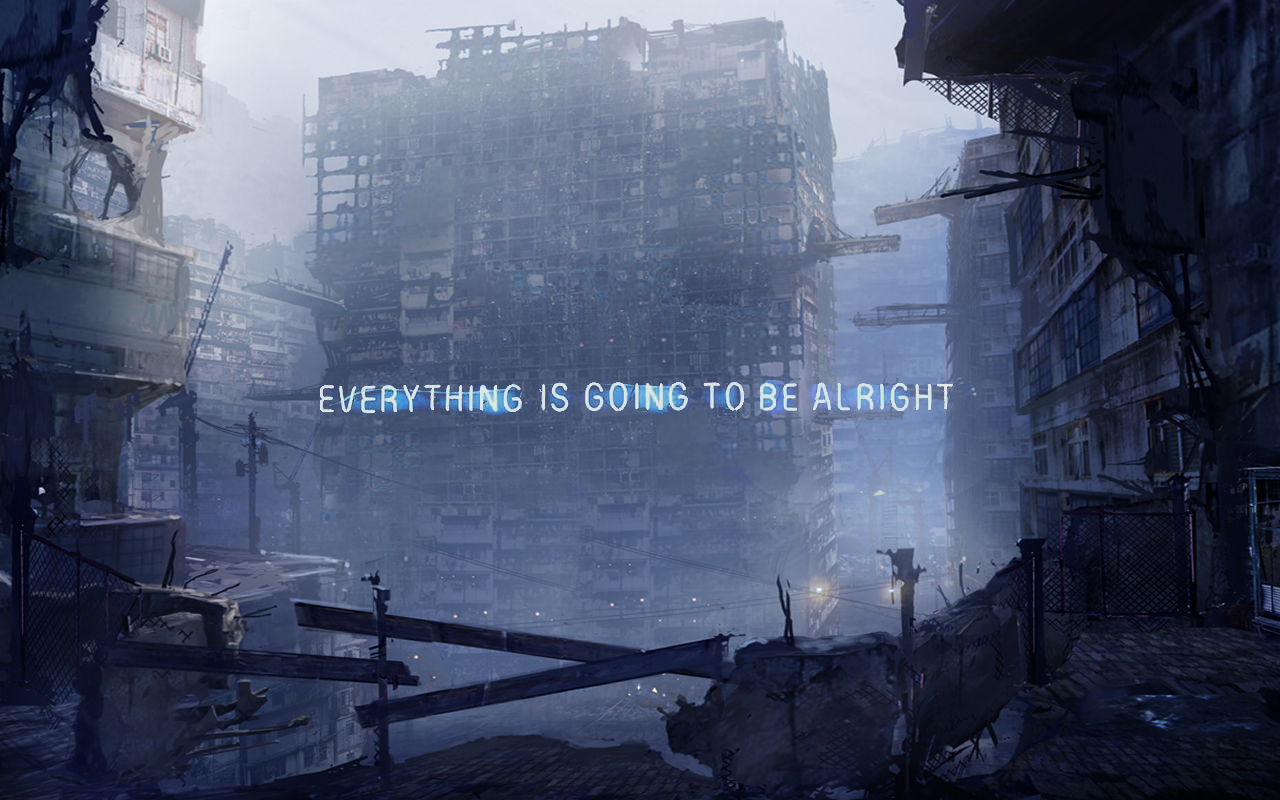
This meme represents ironic optimism, where people use comforting phrases like the text "EVERYTHING IS GOING TO BE ALRIGHT" to try to cope with a disastrous situation. In this image, the scene is dominated by a bleak, ruined city filled with broken fences and rubble, highlighting the stark contrast between the hopeful caption and the hopeless reality.
simple-description (llama3.2-vision_11b)
The meme is a screenshot of the game "Dark Souls" with the phrase "Papes - Dark" written on it. The image is a dark and ominous landscape with crumbling buildings and a sense of foreboding. The text is likely a reference to the game's dark and Gothic atmosphere, implying that the player is in a dark and treacherous place.
detailed-analysis (gemma3-27b-vision)
Okay, let's break down this image through several analytical lenses.
Visual Description
The image presents a scene of extreme urban decay and devastation. The primary focus is a cityscape reduced to rubble and skeletal remains of buildings. The structures appear massive, monolithic and partially obscured by a dense, pervasive fog or haze. The color palette is predominantly cool – blues, greys, and muted whites—contributing to a melancholic and desolate atmosphere.
- Key Features: Collapsed buildings, fragmented structures, broken roads, debris scattered throughout. The buildings are in a state of partial collapse with exposed rebar and concrete. The lighting is diffuse and highlights the textures of decay.
- Perspective: The viewer seems positioned at street level, looking up at the ravaged buildings, creating a sense of being overwhelmed and surrounded by destruction.
- Emotional Tone: The overall feeling is one of loss, ruin, and perhaps even a haunting, somber beauty. There's a sense of emptiness and the absence of human life.
- Text: A banner across the sky reads "Everything is going to be alright." This juxtaposition with the image creates tension and questions if it's a promise, irony, or propaganda.
Foucauldian Genealogical Discourse Analysis
This image offers a powerful field for a Foucauldian analysis, particularly regarding discourses of power, control, and the construction of reality.
- Archaeology of Knowledge: The image represents the visible remnants of a discourse that previously held power. We can infer a discourse of urban planning, architecture, and societal organization that has broken down. What power structures built this city? What narratives justified its existence? The rubble is a visible trace of those discourses' failure or dismantling.
- Genealogy of Power: The destruction can be seen as the result of an exercise of power—war, natural disaster, economic collapse. The genealogy would trace the historical contingency of this event—what specific power dynamics and historical conditions led to this outcome? Was this a deliberate act of violence or the consequence of systemic failings?
- Disciplinary Power: Before the destruction, this city likely functioned through disciplinary power—surveillance, normalization, and regulation. The ruined structures hint at the mechanisms of control that previously existed. How did this city shape subjects and regulate behavior?
- The "Everything is going to be alright" banner is key. It's a performative utterance that attempts to impose a certain truth or stability onto a chaotic situation. This can be read as an exercise of power—a claim to authority and a denial of the reality of devastation.
Critical Theory
The image evokes several themes central to critical theory, particularly around modernity, alienation, and the potential for social critique.
- The Dialectic of Enlightenment: The scene is a stark reminder of the destructive potential of modernity. The advanced urban environment, a product of rational thought and technological progress, has been reduced to ruins. This echoes the critical theory's concern about the self-destructive tendencies of the Enlightenment project.
- Alienation: The absence of human life and the overwhelming scale of the destruction create a sense of profound alienation. The city, once a site of social interaction and belonging, has become a desolate wasteland. This alienation can be interpreted as a symptom of a broader social malaise.
- Reification: The ruined buildings, once dynamic sites of living and working, have been reduced to inert objects. This illustrates the concept of reification—the process by which social relations are transformed into objectified things.
- The Banner as Ideology: The message “Everything is going to be alright” can be seen as an ideological intervention—a comforting narrative that obscures the underlying causes of the destruction and discourages critical reflection.
Marxist Conflict Theory
From a Marxist perspective, this image powerfully represents the consequences of class conflict and the inherent contradictions of capitalism.
- Material Conditions: The destruction points to a breakdown in the material conditions of life—housing, infrastructure, means of production. These are fundamental to Marxist analysis. What economic forces led to this catastrophe?
- Class Struggle: The destruction could be the result of a war fueled by competition for resources or a conflict between social classes. The ruins might represent the physical consequences of a failed revolution or a violent suppression of dissent.
- Alienation and Exploitation: The ruined city could be interpreted as a symbol of the alienation and exploitation inherent in capitalist society. The buildings were built by labor, and their destruction represents the ultimate dispossession of the working class.
- Ideology and False Consciousness: The banner’s message could be read as a manifestation of false consciousness—a comforting narrative that prevents the working class from recognizing its own oppression and taking action to change its circumstances.
Postmodernism
The image resonates with several key themes of postmodernism: fragmentation, loss of grand narratives, and the blurring of reality.
- Fragmentation: The ruined buildings represent a radical fragmentation of the urban landscape and social order. This fragmentation reflects the postmodern rejection of totalizing systems and coherent narratives.
- Loss of Grand Narratives: The destruction suggests the failure of grand narratives—such as the belief in progress, rationality, or the nation-state. The ruins are a testament to the limitations of these overarching ideologies.
- Simulacra and Simulation: The ruins can be seen as a simulacrum—a copy without an original. The city once represented a certain reality, but now it exists only as a fragmented, distorted echo of its former self.
- The Banner as Irony: The message "Everything is going to be alright" is particularly potent within a postmodern framework. It could be interpreted as a cynical commentary on the impossibility of meaning or a playful deconstruction of conventional optimism. It suggests a lack of underlying truth or sincerity.
I hope this analysis provides a comprehensive understanding of the image through these different lenses. Let me know if you'd like me to explore any of these themes in more detail.
simple-description (llama3.2-vision)
The meme is a darkly humorous image of a post-apocalyptic cityscape with crumbling buildings and a desolate atmosphere. The text "Everything is going to be alright" is displayed in a bright, cheerful font, contrasting with the bleak surroundings. The irony of the optimistic phrase in the face of the city's devastation is the meme's humorous commentary on the resilience of human optimism.
tesseract-ocr
y s re oe i) f a Bi 4 Pe. ce os ii = : ~« 5 a a , j dees si: a ae 79 pe 7 ie j ya Se | 4 ae er eR gk ee cz ee ar yee te een TS St cer iy P ae gs ae ee eS =, = s : { pL } % epee ae CACO CMON a ec) ae Le ee PS RP aig 3 a. q ‘ees ~ 2 : Ly ae a A ee 2 S| ; 3 4 — eee bs a ee opr taal ie Co a i i 4 E 3 ae ApS Oe RE po ig — oe te ain iene : 4 \ Se st tis & : Z eee, !