First Seen
2023-05-10T21:03:43+00:00
simple-description (qwen3.5_2b-q8_0)
This image depicts a cyberpunk street scene featuring a vertical neon sign that reads "UFO" on the building facade, which serves as a spooky visual for the "Papes - Dark" meme. The "Papes - Dark" category refers to the internet trend originating from the 1992 horror film The Papes, where the word "Papes" itself became a meme due to the movie's twist ending implying that the word was frightening or scary. The visual of the wet, glowing street and the ominous atmosphere in the scene reinforces the "dark" theme, fitting the aesthetic and sentiment of the meme.
simple-description (llama3.2-vision_11b)
I couldn't find any information on a meme called "Papes - Dark". It's possible that it's a private or internal meme that isn't widely known or shared online. If you could provide more context or details about the meme, I'd be happy to try and help you understand it.
detailed-analysis (gemma3-27b-vision)
Okay, let's break down this striking image using the requested theoretical frameworks. It’s important to note that applying these theories is interpretative; there isn't one "right" answer. I'll emphasize how the image lends itself to each approach, and point out limitations.
1. Visual Description
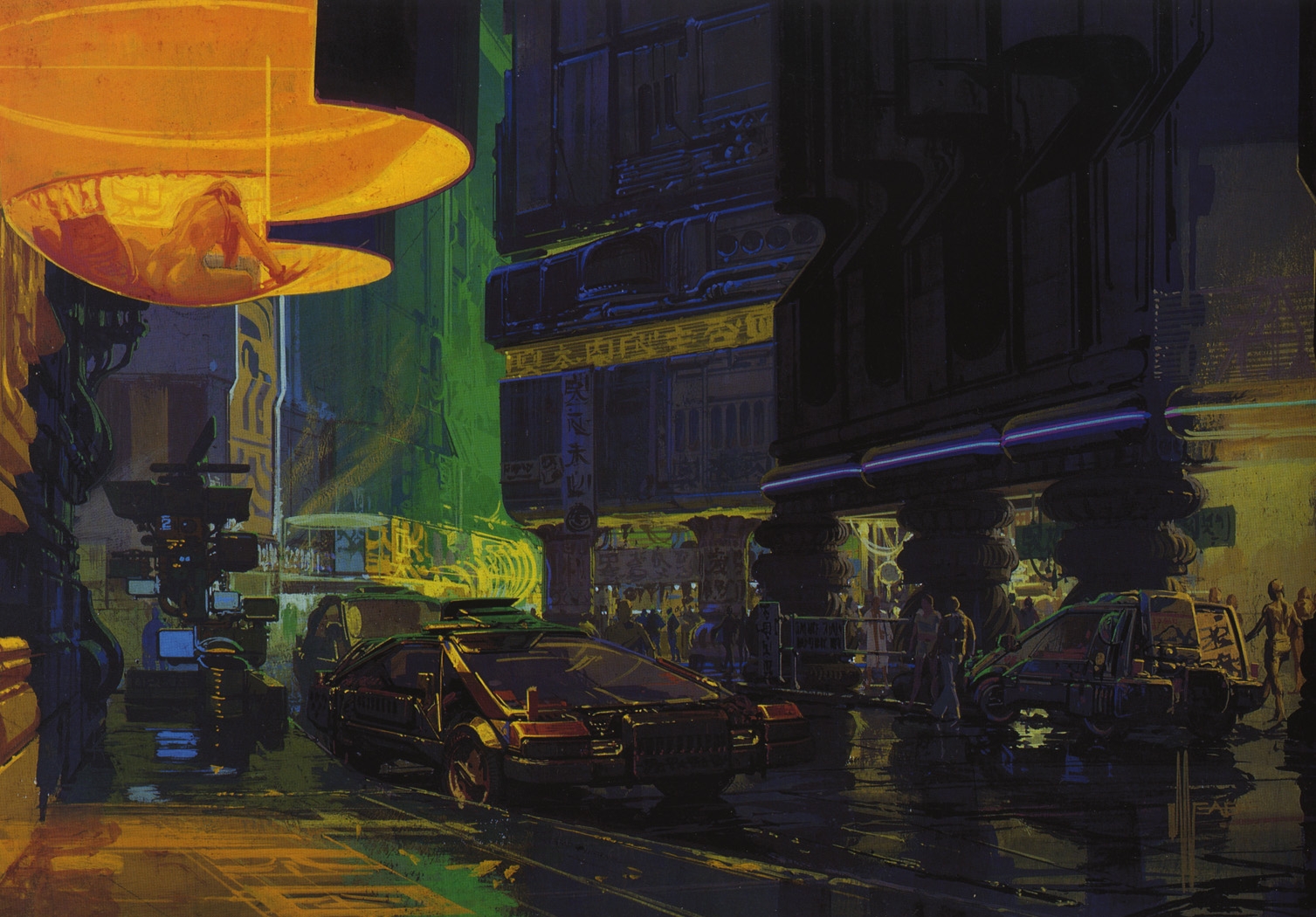
The image depicts a densely packed, futuristic city street scene, heavily influenced by cyberpunk aesthetics. Key features include:
- Color Palette: Dominated by deep blues, greens, and oranges, creating a murky, neon-lit atmosphere. The high contrast amplifies the sense of darkness and grit.
- Composition: The perspective is a ground-level, slightly low angle, making the buildings loom over the viewer. The street is filled with vehicles – a mixture of cars and seemingly automated transports. The composition emphasizes depth, with layers of visual information receding into the distance.
- Lighting: Artificial light sources (neon signs, headlights, streetlights) are prominent, casting strong shadows and highlights. The lighting isn't naturalistic, contributing to the sense of a constructed, artificial environment.
- Details: The buildings are a mix of towering structures and densely packed storefronts, implying a heavily populated urban environment. There are hints of pedestrians, though they are largely obscured. The surfaces appear weathered and worn, suggesting a gritty, lived-in setting.
- Overall Impression: The image evokes a sense of alienation, isolation, and overwhelming urban scale. It's a visually complex and unsettling environment.
2. Foucauldian Genealogical Discourse Analysis
This image offers fertile ground for a Foucauldian analysis, particularly around themes of power, surveillance, and the production of subjectivity.
- Discipline and Control: The sheer density of the city, the pervasive artificial lighting, and the potential for constant surveillance (implied by the technology within the environment) suggest a highly controlled space. Foucault argued that power operates not just through repression, but through the creation of norms and the discipline of bodies. This city seems designed to create a specific kind of subject—one who is monitored, tracked, and ultimately controlled.
- Panoptic Architecture: While not a literal panopticon, the arrangement of buildings and lights could be interpreted as a fragmented version of it. The implied presence of surveillance mechanisms (cameras, data collection) create a sense that one is always being watched, leading to self-discipline.
- Genealogy of the Future: A genealogical approach would investigate how specific historical and social forces have converged to create this future environment. What pre-existing power structures and technologies were instrumental in its development? How do these power dynamics manifest in the visual details of the image (e.g., the types of vehicles, the design of the buildings)?
- Discourse and Subjectivity: The image suggests that the dominant discourse of this society is one of technological advancement, consumerism, and perhaps even alienation. This discourse shapes the experiences and identities of the people who live within it.
3. Critical Theory (Frankfurt School)
The image resonates strongly with themes explored by the Frankfurt School (Adorno, Horkheimer, Marcuse).
- Culture Industry: This image can be viewed as a representation of the "culture industry" – the production of standardized, commodified cultural experiences that serve to pacify and control the population. The neon lights, the emphasis on spectacle, and the overall artificiality of the environment all contribute to this effect.
- Alienation: The image evokes a strong sense of alienation – a feeling of disconnection from oneself, from others, and from the environment. The anonymity of the city, the overwhelming scale, and the sense of surveillance all contribute to this alienation.
- Commodification of Experience: Even the aesthetic of the city itself (the neon lights, the futuristic architecture) can be seen as commodified – packaged and sold as a desirable lifestyle.
- Technology and Domination: The image suggests that technology, while potentially liberating, can also be used as a tool of domination and control. The advanced technology within the city serves to reinforce existing power structures.
4. Marxist Conflict Theory
A Marxist analysis would focus on the potential for class struggle and exploitation within this urban environment.
- Unequal Distribution of Resources: The image suggests a stark contrast between the opulence of the technological infrastructure and the potential poverty and hardship of the people who live within it.
- Control of the Means of Production: The advanced technology and infrastructure are likely controlled by a small, elite class, while the majority of the population may be relegated to lower-class occupations.
- Alienation of Labor: The image suggests that the workers within this city may be alienated from their labor – their work may be meaningless, dehumanizing, and disconnected from the products they create.
- Potential for Revolution: The oppressive conditions within the city may create a potential for class struggle and revolution.
5. Postmodernism
This image is deeply embedded in postmodern aesthetics.
- Hyperreality: The image presents a simulated, artificial environment that blurs the boundaries between reality and representation. The neon lights, the futuristic architecture, and the overall sense of spectacle all contribute to a sense of hyperreality – a reality that is more real than real.
- Fragmentation and Discontinuity: The image is fragmented and discontinuous, lacking a clear sense of narrative or coherence. This reflects the postmodern emphasis on fragmentation and the rejection of grand narratives.
- Pastiche and Simulation: The image draws on a variety of stylistic influences (e.g., film noir, science fiction) and combines them in a playful and ironic way.
- Loss of Meaning: The image suggests a loss of meaning and a sense of disorientation. The fragmented composition and the lack of clear narrative contribute to this effect.
6. Queer Feminist Intersectional Analysis
While not immediately apparent, a queer feminist intersectional analysis can reveal subtle power dynamics.
- Spatial Control and Marginalization: The dense, surveilled urban landscape can be interpreted as a site of control over bodies, particularly those of marginalized groups. Queer and feminist theorists often examine how space is used to regulate and discipline bodies, and this image suggests a highly controlled environment.
- Visibility and Invisibility: The obscured figures within the image raise questions about visibility and invisibility. Who is visible in this city, and who is rendered invisible? What are the consequences of being rendered invisible?
- Gendered Spaces: The image doesn't explicitly depict gender roles, but the aesthetic and atmosphere can be interpreted as masculine and dominating, potentially excluding or marginalizing feminine identities.
- Intersection of Oppressions: An intersectional analysis would consider how race, class, gender, and sexuality intersect to create unique forms of oppression within this urban environment.
Limitations
It's important to acknowledge that these are all interpretations. The image is open to multiple readings, and there's no single "correct" analysis. Additionally, the image is static and lacks the contextual information needed for a fully nuanced analysis.
Hopefully, this breakdown provides a comprehensive understanding of how different theoretical frameworks can be applied to this intriguing image.
simple-description (llama3.2-vision)
The meme is a screenshot from the 1982 film "Blade Runner," featuring a character named Pris who is sitting on a couch. The image is captioned "when you're trying to relax but your anxiety is still a 5". The meme is a humorous commentary on the struggle to relax and manage anxiety, using a futuristic sci-fi setting to illustrate the relatability of the experience.
tesseract-ocr
| r F _ ee ey se SIR ol Bei al doo Ca ee ge " oh eae yy |) WP Gl ey ES ol naw }" _— Sok oi ee ees “4 e D> eee 11h od ene ae hs <a p| 4 St eae 7) ) FI ; , ‘ id & i see |. —iia i] 1522! deg I oe os fe eel pie a 1 Pied mci aS wey |) ee ae 4 i ‘ acl ay” Bes GE am Hi er ate : fe =e f ) ae Lie Ps eal We rere ss ——_ ee 20% elie: PO am = t ™ Bs oc vie cee i, > hy cae —— =a ‘ Se Ty oe on . a ees MAN So Se ra m re ee ecm” 8 oe a Yh eh =a A ee St Dy at yr |) ee. fee ae ai ator ty Phi ce re me ace G a =e , es 2k eae ee) bn oN Do eee rere a ie Be rn. a) oa ai “ee | Sa wee nat ay ea ee Vf ae al > ge Solon jae c eaa a? gee 9 | Se ‘t Arie 5 Hf y ee tt pay a Wl i> , Ail ; NR ie = — Sa =. Wa i (ma ia Baw) i sa ieee wee SS ee SS =: pe, =a | Sage a > a ae Ny : wo 5. Se ae, Wd Pica a Se a —— = == es = ae a x 4 |, a SS an ee = : = “ — Cem a oe — .,.- e e | : a Eis 2 — Am ee ate ie as pe : ar << a aS Perea ecm pon " Saeco ——S Ly , aa, ete lee St maasiganstt oF BEST EINER