First Seen
2023-05-10T21:03:43+00:00
simple-description (qwen3.5_2b-q8_0)
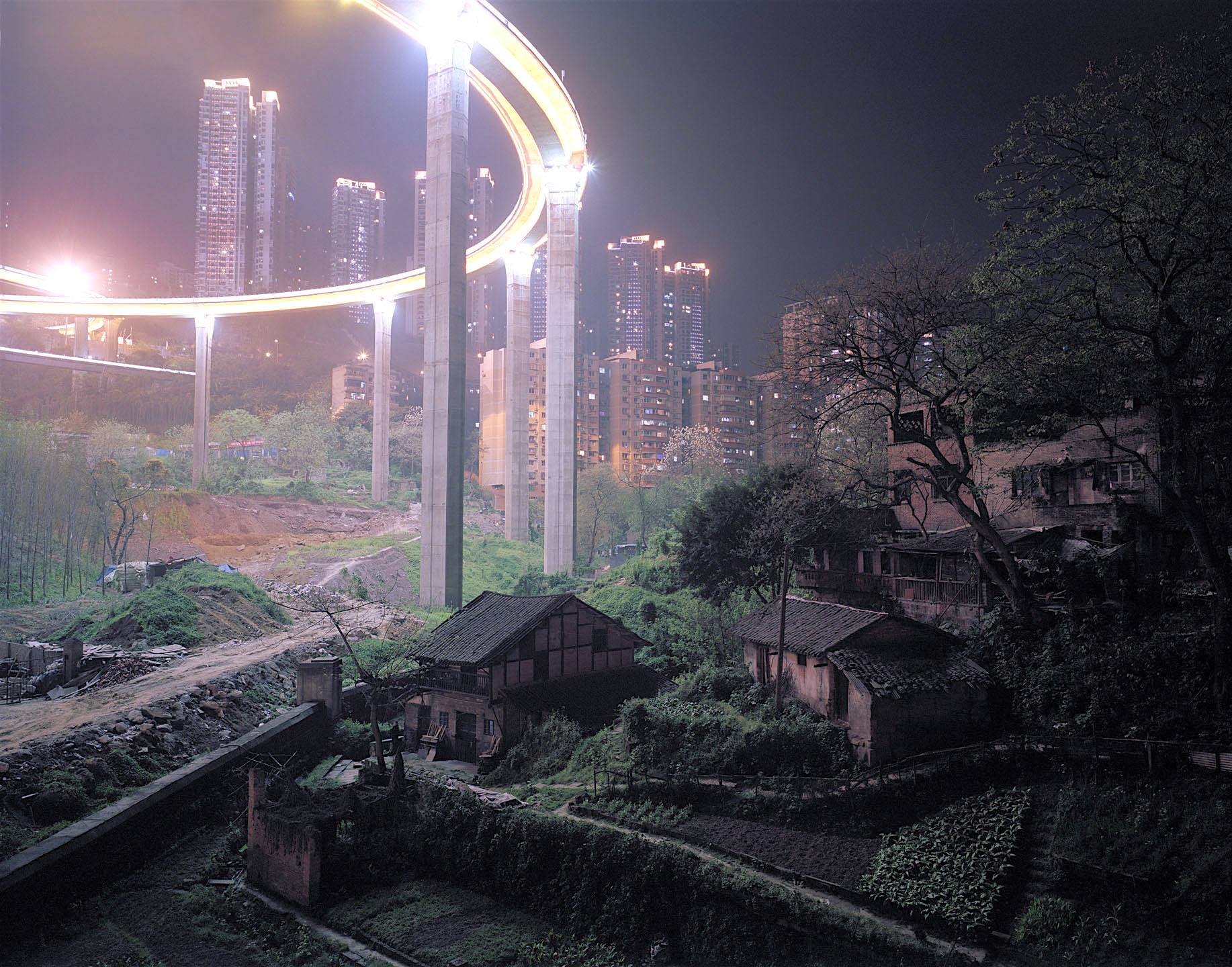
This meme presents a moody, nocturnal scene that embodies the 'Dark' aesthetic through a high-contrast composition. In the foreground, the visual is dominated by weathered, decaying brick houses that sit in the shadow, while a massive, brightly lit highway and bridge loom heavily in the distance. There is no text visible in the image.
simple-description (llama3.2-vision_11b)
The meme is an image of a dark and abandoned-looking street with a few buildings and a road in the foreground, with a large, ominous-looking tree in the background. The image is captioned "Papes - Dark". The meme is likely referencing a popular internet meme or joke about the "Papes" meme, which is a humorous and often absurd reference to something mundane or ordinary.
detailed-analysis (gemma3-27b-vision)
Okay, let's break down this compelling photograph with the requested theoretical lenses. It's a complex image, so each section will attempt to tease out how relevant concepts apply.
Visual Description
The image presents a stark juxtaposition of urban development and what appears to be older, rural or working-class housing. The scene is bathed in the artificial light of a modern, elevated highway system that loops and rises between towering, illuminated skyscrapers. This highway structure dominates the upper portion of the frame, appearing almost alien in its futuristic design.
Below, the terrain descends into a dense, shadowed hillside covered in trees and vegetation. Scattered amongst the greenery are small, older dwellings—simple, somewhat dilapidated wooden buildings. The lighting down below is minimal, creating a strong contrast with the bright, glowing structures above. There is a visible excavation or construction site in the foreground, suggesting further development is encroaching upon this older settlement. The overall effect is one of dramatic visual division, highlighting a strong sense of class, technological, and spatial disparity. The perspective is elevated, as if the photograph is taken from a position overlooking the entire scene.
Foucauldian Genealogical Discourse Analysis
This image lends itself well to a Foucauldian reading, exploring the discourse of progress and power. The highway and skyscrapers aren't merely structures; they represent a discourse of modernity, technological advancement, and economic growth. A genealogy would trace the historical construction of this discourse.
- Power/Knowledge: The highway represents a shift in power—the power to move people and goods efficiently, to control space, and to define what constitutes "progress." This power is coupled with knowledge—engineering, urban planning, and economic theories that justify and enable such developments.
- Disciplinary Power: While not explicitly visible, the highway system implies surveillance and control. It dictates routes, organizes movement, and contributes to a broader network of control.
- Normalization: The image suggests that this kind of disparity – ultra-modern structures looming over decaying older settlements – is becoming normalized. The discourse of “development” frames this as inevitable, or even desirable, glossing over the social costs.
- Archaeology: We can trace the "archaeology" of this landscape – the layers of history revealed in the contrast between the old settlements and the new infrastructure. The highway doesn't just build on the old; it erases its narratives.
Critical Theory (Specifically, Frankfurt School/Adorno and Horkheimer)
The image evokes themes of the "culture industry" and the spectacle, as understood by the Frankfurt School.
- Commodification & Reification: The sleek, modern structures can be seen as embodiments of commodification – everything is measured in economic value. The older dwellings are devalued, treated as obstacles to progress rather than homes or communities.
- Pseudo-Individualization: While appearing different, both the modern and old settlements serve the same overarching system. The towers accommodate those who can afford them, and the lower dwellings serve as a place for those displaced by such ‘progress’.
- The Spectacle: The bright lights and imposing scale of the highway and skyscrapers create a spectacle—a surface-level display of power and wealth that distracts from underlying inequalities. It's a visual assertion of dominance, obscuring the human cost of development.
- Loss of Authenticity: The photograph hints at a loss of authentic community and place. The older dwellings, likely inhabited by people with deep roots in the area, are overshadowed and threatened by the impersonal forces of modernization.
Marxist Conflict Theory
This image is a potent visual representation of class conflict.
- Base & Superstructure: The highway and skyscrapers represent the material base of society – the economic forces driving development. The older settlements represent the superstructure—the social and political systems that reinforce these economic forces. The visual dominance of the upper structures signifies the dominance of the ruling class.
- Exploitation & Alienation: The image hints at the exploitation of the working class or marginalized communities. Their homes and livelihoods are threatened by the demands of economic growth. They are alienated from the benefits of this growth, existing in the shadows of the new structures.
- Class Struggle: The visual juxtaposition suggests an ongoing struggle between those who benefit from development and those who are displaced or marginalized by it. The highway could be seen as a physical manifestation of power relations, dividing and separating classes.
- False Consciousness: The spectacle of modernity (the lights, the scale) might contribute to "false consciousness"—the idea that people are misled into accepting the existing system, even if it’s detrimental to their interests.
Postmodernism
Postmodern theory can be applied to this image in several ways.
- Deconstruction of Grand Narratives: The image challenges the "grand narrative" of progress. The juxtaposition of the old and new suggests that progress isn't linear or universally beneficial. It exposes the contradictions and costs associated with modernization.
- Fragmentation & Hybridity: The image depicts a fragmented landscape—a collision of different eras, architectural styles, and social classes. This fragmentation can be seen as a characteristic of postmodern society.
- Simulation & Hyperreality: The bright lights and imposing scale of the highway and skyscrapers might create a sense of hyperreality—a simulated experience that obscures the underlying reality of inequality and displacement.
- Loss of Meaning: The image can be interpreted as reflecting a loss of traditional values and a sense of rootlessness in a rapidly changing world.
Queer Feminist Intersectional Analysis (This is the most challenging to apply directly, but here's a consideration)
While not explicitly visible, a Queer Feminist Intersectional analysis can offer further layers of understanding.
- Spatial Justice: The image raises questions about spatial justice—who has access to safe, healthy, and dignified living spaces? The image suggests that certain communities are marginalized and displaced in the name of progress.
- Intersectionality of Oppression: The residents of the older dwellings may face multiple forms of oppression—class-based discrimination, racial or ethnic marginalization, gender inequality, and potentially other factors.
- Displacement & Vulnerability: Displacement disproportionately affects marginalized groups, increasing their vulnerability to poverty, violence, and other forms of harm. The image can be read as a visual representation of this vulnerability.
- Challenging Normative Spatial Arrangements: The image challenges the normative spatial arrangement that prioritizes modern development over traditional communities. It asks us to consider alternative ways of organizing space that are more inclusive and equitable.
This is, of course, just one interpretation of the image. The beauty of art is that it can be viewed through many different lenses, and each lens reveals new layers of meaning. Let me know if you’d like me to delve deeper into any particular theoretical framework.
simple-description (llama3.2-vision)
This meme is an image of a cityscape with a massive, curved highway that looks like a giant roller coaster. The image is captioned "when you finally understand the traffic in [city name]". The meme is likely poking fun at the notorious traffic congestion in a specific city, implying that it's so bad that even the highway looks like a roller coaster.
tesseract-ocr
a , Soe eee 5 . ‘oy SEES Dee a ag. : : 2a . os ER oS Nae i ‘ ea : j { oth Ce Sele PEE Ty REM IOS ae j EUV se ace ge ei ac eg ese : | 5 wemreee "| (eee heat EET a Pips . . la ie o © ore at = ie eS bs Res.) : } Le eS ee i et [EEE © cee Soa ae pact ee ae US ae b ee Se ee cies ae Be ee cs oe Se) eee pe (SRF cue Seo ape ses iy oe i oe Crea fc ee 4 “e ' : we iF Ne ee : i os 7 Eee A ee Sas Beat ates aa aT re 4 Wigs. ee ae ase - a eee ge \\ 4 TE ina aed ie So ae ; ‘eee |e Yar sepa iba , Zo oman eat? | = e bee A Ns 8 Meier ae e| = : ax 48 ee eS : Nee — B Pe VINA ee - Seba od jg . r q ss = GOR a Wclsxf. i S. : * = is ee ee tiers eg eel TA ean esa Saya oe | gi se oY SRR ET apt aa eet co ee é —— Cope erane! Same a. iy on bo PPE CRETE UN ci aE 3 pe eg a a) EZZ ie ig Oe SL : ee ee Oe See 2. Zz a Se a eee "Pai f Sen A ia OC Eee eee CO pe ie ee 2 = 4 git eo << O Pe Pa TG sonia Wee ee races aS ecceme S 2 . HK} ‘ Bt nS ie ee ee ‘e Nh Oe a i : eee ie ae eee ge a! j be ; oe ee ee oh : ee ee ‘ ge eS sels, ee Maa gees | = eee ; er] ji Fae ae : ; : = { SEF par at % —_ & = mint ace EE gh Oe wae a ue a j Peo a a a ee eee ws : et OE ee Oe ores fie nee . Besse are = ey Be ES me : ag ee ER SE See > BS ee erent erd a ans Sie pes ag aes ; , Me PE " ee, f i : : : g i .. Uteeig Hea peertg 2 cee