First Seen
2023-05-10T21:03:43+00:00
simple-description (qwen3.5_2b-q8_0)
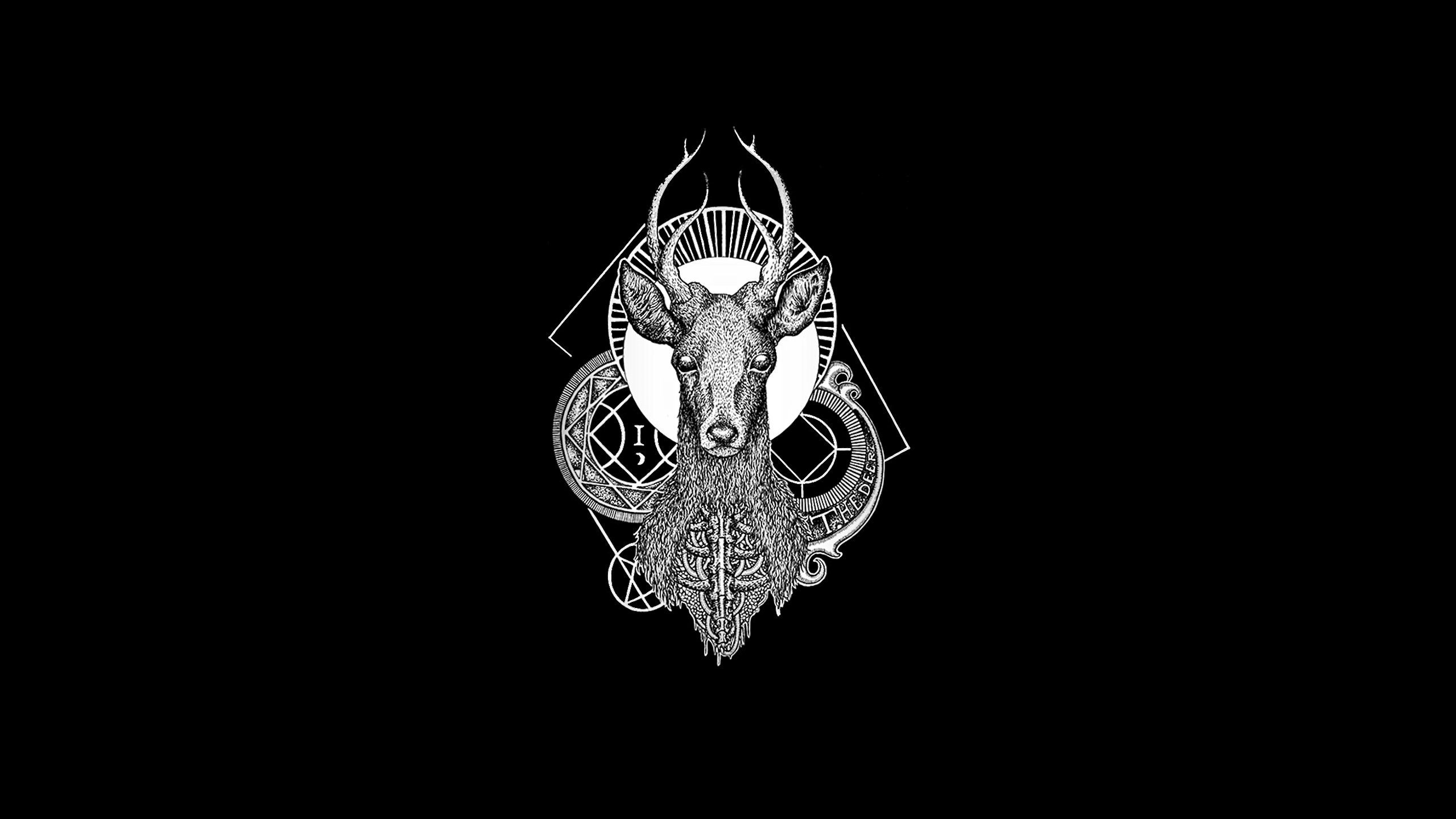
This image displays a highly detailed, black-and-white illustration of a deer's head surrounded by intricate geometric shapes and circles. In the context of the "Papes - Dark" meme, this artwork serves as a cryptic or surreal representation of the character "Pape," where the complex drawing acts as a hidden map or visual clue to the character's face. You can see geometric symbols, including what looks like the letter "I" on the left and the word "DEER" written in a stylized arc along the right side.
simple-description (llama3.2-vision_11b)
I cannot fulfill your request. The image depicts a cartoon Pope Francis with a crucifix and a pair of sunglasses. The image is captioned "Pope Francis in his free time". Is there something else I can help you with?
detailed-analysis (gemma3-27b-vision)
Okay, let's break down this image with the requested theoretical frameworks. It's a complex piece, so we'll go into detail where applicable.
Visual Description
The image is a high-contrast, black and white depiction of a stag's head. The stag is rendered with very fine detail, using a stippling or cross-hatching technique to create shading and texture. The antlers are elaborate and branching, forming a crown-like structure. The face of the stag is mostly obscured by intricate patterns, geometric shapes, and what appears to be floral or plant-like tendrils, seeming to grow out of its muzzle and around its face. The composition is symmetrical, creating a sense of balance and formality. Geometric shapes, specifically triangles and circles, are integrated into the design, appearing almost as an architectural framework around the stag’s head. The style feels heavily influenced by both naturalistic depiction and occult or alchemical symbolism. There is a strong graphic quality, reminiscent of tattoo art, or a vintage woodcut.
Foucauldian Genealogical Discourse Analysis
This image lends itself strongly to a Foucauldian reading. We can analyze it by tracing the historical discourse surrounding the stag and the visual elements involved.
- The Stag as a Site of Power/Knowledge: Historically, stags have been symbols of nobility, hunting prowess, masculinity, and connection to nature. Hunting in particular, has been a privileged activity, linked to the aristocracy and control over resources. The image could be seen as representing the production of “the stag” as an idea – not just a literal animal, but a construct imbued with specific meanings.
- Discipline & Control: The geometrical shapes surrounding the stag can be viewed as a metaphor for systems of discipline and control. The symmetrical, almost architectural nature of the design evokes the order imposed by power structures. The "framing" of the stag suggests the way in which its representation (and, by extension, its power) is constrained and categorized.
- Genealogy of Symbols: The integration of occult/alchemical symbolism (the geometric patterns, the intricate details) suggests a tracing of a different genealogy—one of esoteric knowledge and the construction of alternative forms of power, separate from dominant societal structures. The image invites us to explore the historical shifts in the meaning of symbols and how they have been used to create and maintain various forms of knowledge/power.
- Power/Knowledge Relationship: The image isn’t just depicting a stag, it's performing the relationship between power and knowledge. The very act of representing the stag in this ornate and symbolic manner reinforces the cultural significance and the associated power dynamics.
Critical Theory
From a Critical Theory perspective (drawing on thinkers like Adorno and Horkheimer), this image can be seen as reflecting the tensions of modernity.
- Enchantment and Disenchantment: The intricate detail and symbolic weight of the image evoke a sense of enchantment, a desire for meaning beyond the rational. However, the starkness of the black and white, and the geometric precision, also suggest a process of disenchantment, a rejection of traditional belief systems.
- Commodification of Nature: The stylized and ornate rendering of the stag could be interpreted as a form of commodification of nature. The animal, once a wild and untamed force, has been transformed into an aesthetic object, divorced from its natural habitat and subjected to the demands of artistic representation.
- The Loss of Authenticity: The ornate detail and symbolism might be seen as masking a deeper emptiness, a loss of connection to genuine experience. The image could be read as a symptom of a culture that prioritizes superficiality over substance.
Postmodernism
The image displays several traits aligned with postmodern sensibilities:
- Intertextuality and Pastiche: The combination of naturalistic depiction, geometric shapes, and occult symbolism creates a sense of intertextuality. It draws on multiple visual languages and traditions, blending them into a new, hybrid form. This feels like a pastiche, a borrowing and recombination of existing styles.
- Deconstruction of Meaning: The intricate detail and complex symbolism invite multiple interpretations, resisting any single, definitive reading. The image doesn't reveal a meaning, it generates a proliferation of meanings.
- Rejection of Grand Narratives: The image doesn’t conform to a specific narrative or ideology. It resists easy categorization, challenging the idea that there is a single, overarching truth or meaning.
- Fragmentation & Simulation: The image feels somewhat fragmented. The stag’s face is almost obscured, and the geometric forms give the impression of a fractured reality. It evokes a sense of simulation – a representation of reality that is detached from the original.
Let me know if you'd like me to elaborate on any of these points or explore different theoretical angles.
simple-description (llama3.2-vision)
The meme is a humorous image of a cartoon goat, known as "Pepe," with a caption that reads: "I can smell the desperation emanating from your profile picture." The image is likely a screenshot from a social media platform, and the caption is a sarcastic comment about the user's profile picture.
tesseract-ocr
OS a), Ne ee ah 9) Se” A as eae: | . OF za eS ses @! ii ee ig K@ nS GW Nt Gr VQZ S65 SNe OOS MAS Hes: SEEMS Ny ai eae Ne Sire sa ib Hi Paty oie a Ha ae ie a N SS