First Seen
2023-05-10T21:03:43+00:00
simple-description (qwen3.5_2b-q8_0)
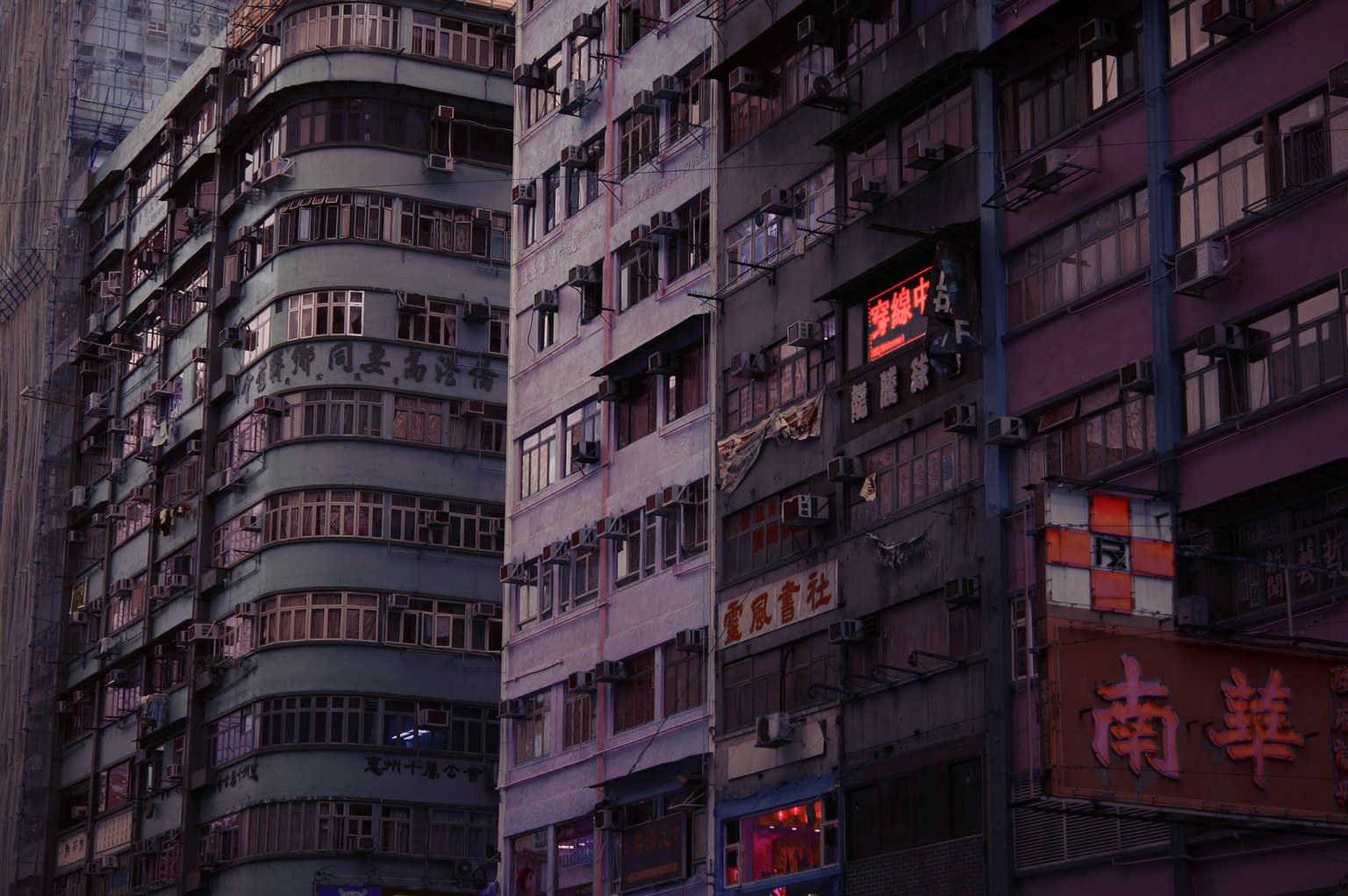
The "Dark" meme refers to a photo losing all its color saturation and turning the image into a black-and-white monochrome picture. This image is already heavily desaturated with heavy purple tones and glowing neon red signage—such as the red "穿線中" (Chuan Xian Zhong) sign and the orange "南華" (Nan Hua) sign—creating a heavy, moody atmosphere that feels like a "dark" night scene without sunlight.
simple-description (llama3.2-vision_11b)
The meme appears to be a screenshot of a Reddit comment, with the username "Papes" and the text "Dark" in the context of a category. The meme is likely a humorous or ironic reference to a dark or sinister topic, with the username and category name suggesting a sense of foreboding or ominousness.
detailed-analysis (gemma3-27b-vision)
Okay, let's break down this photograph using the requested theoretical frameworks. It's a complex image, so we can pull threads from several areas.
Visual Description
The photograph depicts a dense, close-up view of apartment buildings in an urban environment, very likely Hong Kong or a similar East Asian city. The buildings are stacked vertically, demonstrating extreme density and a lack of horizontal sprawl. They are aged, with visible air conditioning units, makeshift additions, wiring, and screens protruding from the facades. The color palette is a muted, cool mix of greens, grays, and blacks, punctuated by vibrant, saturated neon signs in red and pink. These signs, written in Chinese characters, add a layer of visual noise and cultural specificity. The composition is tightly cropped, emphasizing the sheer density and claustrophobia of the space. There's a strong interplay between order (the building structures) and chaos (the additions, wiring, and signage). Lighting is diffused and moody, creating a sense of mystery and suggesting a time of dusk or night. The image evokes a feeling of a lived-in, heavily populated environment that is simultaneously gritty and visually striking.
Foucauldian Genealogical Discourse Analysis
This image provides a rich site for a Foucauldian analysis. The buildings themselves function as discursive formations producing and regulating everyday life. The proliferation of air conditioning units and ad-hoc structures – the “additions” – demonstrate a localized response to, and re-negotiation of, imposed regulations around space and comfort.
A genealogical examination would focus on how the conditions leading to this dense, layered architecture came to be. We can trace the history of housing policy, economic pressures (high land costs), migration, and urbanization that created the need for such vertical, highly occupied spaces. The very visibility of the infrastructure (wiring, ACs) speaks to a breakdown of the ideal of seamless, regulated control.
Power/Knowledge is readily apparent. The arrangement of these dwellings—how they’re built, who lives in them, and how they are regulated—demonstrates the operation of power. The sheer density suggests a normalization of extremely constrained living conditions, a form of disciplining space to accommodate a large population. The constant surveillance implied by the multitude of windows—even with blinds and curtains—further demonstrates the interplay of power and observation.
Marxist Conflict Theory
The image lends itself perfectly to a Marxist interpretation. It visually encapsulates the contradictions inherent in capitalism: the accumulation of capital leads to increasingly concentrated populations, and the exploitation of labor manifests in the cramped, often substandard, living conditions depicted.
Class struggle is symbolized by the contrast between the sheer volume of housing (accommodating a large working class) and the lack of individual space. The improvisational nature of the additions—the screens, the wiring—suggests a material response to economic hardship or the desire to maximize limited resources. They are markers of ingenuity born of necessity, revealing the gap between those who own and those who simply inhabit the space.
The building structures can be seen as a physical manifestation of the means of production – housing as a commodity. The arrangement of living spaces indicates the alienation of the inhabitants from the buildings themselves, their living conditions dictated by economic forces. The visible clutter and density point to a lack of access to resources and a struggle for basic necessities.
Postmodernism
This image exhibits several characteristics of postmodern aesthetics. The fragmentation of the building facades, the juxtaposition of organic and inorganic forms (building structure versus added screens and wiring), and the overwhelming density create a sense of chaos and a rejection of traditional order. The image deconstructs the idea of a clean, functional urban landscape.
The layering of signs and textures represents a simulacrum – a copy without an original. The added elements—the screens, wiring—are a representation of need, a manufactured symbol overlaid on the building’s core function. This mimics the postmodern concept of surfaces replacing substance.
The eclecticism of the scene—a mix of high-density architecture, makeshift modifications, and neon signage—rejects the idea of a cohesive, unified style. It embodies the postmodern emphasis on pastiche and the blurring of boundaries. The lack of a clear focal point, the overwhelming visual information, contributes to a sense of hyperreality—a reality that is more real than real.
Queer Feminist Intersectional Analysis
While not explicitly demonstrating queer or feminist themes, an intersectional reading can reveal how multiple systems of power operate within this space. The dense, cramped living conditions likely exacerbate the vulnerabilities of marginalized groups—women, LGBTQ+ individuals, and migrant workers—who may experience heightened risks of harassment, exploitation, and lack of privacy.
The image also evokes themes of domesticity and constraint. The tightly packed living spaces suggest limitations on agency and autonomy, potentially reinforcing traditional gender roles and expectations.
An intersectional reading would consider how factors such as gender, class, immigration status, and sexual orientation intersect to shape the lived experiences of the residents within these buildings. The lack of privacy and the constant surveillance implied by the multitude of windows can be particularly oppressive for marginalized groups who may be subject to discrimination and harassment. The image can prompt questions about who has access to resources, who controls the space, and who is most vulnerable within this environment.
This is, of course, not an exhaustive interpretation, and there are many other ways to analyze this image. I’ve tried to provide a detailed response based on the requested frameworks. Let me know if you’d like me to elaborate on any of these points or explore other theoretical perspectives.
simple-description (llama3.2-vision)
The meme is a screenshot of a Reddit comment that reads: "I just realized I've been living in a 1-bedroom apartment in Hong Kong for 10 years and I still haven't seen the entire apartment".
tesseract-ocr
|” Finn Ae | a fs Py rT i Cia a Y Py ) Z “ 7 4 ae a obs . fr es f ‘4. a> rh i ig Ave aie Wee = PY ae % 4 or Lg og le aay Ma thie ; é Pa ] ru L. rh ONY gat = of Pe rT ow TA he ate it” glee e: & 20 Ne fj i} “4 | ye ra ae 4 ae i Ne g y i i ce PM = ; io Be Le Dh | Th 1 l tw Ai. = || Fae i eae | Ee __, aa Ye Lar ia V4 (AL et aN eli a al Ps | ae ie i} 7 7 Ws a ALA Y ve ) 0 fee pelle A i] ete tani lS tains | ihe Ct r <i i ‘i i oe. een ere) HI at = Pe 1 Td 4) ri 7 ee i re i wu Coa Yo — a