First Seen
2023-05-10T21:03:43+00:00
simple-description (qwen3.5_2b-q8_0)
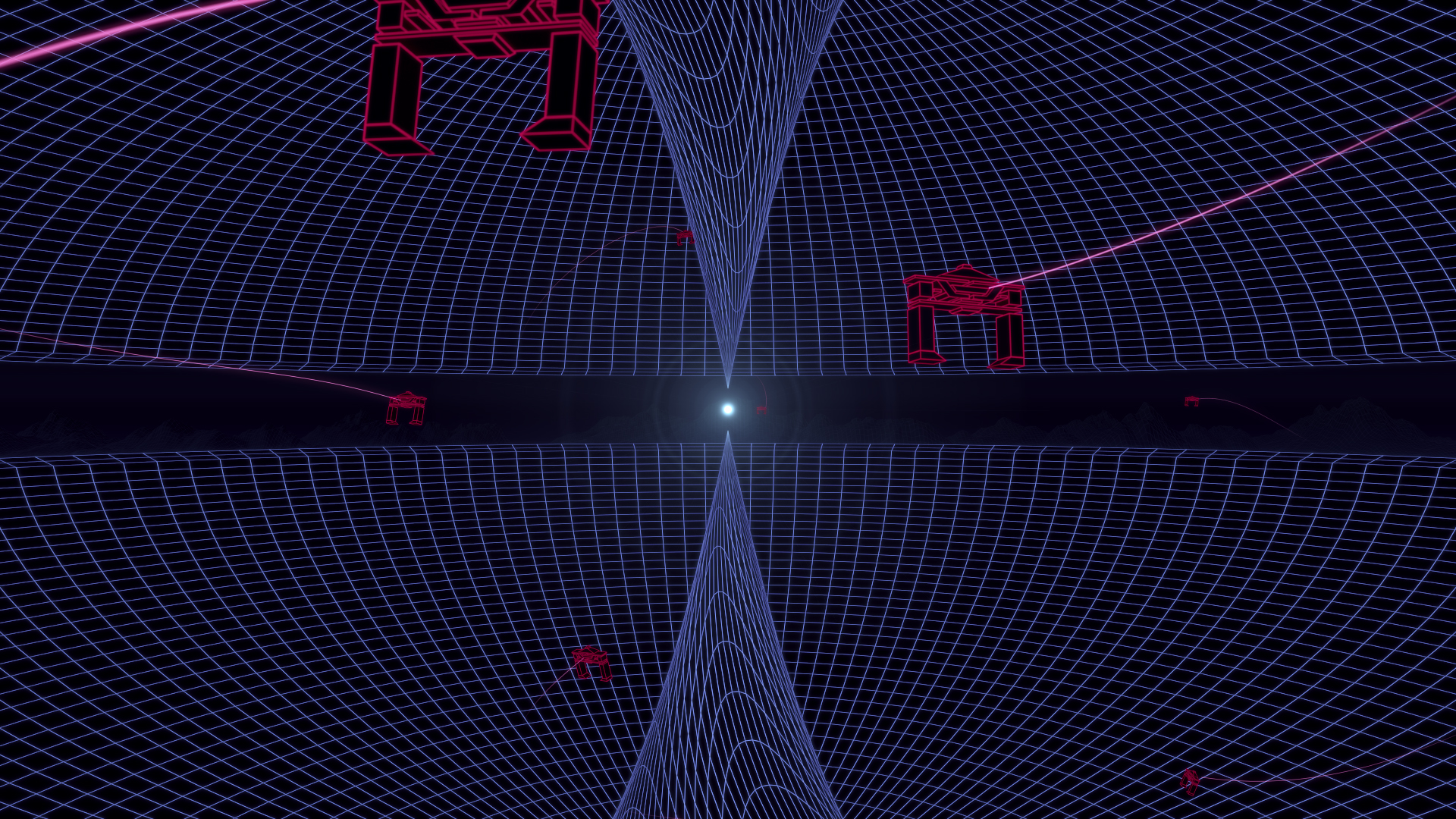
This is the 'Papes - Dark' meme, featuring a wireframe scene with a black background that creates a tunnel-like distortion. Jagged red blocks and lines warp into a 3D perspective toward a bright light source in the center. There appears to be no legible text on the image, though the visual style mimics the abstract chaos of the Papes meme format.
simple-description (llama3.2-vision_11b)
The meme is a screenshot of the game "Dark" with a character model of a pope. The image is captioned "I can see for miles" and the game's soundtrack is playing in the background. The meme is likely referencing the game's ability to create a sense of immersion and atmosphere, with the soundtrack adding to the experience.
detailed-analysis (gemma3-27b-vision)
Okay, here’s an analysis of the image, broken down into sections as requested, focusing on the most applicable theoretical frameworks. Given the abstract and digitally-constructed nature of the image, certain areas of analysis will be more potent than others.
Visual Description
The image presents a stark, digitally-rendered scene. A grid of blue lines constructs a warped, almost infinite perspective, converging towards a central point of bright white light. This point acts as a visual “singularity” or vortex. Superimposed on this grid are fragmented, red, wireframe-style robotic or mechanical forms. These figures appear fragmented, deconstructed, and scattered around the central point. The color palette is limited to black (background), blue (grid), and red (figures), creating a high-contrast, and somewhat retro-futuristic aesthetic reminiscent of early computer graphics or virtual reality simulations. The lines of the grid create a strong sense of depth and movement, drawing the eye towards the central point. The overall effect is one of disorientation, fragmentation, and a suggestion of powerful, unseen forces at work.
Postmodernism
The image strongly evokes several key tenets of postmodern thought.
- Simulacra and Simulation: The scene is entirely constructed; it’s a simulation of something rather than a representation of reality. The grid is the reality within the frame, not a representation of space. This echoes Baudrillard’s ideas of the loss of the real, where simulations become more real than the real itself. The fragmented robotic forms can be seen as the breakdown of stable forms, representing the instability of meaning.
- Fragmentation and Deconstruction: The robotic forms are not whole, solid entities. They're broken apart, suggesting the breakdown of grand narratives and the rejection of unified, coherent systems of thought. This reinforces the postmodern idea of instability and the rejection of totalizing ideologies.
- Hyperreality: The intense, digitally-constructed aesthetic creates a “hyperreal” experience, where the simulation surpasses and replaces the original experience. It's not about representing a reality, but creating one that is more intense and overwhelming than anything naturally occurring.
- Irony & Pastiche: The retro-futuristic aesthetic can be interpreted as a pastiche of earlier visions of the future, creating a playful, ironic commentary on technological progress and the promises of modernity.
Foucauldian Genealogical Discourse Analysis
Michel Foucault’s concept of genealogy and discourse can be applied in the following ways:
- Power/Knowledge: The image implies a system of power embodied in the converging grid lines. The central white light could be seen as a point of concentrated power that “shapes” the fragmented robotic figures. The grid itself is a discursive structure that defines and constrains the movement and form of the figures.
- Archaeology of Knowledge: The wireframe robotic forms hint at a historical genealogy of technological thinking. Their deconstructed nature suggests a “digging up” of the underlying assumptions and power structures embedded in our ideas about technology and artificial intelligence.
- Discipline and Surveillance: The grid can be read as a panoptic structure, suggesting a system of surveillance and control. The lines define a space where the fragmented figures are constantly observed and categorized.
- The Gaze: The perspective of the image forces the viewer into a position of observation. We are positioned as someone examining and interpreting the fragmented forms, mirroring the power dynamics inherent in knowledge production.
Critical Theory
The image lends itself to analysis through the lens of Critical Theory, specifically pertaining to the role of technology and the alienation it may cause:
- Technological Determinism vs. Social Construction of Technology: The image isn’t neutral. The grid forces the fragmented forms into a specific pattern, seemingly “determining” their fate. However, the fragmented nature of those forms suggests a resistance to this determinism.
- Alienation: The robotic forms are broken and scattered, perhaps representing the fragmentation of the individual in a technologically advanced society. They lack wholeness and purpose, suggesting a sense of alienation.
- Commodification/Dehumanization: The robotic forms, being mechanical, can be seen as a metaphor for the commodification of labor and the dehumanization of individuals within a capitalist system. They are reduced to fragmented parts, devoid of individual agency.
Marxist Conflict Theory (limited application)
While not the most potent framework, some elements of Marxist theory can be drawn:
- Class Struggle (Metaphorically): The fragmented, possibly enslaved, robotic forms could represent a metaphor for the working class, disassembled and controlled by a dominant power structure (the grid and central light).
- Means of Production/Control: The grid itself can be seen as the "means of production," controlling the forms and dictating their movement. This embodies the power dynamics inherent in capitalist production.
Let me know if you’d like any of these points elaborated, or if you’d like me to explore a particular theoretical lens in more detail!
simple-description (llama3.2-vision)
The meme is an image of a person who has just died and is now in the afterlife, where they are greeted by a figure who is a mix of a Buddhist monk and a cowboy. The figure is saying "Well, you've finally got everything you ever wanted. Now, you can just sit back and relax. You've got no more problems. Your work is done. You've earned your rest." The text is written in a humorous, sarcastic tone, implying that the person's afterlife is not as peaceful as they expected.
tesseract-ocr
a a a ee ee oon ——_l. SS Ss Z oe —————— = Se ao ee Si se DIA oA NIN — ELIE wees a ‘ ee, aaa Za KS a ae arena #: ee wa a, ~ Be anew ah LESS SSS a ae ELIE ag SE AE ISS SSS 7 aw tana Sea aaa a ta a ree) Ss — TESTS ae : = = = —_ ~F 5 a a a awa Sener aman \ I ARARERNNRee NSS — = = LLS ELTA (SS = =— a a 2 Sess = = 27777 SS ZL PES — = 777 fF > : Ze \ a = Hee SS 7 ao == Pe ) SS HH \ ro Ss He fr LE) i aN = ge eee==cce===| foe | poe oss : , | greece ieee ===—=— oe =====———= igi === ae SSeeeee=eeee SS5n—== Ze soe SSeS eececececees 2222S —: oe We | - cca Se i <e-eeeeeeeeee So = << S| = === == = — SSE ——— SO aun ' - Se FBesesesee! , , SS si ES =S=S==e=e: j SS ‘(gE ES geee=e==ee: : — \]25G: 2 e==2==5=! | — ye ~~ yg — (Oe — LT —— | UXyxX ee , Ly —— Up, Or \ CL — VY on SS SSSny \ ree EEE SSN | .4 = Se ‘. eee i ae a SS e Ty Lee Sas SSS ee SS HAN aa ei |} 7/8 | We LOD a oe We@ Ye awe eaeawe wae aaa te SE2 EEE —— EEE SEL ea