First Seen
2023-05-10T21:03:43+00:00
simple-description (qwen3.5_2b-q8_0)
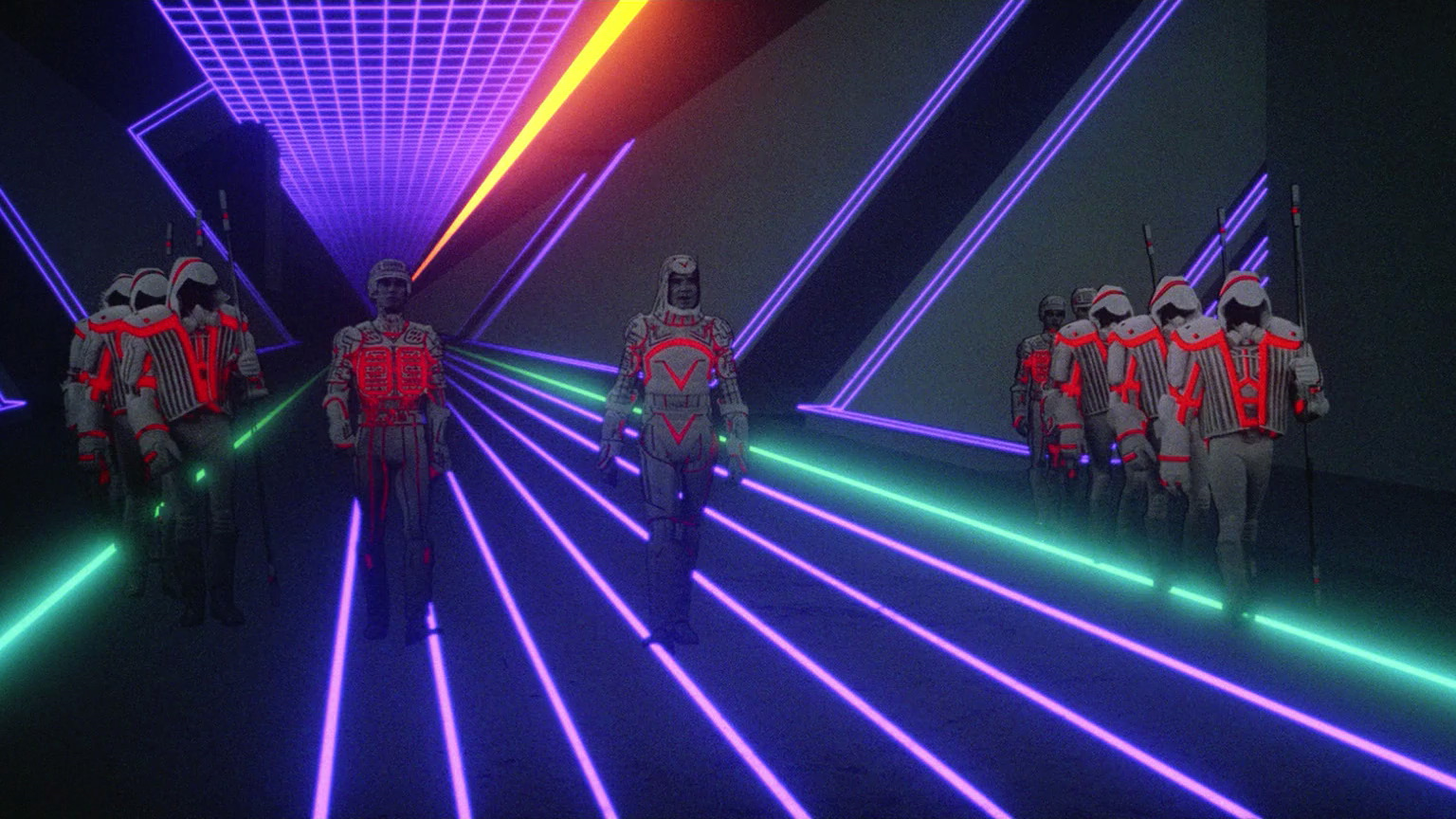
This meme depicts a dark, sci-fi scene featuring a group of armored soldiers marching down a corridor illuminated by neon purple and green lights. The term "Papes" (short for the Vatican) creates a humorous dark comparison by suggesting these figures represent religious authority in a futuristic, dystopian setting. The word "PAPES" is written in glowing red text on the chests of the soldiers lining the left and right sides.
simple-description (llama3.2-vision_11b)
The meme appears to be a screenshot from the 1982 sci-fi film "Blade Runner," but with the words "Papes" and "Dark" written in the top left and bottom right corners, respectively. The image shows a group of futuristic-looking police officers in a dimly lit, dystopian cityscape. The text "Papes" and "Dark" are likely references to the film's themes of police corruption and the dark, gritty atmosphere of the movie's world.
detailed-analysis (gemma3-27b-vision)
Okay, let's break down this image through several critical lenses. Given the imagery, certain analyses are much more prominent than others.
Visual Description
The image presents a digitally rendered scene strongly evocative of the 1982 film Tron. The setting is a sleek, geometrically precise space, defined by stark black surfaces and illuminated by vibrant neon lines in shades of electric blue, hot pink, and a warm orange/yellow. These lines form a grid-like structure, suggesting a digital matrix or cyberspace.
A group of stylized figures, resembling futuristic soldiers or digital entities, are arranged in a formation moving towards the viewer. They are clad in dark, armored suits with glowing red or pink circuitry patterns embedded in their bodies. The figures have minimalist, almost mask-like heads, and an ambiguous form that seems to blend human and machine. The perspective is low, emphasizing the figures' height and power, and drawing the viewer into their space. The whole aesthetic leans heavily into the 1980s retro-futuristic style, prioritizing sharp edges, glowing lights, and a sense of streamlined, technological dominance.
Foucauldian Genealogical Discourse Analysis
This image lends itself well to a Foucaultian analysis. The space itself, with its rigid grid and glowing lines, represents a dispositif – an arrangement of power, knowledge, and institutions. This is a space of control, surveillance, and normalization. The lines define the space, but also contain it, and by extension, the figures within.
The figures themselves can be read as embodiments of disciplinary power. Their uniform, rigid structure, and marching formation exemplify how power operates through the normalization of bodies. They are not individuals but functions within this system. The glowing circuitry is not just decorative; it can be seen as the internal mechanism of control, the code that dictates their behavior.
A genealogical approach would ask how this particular arrangement of power/knowledge came to be. The imagery points to the rise of computing, the digital realm, and the increasing integration of technology into every aspect of life. The “soldiers” represent the logic of control embedded within this system—a network of surveillance and the shaping of subjectivity through technology. The aesthetic, recalling the 80s, suggests a specific historical moment where these discourses around technology, control, and the future began to take hold.
Critical Theory (Specifically the Frankfurt School)
The image can be viewed through the lens of critical theory, echoing the concerns of the Frankfurt School. The highly stylized and almost sterile environment, combined with the rigid, dehumanized figures, evokes the anxieties around the “instrumental rationality” of modern society. The technological aesthetic feels less about progress and innovation, and more about the potential for control and alienation.
The "soldiers" aren't fighting a battle with an enemy; their formation suggests a self-perpetuating system of power. They appear to be policing the digital space itself. The image could be read as a critique of the way technology can be used to reinforce existing power structures and control. The lack of individual expression within the figures speaks to the potential for technology to suppress individuality and critical thought, creating a society where individuals are reduced to mere components within a larger, impersonal system.
Marxist Conflict Theory
While not immediately overt, a Marxist interpretation can be applied. The figures represent a force of control, protecting an unseen system (perhaps a digital capital system or a centralized power structure). Their uniformity and lack of individuality suggest a classless appearance, but this is a false appearance. Beneath the surface, there's likely an inherent power dynamic – someone is controlling these "soldiers," and someone benefits from their control.
The rigid structure of the space and the formation of the figures emphasize order and discipline, which can be seen as mechanisms to maintain the status quo and suppress dissent. The image might be interpreted as a representation of the "apparatus of control," used by the ruling class to maintain its dominance. The glowing circuitry can be read as the network of control, the connections that enable the ruling class to exert its power.
Postmodernism
The image's aesthetic embodies several key aspects of postmodernism. The deliberate referencing of the 1982 Tron movie is an example of pastiche – a stylistic borrowing and mixing of different sources. The bright neon colors and geometric shapes represent a move away from the simplicity and functionality of modernism towards a more playful and visually stimulating aesthetic.
The ambiguity of the figures – are they human, machine, or something in between? – reflects the postmodern deconstruction of fixed categories and identities. The image challenges the idea of a singular, coherent reality, suggesting instead a fragmented and simulated world. The lack of narrative or clear purpose adds to this sense of ambiguity. The image is more about representation than meaning, emphasizing the constructed nature of reality.
Note: The application of Queer Feminist Intersectional Analysis feels less direct in this image. While the dehumanization of the figures could be linked to broader patterns of social control and marginalization, the image doesn’t explicitly address gender, sexuality, or intersectional power dynamics. It lacks the specific visual cues that would lend themselves to such an analysis.
I hope this multi-faceted analysis is helpful! Let me know if you'd like me to elaborate on any of these points or explore different interpretations.
simple-description (llama3.2-vision)
The meme is an image of a group of people in a futuristic setting, likely from a sci-fi movie or TV show. The image depicts a group of people in futuristic armor, standing in a dark, neon-lit hallway. The text "I can see your pixels, but not your love" appears in the image.
tesseract-ocr
ai S