First Seen
2023-05-10T21:03:43+00:00
simple-description (qwen3.5_2b-q8_0)
The Papes meme is a popular format where a person's head is replaced with a pixelated texture, often referencing the game Papers, Please. Since there is no text in the image, the 'Dark' aspect likely refers to the cyberpunk aesthetic. The image uses this style to create an atmosphere of futuristic bureaucracy, relying on the visual texture to convey the humor.
simple-description (llama3.2-vision_11b)
I couldn't find any information on a meme that matches the description "Papes - Dark". It's possible that the meme is not well-known or that the description is incorrect. If you could provide more context or information about the meme, I'd be happy to try and help you understand it.
detailed-analysis (gemma3-27b-vision)
Okay, let's break down this visually striking image through the lens of the theoretical frameworks you've requested. Not all will apply strongly, so I’ll indicate where that's the case.
Visual Description
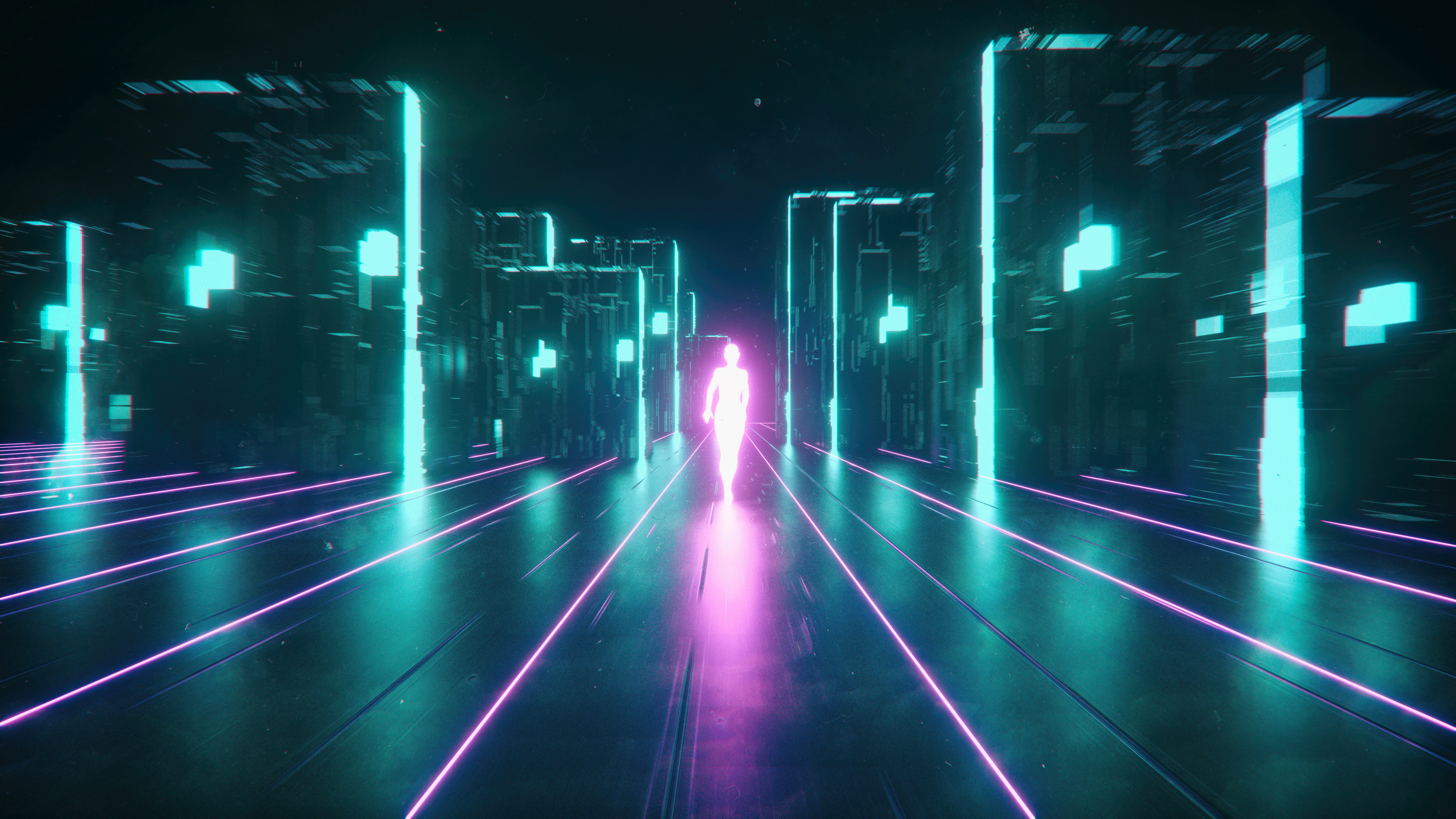
The image depicts a seemingly endless, highly stylized digital or virtual space. The composition is overwhelmingly dominated by vertical, glowing turquoise structures that resemble pillars or the casings of digital infrastructure. These are arranged in a grid-like perspective, creating a strong sense of depth and a converging vanishing point. Beneath and between these pillars are glowing magenta/pink lines that stretch toward the vanishing point.
Central to the composition is a luminous, humanoid figure, also rendered in magenta/pink, standing directly in the center of this linear pathway. The figure is somewhat ambiguous, lacking distinct features, and appears almost like a digital projection or avatar.
The overall aesthetic is highly futuristic, reminiscent of Tron, cyberpunk, or the visualization of cyberspace. There’s a heavy emphasis on light, and a lack of texture, creating a smooth, clean, and almost sterile environment. The color palette is limited, contributing to the image’s stylized and artificial quality.
Foucauldian Genealogical Discourse Analysis
This image offers interesting possibilities for a Foucauldian reading. The grid-like structure and the regimented arrangement of the pillars can be interpreted as a dispositive—a system of power/knowledge that organizes and regulates.
The pillars themselves represent a kind of architecture of control, a visible manifestation of an underlying system of rules and norms. The linear pathway and converging perspective imply a directed, monitored trajectory. The figure at the center, while seemingly central, is within this framework, and therefore subject to its disciplines. The figure's lack of defined features suggests it's a subject constructed by this system, not an individual with inherent essence.
A genealogical analysis would look at how this particular 'dispositive' of digital space and technological control emerged from historical shifts—the move from physical architecture of confinement to digital architectures of surveillance and control. What discourses (technological, scientific, economic) made this type of virtual structure possible? It asks how this structure functions to produce certain kinds of subjects, and to exclude or marginalize others.
The lack of "natural" light or organic elements is also relevant – it suggests a system that has severed itself from grounding in the natural world, constructing its own internal logic and justifications.
Critical Theory
The image lends itself to a broad critical theory interpretation, particularly concerning themes of technology, power, and alienation.
The overwhelming scale of the digital infrastructure and the solitary figure create a strong sense of alienation. The figure is seemingly within a technologically advanced environment, but it is isolated and indistinct. This reflects a common critical theory concern with the dehumanizing effects of technology and the potential for it to create a sense of disconnectedness.
The image can be seen as representing a “technological panopticon” – a system where surveillance is not necessarily direct, but the potential for it is always present. The structure of the space implies constant monitoring, even if not explicitly visualized.
The aesthetic itself—clean, smooth, and artificial—can be critiqued as representing the commodification of experience. The space is not about genuine connection or lived experience, but about the representation of experience within a digital, consumerist system. It’s about simulating a feeling rather than experiencing it.
Marxist Conflict Theory
Applying a strict Marxist conflict theory approach is somewhat limited, but some connections can be drawn.
The digital infrastructure could be seen as a representation of the "means of production" in the information age. The pillars and lines are the infrastructure on which digital capital flows. The figure, as a user or operator within this system, could be seen as representing the "labor" within that economy.
However, the image doesn't explicitly show conflict or class struggle. The figure is not being exploited in an obvious way. One could argue the potential for exploitation is inherent in the system—the figure's data is being collected, their behavior is being monitored, and they are contributing to the accumulation of digital capital.
The image could also be interpreted as representing the alienation of labor in the digital age – a sense of disconnection from the product of one’s labor, and from other people.
Postmodernism
This image is heavily laden with postmodern sensibilities. The hyperreal aesthetic—a simulation of reality that is more real than reality itself—is a key characteristic. The image doesn't represent a "real" space; it's a constructed simulation, an abstraction of digital infrastructure.
The figure's ambiguity and lack of defining characteristics are also typical of postmodern representations of the self. The self is no longer seen as a stable, coherent entity, but as fragmented, fluid, and constructed through language and images. The figure doesn’t have a fixed identity within this space; it is the digital construct.
The emphasis on surface, style, and spectacle—the vibrant colors, the sleek lines, the dramatic perspective—are all hallmarks of postmodern aesthetic practices. The image prioritizes form over content, creating a visually stimulating but ultimately empty experience.
Queer Feminist Intersectional Analysis
This area requires a bit more extrapolation, as the image doesn't overtly depict gender or sexuality. However, a queer feminist reading can be applied to the power dynamics and the figure's position within the system.
The stark, geometric structure of the space can be read as a metaphor for oppressive, patriarchal systems – rigid, inflexible, and designed to control movement and confine bodies. The figure, standing within this space, could be seen as representing a marginalized body—a body that doesn’t fit neatly into the grid, and that is therefore subjected to surveillance and control.
The ambiguity of the figure's gender and identity is relevant. By not explicitly defining the figure, the image opens up possibilities for challenging binary notions of gender and sexuality. The figure can be interpreted as fluid, non-binary, or resisting categorization.
An intersectional analysis would also consider how the figure’s position within the system might be affected by other forms of oppression, such as race, class, or disability. The image, while abstract, can be seen as a representation of the complex ways in which power operates in society, and how marginalized bodies are often subjected to multiple forms of control.
I hope this detailed breakdown is helpful! Let me know if you would like any of these analyses expanded or explored further.
simple-description (llama3.2-vision)
This meme is a still image of a character from the 2008 film "Tron: Legacy" standing in a dark, neon-lit hallway. The character, Quorra, is not present in the image, but a text overlay reads "I'm not arguing, I'm just explaining why I'm right". The image is likely being used to express a sense of confidence or superiority in a conversation.
tesseract-ocr
« a Me 7a LA yA he, SS , <<. . - ¥ a j o es i mt, . i 4 Zé Pi a : 7 be : = ~ ~ a & a a (4 yy _ er = y i —— : ~ : = a a Lil ais a = -— a & a 7 @ y 3 2 = =a ; : ~ > y 3 p e ; 6 3 Ce ’ a eae a <— = = Al gi eee cons ‘| meee a Eee a Sita be a ed » "7 ea C an a = - ie _— Ss Se | f 4 r a tA 4 on = i a es . ~ . 3 Seni, he is iS : — a . aera: <= — “ ; ; —— ee if ame ze . @ a — 4 Pe "4 2 el aa a — ~ — q a I F eo ‘ i j a i. PS an : bs t A es Be er ae = —_ =e i . . q ‘ _ i i i 4 an as q r ee i iu 4 § 5 a — ee . rn by 4 Ss ae ef > - ai are 3 i - N i A Pe a . as se ie - _ S g —— =_=~_ a co Ce a ’ wy ie , Pe 4 a bali ~ SS bl oe i” 7 e a ee saa : 3 oe : aoa a . ; a x ae | aa * a | ie eo a : q -s ee 4 oe Ee ug 7 ee ; ae a = ze zz LT = = & F _ kt @ | ae Pe pa a : E : P 3 rt i < i @ . 4 : \ 4 Se — mi a =e | Se a. iz i a Hg jae BS: ee — — * i S ant cae | j Se | ae Se oo : E xz 7 - co Tae. | i i i = ‘ saa a ; a bees a at : * ae 3 a a . am . 4 - => a . 3 mee = 79 : 4 _— a E = e. 5 |= e = = — a a ‘ f o£ 4 = a — ’ 4 4 a= “es a eo j = s ea oa - ay ; . a0 a F E pene a ae z P a ge ‘ es es 7 a — a z a - ee ane ” a x ” is e Ny — a —— ~ xs = eae , “6 eee « g i ae - > e al ee _ e a - ce Zu . es : F a a ee i = hee —~ a = 4 s ge —epetnt -eeae ype Se gas a oe mare ee — = r = * . So ger “a eS a Sy a ee — ts = ; wii — a a s£ B ieee ae ees ee a ee SG, — a ae = = Sf a PS ae Ps a — —— " e zi Te eS. aS - a ce Sa 7 OF imate, Sees ag oe ea! oo iit, a _ CO _— - e ee a. =e — i 3 " F = as 4 “ i = Be a. a ee, ae % See a a . meee i be gs — a ae Pai = Es Ce ie ee a <4 ~~ = ~ a i a a aa an if: ee Be: eco aaa’ £. fh Soce ‘ NS. ee % a 4 Bees ae . - ~ ee eo so oe ae oe COU Lee CP ER. CR eS ee Ss ce eee cee ee i , a _ g fe eC” a 4 — = , a i as En F a ee aS SS es a ee oe eo me ee al Pee “@ fw aa a Das is ee lS a Dae a fe — ‘ ee - ee £2 F a TS ee eo. : ni — NSS ae a ee . i Pe MD ee ae ee Cs i RRR ‘ We RSENS ee ae ll ae - £ _ P |{ eS ie a 3 S 2 ~ SS ee oe s e 2g = —s = SS er <— i, a 2 ae . 4 Poy =. 3 ee aN Be ee em) i Ms ae y Seas SS es i ee Bee |. jie fe ee ae - i ah ol . ~~ i a . 7 A S| He Be) = a s ws \ “ a Pea ee i " x » a i Ro ‘ . x if Ble... oe ’ di | peed ee aaa eames ys