First Seen
2023-05-10T21:03:43+00:00
simple-description (qwen3.5_2b-q8_0)
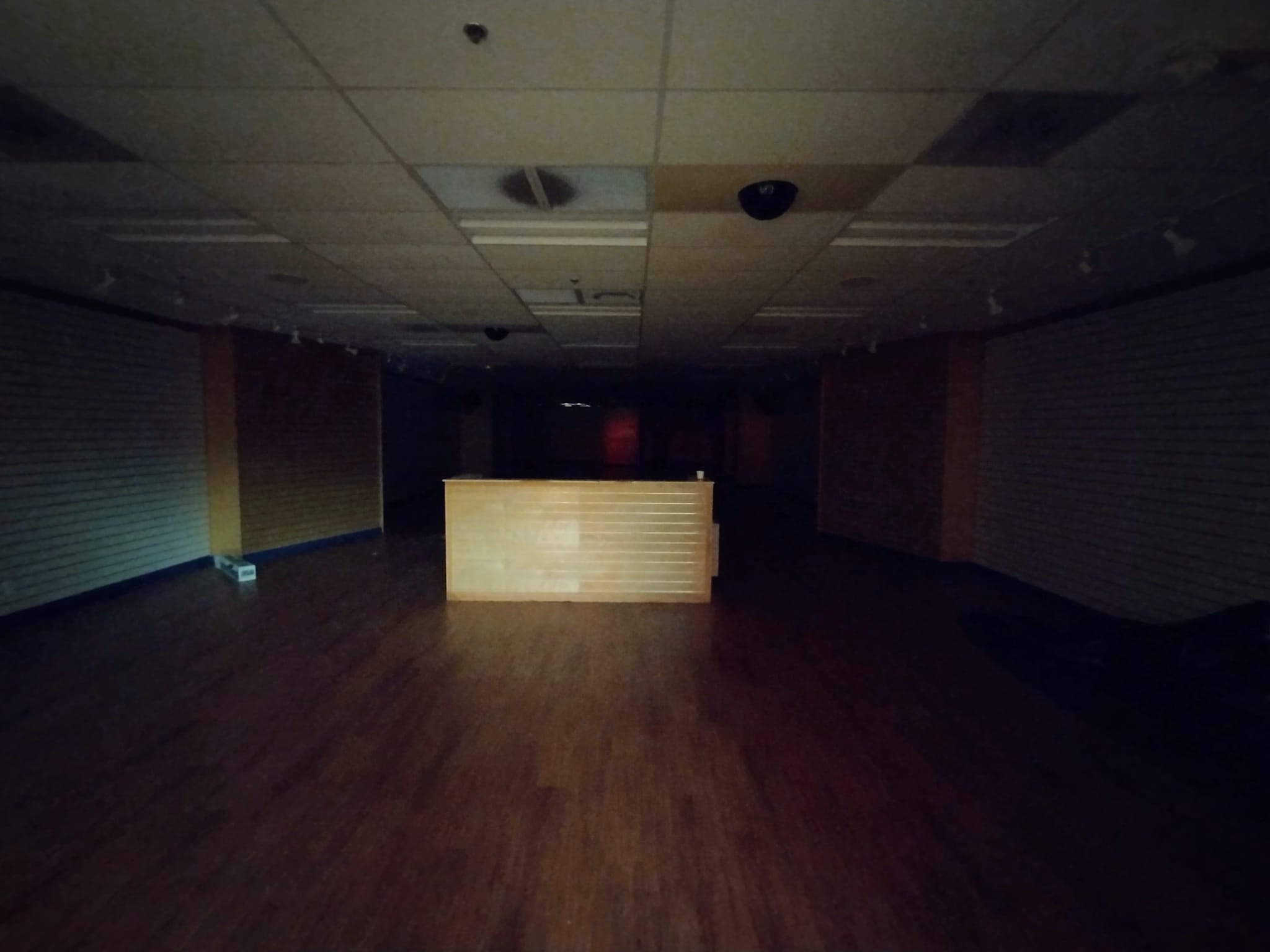
This image serves as a visual representation of the "Darkness" meme, which is often used to depict the fear of standing in an empty, terrifying void. The photo captures a large, cavernous hall dominated by a brightly lit wooden counter, which creates a harsh contrast against the deep shadows surrounding it. The scene emphasizes the lack of visibility and the feeling of being trapped in a dark room, effectively conveying the core theme of the internet meme: the unknown and the dread of silence. There is no legible text visible in the photograph.
simple-description (llama3.2-vision_11b)
The meme is an image of a dark and empty storefront with a sign that reads "Papes" in a childish, handwritten font. The image is meant to be humorous because it's a typical storefront, but the name "Papes" implies that it's a store that sells adult products, which is ironic given the store's empty and dark state. The meme is likely referencing the idea that a store that sells adult products would be empty and dark, implying that it's not a successful business.
detailed-analysis (gemma3-27b-vision)
Okay, here’s an analysis of the image, broken down into sections based on the theoretical frameworks you requested. Some sections will be more robust than others, as the image lends itself to some frameworks more readily than others.
1. Visual Description
The image depicts the interior of a vacant commercial space, likely a storefront within a strip mall or similar complex. The space is long and narrow, with a polished, wood-grain laminate floor running lengthwise. A raised counter or reception desk is centered in the midground, illuminated by a warm, direct light source that casts a sharp shadow extending from the front of the counter towards the viewer.
The walls are painted in a faded or muted yellow, partially obscured by rolled-down security shutters. The ceiling is a standard drop ceiling with recessed fluorescent lights, some of which appear to be off or dimmed, creating a stark contrast between illuminated and shadowed areas. The overall lighting is dim and creates a sense of emptiness, neglect, and perhaps even a slight eeriness. The image is dominated by straight lines and hard angles. There is a possible trash item and bottle in the far left.
2. Foucauldian Genealogical Discourse Analysis
This image offers rich potential for a Foucauldian analysis. We can trace the “discourse” of commercial space and how it operates as a site of power/knowledge.
- Discipline and Panopticism: The space, even in its emptiness, is structured by the expectation of surveillance and discipline. The security shutters suggest a need for control and protection, reflecting a societal preoccupation with crime and risk. Even the lighting, designed to maximize visibility, participates in this disciplinary system. The counter itself suggests a point of control, an interface for transactions and surveillance.
- The Discourse of Commerce: The space is "haunted" by the absence of commerce. The very form of the space – the counter, the standardized lighting, the shut-up storefront – speaks to the normalized discourse of capitalism. The emptiness isn’t just a lack of something; it’s a symptom of market forces, of businesses failing or relocating, of economic shifts.
- Genealogy of the Commercial Interior: We can trace the genealogy of this space back through different eras of retail. The design (standard drop ceiling, laminate flooring) points to a certain period of commercial architecture. This analysis would examine how these design choices reflect broader shifts in economic and social priorities. The emptiness of the space suggests a rupture or discontinuity in that historical trajectory.
3. Critical Theory
The image lends itself to a Critical Theory examination, particularly regarding the alienation inherent in modern capitalist systems.
- The Empty Shell: The space itself can be seen as a symbol of alienation. It represents a site of production and exchange that is currently disconnected from meaningful human activity. This resonates with Marx's concept of commodity fetishism, where the value of goods becomes detached from the labor that produces them. The emptiness of the space can be read as a metaphor for the dehumanization of labor and the alienation of the worker.
- The Spectacle: Drawing on Debord, this space, even in its vacancy, participates in the “spectacle” of consumer culture. It’s a potential site of consumption, a void that anticipates being filled with goods and desires. The very layout of the space encourages a specific mode of interaction – browsing, purchasing, consuming. The emptiness intensifies the spectacle by emphasizing the potential for filling it with consumer objects.
- Rationalization and Bureaucracy: The standardized design of the space (drop ceiling, laminate flooring, etc.) exemplifies the “rationalization” that Weber identified as a hallmark of modern bureaucracy. This rationalization, while efficient, can also lead to a loss of individuality and a sense of impersonalization.
4. Marxist Conflict Theory
The image evokes themes central to Marxist thought, specifically around class struggle and the contradictions of capitalism.
- Capital’s Abandonment: The vacant storefront is a visual manifestation of capital’s ability to abandon places and people. It suggests a shift in economic activity, possibly due to globalization, automation, or changing consumer patterns. The emptiness represents a loss of jobs, income, and community vitality.
- The Built Environment as Ideology: The physical space embodies the ideology of capitalism. The design of the storefront – intended to attract customers and facilitate transactions – reinforces the values of consumerism and profit maximization. The emptiness, however, reveals the instability and inherent contradictions of this system.
- Property and Control: The security shutters highlight the issue of private property and the control of resources. The shutters protect the space from unauthorized access, reinforcing the boundaries of ownership. This can be interpreted as a manifestation of class power and the exclusion of those who do not have access to capital.
5. Postmodernism
The image can be interpreted through a postmodern lens, emphasizing themes of fragmentation, simulacra, and the erosion of grand narratives.
- The Void and the Simulacrum: The empty storefront can be seen as a simulacrum – a copy without an original. It’s a space designed to represent commerce, but lacks the substance of actual economic activity. This emptiness highlights the increasing disconnection between signs and reality in postmodern culture.
- The Deconstruction of Space: The image challenges traditional notions of space as fixed and meaningful. The emptiness disrupts the expected function of the storefront, creating a sense of disorientation and ambiguity. This can be interpreted as a postmodern rejection of stable categories and fixed meanings.
- Fragmentation and Loss of Narrative: The vacant storefront suggests a fragmentation of the social fabric and a loss of overarching narratives. The emptiness symbolizes a break in the flow of economic activity and a disruption of the expected order of things.
6. Queer Feminist Intersectional Analysis
This analysis is more nuanced and relies on inferences based on societal context, as the image itself doesn’t explicitly depict individuals.
- Spaces of Exclusion: Historically, commercial spaces, and the economic systems they represent, have been structured in ways that exclude or marginalize certain groups – women, people of color, LGBTQ+ individuals. The emptiness of the storefront can be seen as a symbol of this exclusion. Consider how access to capital, opportunity, and economic power is often unevenly distributed along lines of gender, race, and sexuality.
- Gendered Spaces of Labor: Retail work, often performed by women, is often precarious and underpaid. The vacant storefront can be seen as a symbol of the economic vulnerabilities faced by women in the workforce.
- Intersectionality and Spatial Justice: An intersectional analysis would examine how different forms of oppression intersect to create spatial inequalities. The emptiness of the storefront may be particularly acute in marginalized communities, where economic disinvestment and systemic barriers create cycles of poverty and exclusion.
I hope this detailed analysis, broken down by theoretical framework, is helpful. Let me know if you'd like me to expand on any of these points or explore a different theoretical angle.
simple-description (llama3.2-vision)
The meme is a dark and empty store with a single, flickering fluorescent light overhead. The text "Empty store" is written in a childlike font at the top of the image. The overall tone of the meme is one of eerie, abandoned desolation.
tesseract-ocr
sae * ae ' oie . ™ a ° io beta Aug ig I . oe - ae —_ et , p-4 ‘ a . ld be al a x ¢ ? oi , Fein ‘ a _ ‘ fae as , : 2 still y . iaed peo . ies r a - ee ea er ; jel a . aes E - i vor inal z ~ a dts _ ie hs . ee : x ‘ ‘ 7% ae RE , a ate mine — ——— = i and os eee Lo sae cers oe al 4 t~ 2 a an ae 1 i , ae el + jay et ae ’ Oana | F184 : ' i a ; erie, A we sai 3 |