First Seen
2023-05-10T21:03:43+00:00
simple-description (qwen3.5_2b-q8_0)
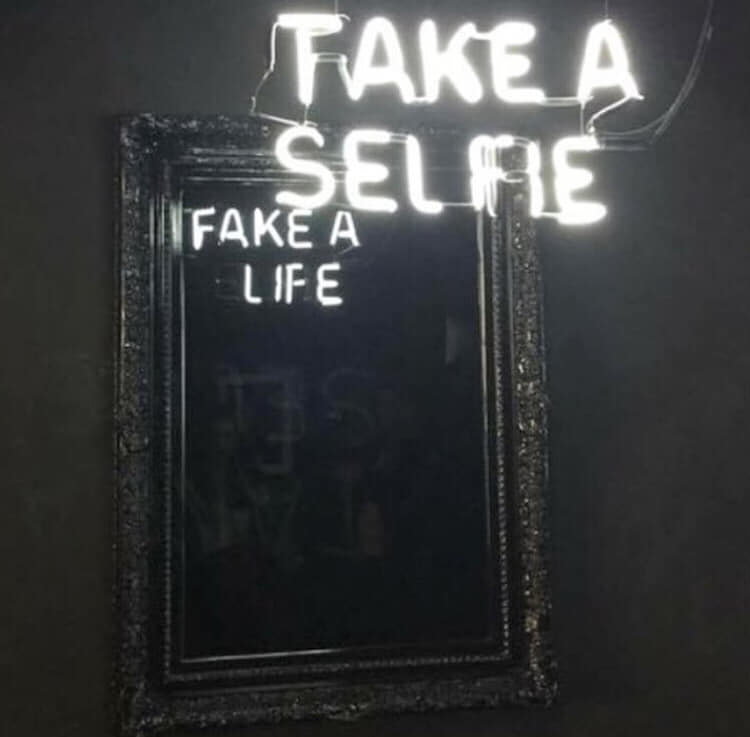
This dark, moody meme features a large mirror with an ornate black frame that displays the glowing neon text "TAKE A SELFIE" at the top. Inside the glass, the words "TAKE A LIFE" are reflected in the mirror's surface, creating a visual pun. The joke suggests that while the sign asks for a "fake selfie," the reflected text implies you are actually asking to "take a life."
simple-description (llama3.2-vision_11b)
The meme is a screenshot of a TikTok video where a user, "Papes", has created a dark and eerie atmosphere with a single image. The image shows a black background with a faint, glowing text that reads "Category context: Papes - Dark". The text implies that the user is exploring the theme of darkness and the unknown, and the image itself is a subtle reference to this concept.
detailed-analysis (gemma3-27b-vision)
Okay, here's an analysis of the image, broken down into the sections you requested, applying relevant theoretical frameworks where appropriate.
Visual Description
The image features a vintage-style ornate mirror with a bright neon sign superimposed on it. The neon sign displays the phrase “Take a Selfie. Fake a Life.” The text is rendered in block capital letters, the phrase “Take a Selfie” being the largest and above “Fake a Life”. The mirror’s reflective surface is black, creating a void where one would expect to see a reflection. The overall aesthetic is a blend of old-world elegance (the mirror frame) and modern/digital technology (the neon). The darkness surrounding the mirror emphasizes the luminosity of the neon.
Foucauldian Genealogical Discourse Analysis
Michel Foucault's genealogical method focuses on uncovering the historical development of power relations through examining discourses – systems of thought, language, and practice. This image is rich with potential for Foucauldian analysis.
- Discipline and Surveillance: The phrase "Take a Selfie" instantly evokes the culture of self-surveillance driven by social media. Foucault argues that modern power operates not primarily through repression, but through producing “docile bodies” – individuals who internalize norms and regulate their own behavior. Selfies can be seen as a form of self-discipline, shaping oneself to meet perceived social expectations and gain validation.
- Normalization of Performance: "Fake a Life" speaks to the way we perform identities and present curated versions of ourselves online. This relates to Foucault’s concept of normalization. Through social media, there's a constant pressure to conform to dominant narratives of success, beauty, and happiness, and to present a "normalized" self, even if it’s inauthentic.
- Power/Knowledge: The act of taking and sharing selfies is tied to a particular knowledge regime regarding self-presentation, aesthetics, and social acceptance. Those who understand and navigate these “rules” are empowered within the digital realm.
- Genealogy of the Selfie: A genealogical investigation could trace the history of self-portraiture (painting, photography) and how it has evolved into the contemporary selfie, examining the shifting power dynamics and social functions of each form.
Postmodernism
This image is deeply embedded in postmodern themes:
- Simulacra and Simulation (Jean Baudrillard): The phrase "Fake a Life" directly points to Baudrillard’s concept of simulacra - copies without originals. The self presented on social media often becomes a hyperreality – a simulation of reality that precedes and determines our experience of it. The ‘real’ self is lost within the layers of constructed identities.
- Deconstruction of Authenticity: The image challenges the notion of an authentic self. It suggests that identity is not something fixed and essential, but rather a constructed performance. The mirror, traditionally a symbol of self-reflection, is rendered useless – the image isn't reflecting truth, but the curated facade.
- Loss of Grand Narratives: Postmodernism rejects overarching explanations of the world. In this case, the image can be seen as a commentary on the erosion of traditional values and the rise of individual self-expression, even if that expression is inauthentic.
- Irony and Parody: There is a level of irony in the juxtaposition of the elaborate, antique frame with the garish, modern neon sign. It’s a playful parody of the pursuit of self-image and the superficiality of social media.
Critical Theory
Applying a critical theory lens (drawing on thinkers like Adorno and Horkheimer) highlights the following:
- Commodification of the Self: The image suggests the self is becoming a commodity. On social media, individuals are incentivized to present themselves in ways that are appealing to others (likes, followers), essentially turning their identity into a form of capital.
- Culture Industry: The emphasis on self-presentation ties into the concept of the culture industry, where standardized forms of entertainment and identity are produced and consumed. Social media platforms contribute to this by promoting certain aesthetics and lifestyles.
- Alienation: The pursuit of a "fake life" could be seen as contributing to a sense of alienation – a separation from one’s true self and from genuine human connection. The image hints at the emptiness that can result from focusing on external validation.
Queer Feminist Intersectional Analysis
A queer feminist intersectional analysis might focus on:
- The Performance of Gender and Sexuality: The call to "Fake a Life" resonates with Judith Butler’s work on performativity. Gender and sexuality are not fixed categories but are continually performed and constructed through social interactions. Social media provides a stage for these performances, which may be authentic or strategic.
- Beauty Standards & Representation: The image can be connected to the way social media perpetuates narrow and often oppressive beauty standards. The pressure to “fake” a life often involves conforming to these standards, reinforcing inequalities based on gender, race, and other social categories.
- Surveillance and Vulnerability: The act of sharing selfies can make individuals vulnerable to surveillance and harassment, particularly for marginalized groups. The image raises questions about the power dynamics inherent in online spaces and the risks associated with self-expression.
- Intersectional Identities: The impact of social media and the pressure to present a "fake" life are not experienced equally across different social groups. The image invites a consideration of how race, class, sexuality, and other intersectional identities shape individuals’ experiences of self-presentation and surveillance.
I’ve tried to be thorough in applying the frameworks you requested. The beauty of art is that it can be interpreted in many ways, so this is just one possible reading of the image. Let me know if you'd like me to elaborate on any of these points.
simple-description (llama3.2-vision)
The meme is a screenshot of a TikTok video where a user is lip-syncing to a song with the lyrics "I'm just faking smiles" and "I'm just pretending". The user is also holding a sign that says "I'm just faking it" and "I'm just pretending". The meme is likely poking fun at the idea of pretending to be happy or fulfilled when you're actually not.
tesseract-ocr
_ Syn / — ¢ ne : | LIFE