First Seen
2023-05-10T21:03:43+00:00
simple-description (qwen3.5_2b-q8_0)
Based on the image provided, there is no visible text in the visual content. The image features Yayoi Kusama's "kayal" or "koyama" pattern (specifically resembling a lamp or patterned fabric), the figure of the woman, and the "This is what I look like" meme style (often associated with Kusama), but there is no readable text present in the scene itself.
simple-description (llama3.2-vision_11b)
The meme features a picture of a person sitting in a dark room, surrounded by a collection of dark-colored objects. The image is captioned "Papes - Dark" and is likely referencing a specific meme or joke that is not visible in this description.
detailed-analysis (gemma3-27b-vision)
Okay, here's an analysis of the image, broken down into sections according to the prompts, addressing each relevant category. Because of the complexity of a single image, these won't be exhaustive treatises, but rather explorations of how the various theories can be applied to understand it.
Visual Description
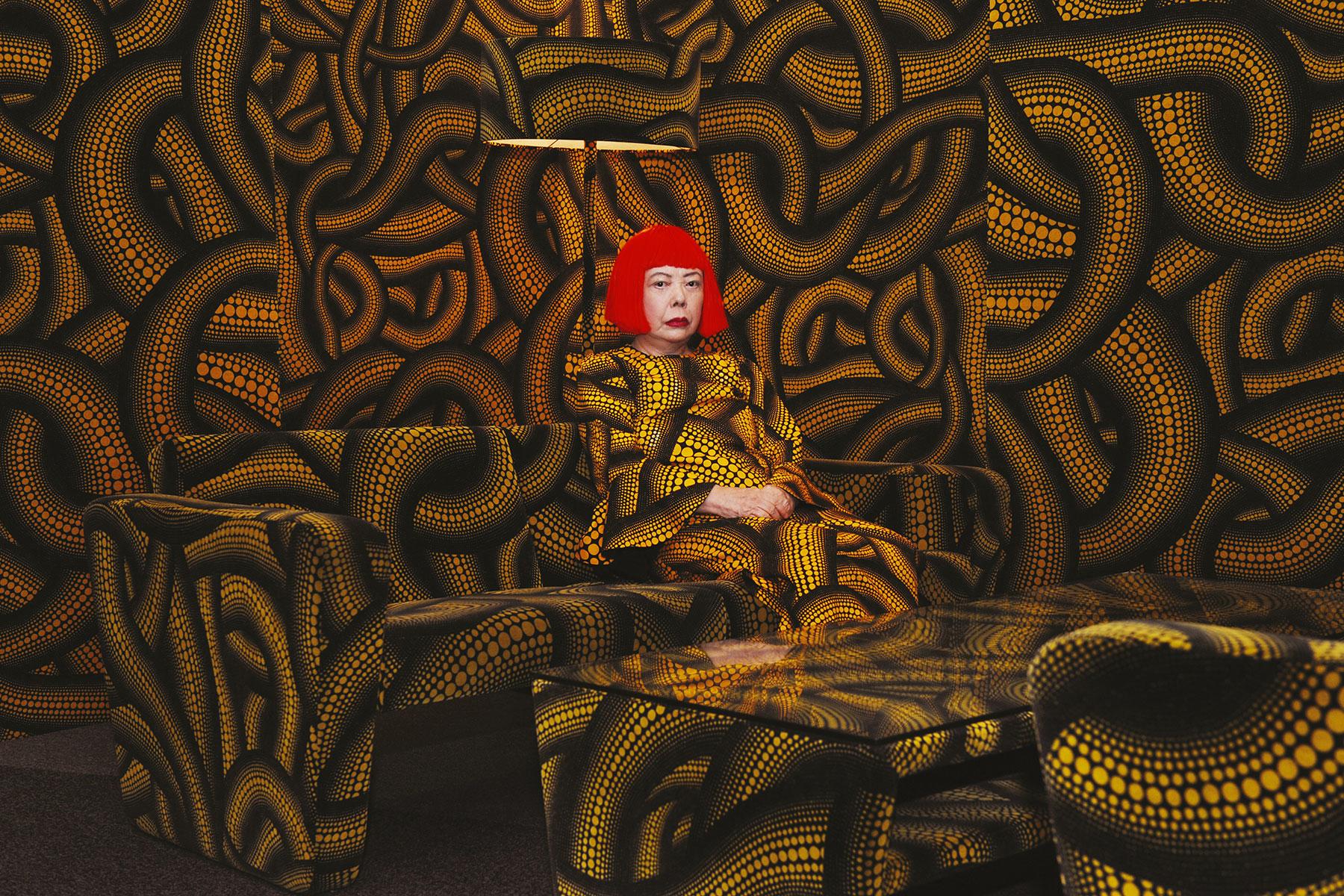
The image depicts Yayoi Kusama, a renowned Japanese contemporary artist, seated on a yellow and black patterned armchair within a room completely covered in the same pattern. The pattern resembles elongated, looping, polka-dotted organic forms, evoking serpentine or intestinal shapes. Kusama herself is dressed in a matching yellow and black patterned outfit, effectively blending her into the environment. She wears a vivid red wig and makeup, creating a striking contrast against the dominant color scheme. The lighting is warm, casting shadows and emphasizing the repetitive nature of the pattern. A single, bright light fixture hangs above, focusing attention on Kusama. The composition is strikingly symmetrical and immersive. The overwhelming repetition of the pattern, the blending of the artist with her creation, and the strong visual contrast create a disorienting, almost hallucinatory effect.
Postmodernism
This image powerfully embodies many tenets of Postmodernism.
- Deconstruction of Boundaries: The image dramatically blurs the boundaries between the artist, the artwork, and the viewer. Kusama is the art, enveloped by it, effectively becoming indistinguishable. This collapses the traditional hierarchical division between creator and creation.
- Simulation & Hyperreality: The overwhelming pattern suggests a simulation of reality. The space is not "real" in the traditional sense; it's a constructed environment that feels more intense and saturated than everyday experience. It creates a hyperreality – a simulation that feels more real than real.
- Rejection of Grand Narratives: Kusama's work often challenges traditional artistic categories and expectations. There's no clear “message” or narrative. Instead, the image is an experience, a sensory overload, rejecting the idea of art serving a specific purpose or conveying a singular truth.
- Irony & Playfulness: There's a playful quality to the image, despite its intensity. The polka dots, while potentially unsettling, also have a whimsical quality. The image simultaneously embraces and subverts expectations of artistic seriousness.
Queer Feminist Intersectional Analysis
This image offers a fertile ground for a Queer Feminist Intersectional analysis:
- Subversion of Gender & Identity: Kusama's bold, performative self-representation challenges conventional notions of femininity. Her bright red wig and makeup create a stylized, exaggerated persona that transcends typical gender norms. The image isn't necessarily about being female but about performing gender in a radical, self-authored way.
- Self-Obsession & Interiority: The image can be interpreted as a visual manifestation of Kusama’s documented struggles with mental health, particularly obsessive-compulsive disorder. The infinite repetition of the polka dots could represent the internal, cyclical patterns of her thoughts and anxieties. This is a reclamation of an interiority often pathologized or suppressed in women.
- Space & Control: Kusama creates a space entirely controlled by her vision. She fully immerses herself (and the viewer) within her artistic world. This act of creation and self-enclosure is a powerful assertion of agency.
- Intersection of East/West: As a Japanese artist working in a Western art world, Kusama's work sits at the intersection of these cultural spheres. Her aesthetic challenges Western expectations of artistic expression, incorporating elements of Japanese traditional art and aesthetics.
Foucauldian Genealogical Discourse Analysis
A Foucauldian reading focuses on power dynamics and the construction of knowledge:
- The Gaze & Power: The image is inherently about the gaze. Kusama subjects herself (and the viewer) to an intense, all-encompassing visual field. This can be understood as a reclaiming of the gaze – subverting the historically male-dominated perspective that often objectifies women.
- Discipline & Self-Surveillance: The repetitive pattern could be interpreted as a metaphor for disciplinary structures. The endless repetition feels constricting, mirroring the ways in which power operates through normalization and regulation. However, Kusama is simultaneously enacting this discipline on herself – a form of self-surveillance and self-creation.
- The Construction of “Madness” & the Artist: Kusama’s known mental health struggles are integral to her artistic identity. The image potentially questions the boundaries between genius and madness. It challenges the ways in which society defines and categorizes “abnormal” behavior, particularly in women.
- Genealogy of the Polka Dot: The polka dot itself becomes a site of genealogical inquiry. Examining its historical presence in art and culture reveals changing meanings and associations. Kusama has transformed the polka dot into a signature motif, imbuing it with her personal history and artistic vision.
Let me know if you'd like me to expand on any of these sections or explore other theoretical frameworks!
simple-description (llama3.2-vision)
The meme is a screenshot of a woman (likely a celebrity) sitting in a room filled with her own artwork, specifically her 2013 exhibition "Roppongi Hills" in Tokyo. The image is captioned "I can smell the desperation radiating from this room". The meme is likely poking fun at the artist's obsessive personality and the overwhelming nature of her work.
tesseract-ocr
Be OOS CSN. OR MSRRY aa Gs pee rt ce BSE ect ee a ae oe ee oe a ig et, Yates SHEN GB? coaae ee ge? ee a 2 a Ne eases nuit aes Se ARSE "Bae a i ay es o i a ie a Si ae ey Pa aesepeeweeuee, Mee ee ae Ce ee ue Seco ae oe SET cece eer BIE EE Sa ree ate ee Se eee Se ge Se acon ad Te Eat me a Ree ae ce Le Be te Bn ch es Pee PT HEE Teta. ke Oe Eig Perec eee es ee Se Pe ee res Pie ee oS ee TP ee | ee ee CSE A oe ee Soros Sesi SRE “Stee? ee Bi 2. 6 ae ae te Pcie eas eco Ba ie Pe eae oc a Perens me Be ye ae mee — 4 ee ees eT te eee Bee mee) re meertmin C Ee Be ga BP od, ES ae { Se aaa cal Se BL eas Te er ieeeeeenac:, 8s Oy ea ee ee a ea a mie er es Ee tee eee ees, et “se COG a eee es a Se 8 te a, Wee mete ate Bale POR MEY Se eee Eee aes Seen mes ae gene SS SN aa S [ome est Euuuicaagen steely: See Ps ARSE cu Seema Be ee e eee Ly oe Petit EOS te a SSE Fe Hoe, ERR. sete sess BOS A ee med Pome eco erty Pee ee SS te XD Coote aus Hes: “See See Ba, Lise ein Ce ie eee mee “tet: atGen Sei. HeOSsis Feel RA sea ae See Nee Pe BS A eek ra igeemanees so ee es DO ae ae ey Ce Ee ee ee Heese. te PR a et co ee gee Pe Gama ea cl ae Perot ee. ane ee Re pax ee 7 eS ON aie Ps Beats ti Fei hae ORE. A i SSS) bf) aR saat Si ea # os Os ES Sm mT ee Sincere Oe ee | ier Oe Ce Cl SS ye eee Bs Sas aN BCA em i PEE e Se wr {fl Se Be Pe ee ee ee eee Pam ak eae caro BSS ek cocci Tm TA HE SaetetQ@ eT Or ee ae ee agente Er Fa Cas oma Ne aa Me ae NR ee ooo a a ie ee ee ee Pee ere ah Nea ANG Sages see a al ee es tn ee BE i aueigeges NN AN any \ em aaa RO” cc ee a SSE Ua eS Mf a} ssle@es: er ee Beaters Bots ame CTS ela gt NGM WO sal i EES See BELA Dees Ss SNORE = ee Coat Ne Se an ae a a ee SO ee Mi ge wee Ee ee IN ee eg ae DRO it a ae 6 eg i ee car OO Ls et as Bee eed ae ee ane ere ME oo SES ee BN ite men Psa RCS tt rape AER lia Ss ee a ie oe ei reece me a Rage 6 gem = cet RAT a eee | Rast wey SELES rE ch AR em Be Nntene a ONE a ee ee bas ee EN a ae Re gee Ee aie on gs a esses et Ce ae Ben PSE oN ag a Fan eee Bey tate eine Te ae ae a Cae Na aR at ey aR Satish einai See a q “22 ease sas), pa Peat a ea RAR Uc Stradi ee SNe ‘ “ he Ve Fo" CORP a Cis wee renee esti oy eS Po a ot oe Re ar Bar IE PAM Na a Sas Wi rete oe) S ee ae BGG ERAS ater BO Sty" eal See oe) eS ee ede Se ae Bae wae Bee See @ [ae Pe ZO ae off _ oy te Sere a ee Ge ae peer | SH aor tame ae Seer = = 4 ee Ba eed Oa ee merry Bence ee: Be hy he ry Oe See ee hg Ca a eee re am fo Sa ee ott LT hath aioe Pies ieee ee. ey cs eee eaten iy at \ a? a a BO TERE Ys fms 2 MUST YS Memes th. Seed ee afi cela ee? te i een See ees aa ties 3 Be Bios ee I ates. Try Oa Fee ee AE RG eh tia PES Abe So) Nils ae Sit Da ha SEE Eh a EL tent es ea rchersa ahh eae Been ai Bred +, Simmer) + Stra “4 maeseeseteeenen Se seg a ing A eae Gey stn eens, ee ae EES BS ate ea, Sh 2 ee SOSA Peary 4 . The 4," Yatee \T? -“) \ ae ie eal