First Seen
2023-05-10T21:03:43+00:00
simple-description (qwen3.5_2b-q8_0)
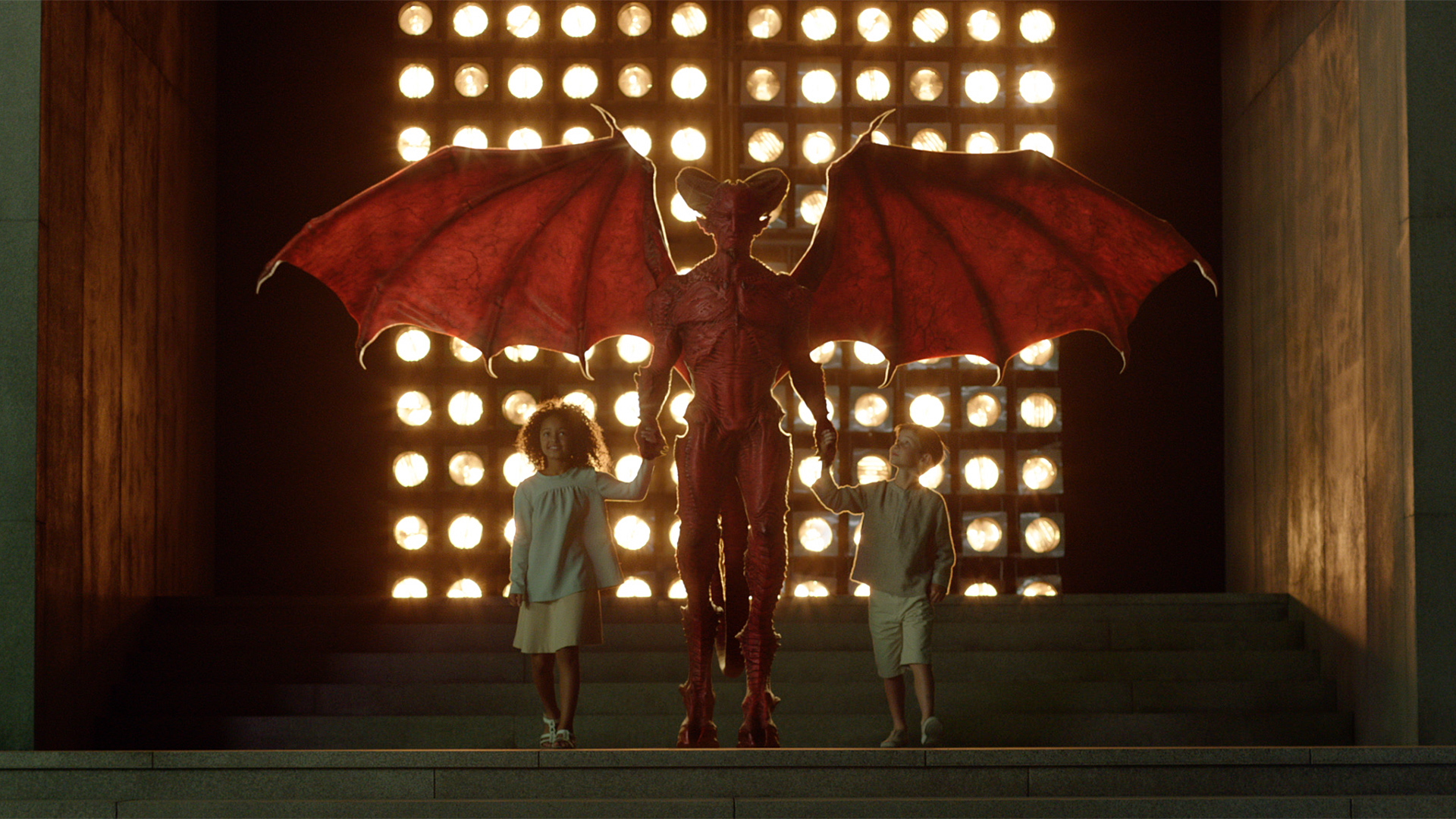
Based on the "Papes - Dark" category, this meme is a dark, humorous interpretation of the popular "Papie" (or "Papas") format. It features a large, red, demonic creature that resembles a monster or devil holding hands with two small children, playing on the contrast between a scary, ominous subject and innocent childhood. In this specific instance, the humor comes from making a dangerous entity look adorable and safe. Crucially, there is no text visible in the image itself.
simple-description (llama3.2-vision_11b)
The meme is an image of a person sitting on a couch with a group of children around them, with a large, cartoonish, and menacing-looking "Pope" sitting in the middle. The text "Papes - Dark" appears above the image, implying that the Pope is being portrayed in a dark and ominous way. The meme is likely making a humorous comment on the idea of a Pope being a symbol of authority and power, but with a dark and edgy twist.
detailed-analysis (gemma3-27b-vision)
Okay, let's break down this image with the requested analytical lenses. It's a striking and multi-layered image, lending itself to several interpretations.
1. Visual Description
The image presents a scene of high contrast and symmetry. Three children, two girls and a boy, stand facing the viewer on a stepped, concrete platform. Behind them is a colossal, demonic figure with expansive, bat-like wings, illuminated against a grid of bright, circular lights recessed into a dark wall. The figure is highly textured, appearing almost organic, with bony protrusions and a skeletal structure. The figure's color is a deep, rich red.
The lighting is dramatic. The circular lights create a halo effect around the demonic figure, while also casting shadows on the children. The overall color palette is limited – predominantly reds, browns, and muted tones, further emphasizing the contrast with the bright lights. The composition feels staged and deliberate, like a theatrical tableau. The children are small in comparison to the figure, creating a sense of awe and power imbalance.
2. Foucauldian Genealogical Discourse Analysis
This image immediately evokes the concept of power/knowledge as articulated by Michel Foucault. The demonic figure can be interpreted as a manifestation of societal or internalized anxieties and structures of control.
- Discourse & Normalization: The demonic figure, seemingly imposing its presence on the children, can represent the normalization of fear, authority, or even trauma. The grid of lights behind it could symbolize the panoptic gaze – a system where surveillance is constant and internalized, shaping behavior and discipline.
- Genealogy of Power: Tracing the "genealogy" of this power – its historical origins and how it has evolved – might reveal the anxieties and historical forces that have created this symbolic figure. What historical fears, religious beliefs, or societal pressures have shaped the "monster" confronting these children?
- Subject Formation: The children, dwarfed by the figure, represent individuals subjected to these power structures. Their stance – facing the figure rather than turning away – suggests a complex relationship of both confrontation and acceptance. They're not necessarily victims; they are produced by the discourse of power, potentially even embodying its future.
3. Critical Theory
From a Critical Theory perspective, this image raises questions about ideology and the reproduction of dominant narratives.
- Myth & Symbolism: The demonic figure is a potent symbol. It can be seen as representing "the Other" – the marginalized, the feared, the repressed. Analyzing the function of this symbolic figure reveals how it's used to maintain existing power structures. Is it used to demonize certain groups, justify oppression, or create a sense of collective identity based on shared fear?
- Alienation: The starkness of the scene and the distance between the children and the figure can symbolize the alienation inherent in modern society. The children are disconnected from the figure, but simultaneously captivated by it. This represents a disconnect from authentic experience and the dominance of abstract symbolic representations.
- Ideological Apparatus: The staged, theatrical nature of the image points to how "ideology" is disseminated through cultural forms. The image works on the viewer through its aesthetic impact, subtly reinforcing certain beliefs and values.
4. Marxist Conflict Theory
A Marxist lens reveals a potential struggle for dominance and the representation of class or power dynamics.
- Symbolic Capital: The demonic figure, as a powerful and awe-inspiring image, represents a form of "symbolic capital" – something that holds value and prestige in a given society. The children, in contrast, appear vulnerable and lacking this symbolic capital.
- Power Imbalance: The sheer size difference between the figure and the children signifies a profound power imbalance. The figure could represent the ruling class or dominant ideology, while the children represent the proletariat or oppressed groups.
- False Consciousness: The children's gaze suggests a complex relationship with the demonic figure. Are they aware of the power dynamics at play? Are they passively accepting the figure's dominance, or are they beginning to question it? This relates to the concept of "false consciousness," where individuals are unaware of their own exploitation.
5. Postmodernism
A postmodern reading deconstructs the idea of a singular, fixed meaning.
- Simulacra & Simulation: The entire scene could be seen as a “simulacrum” – a copy without an original. The demonic figure is a representation of fear, but it's not necessarily “real” in any objective sense. This highlights the postmodern emphasis on the constructed nature of reality.
- Intertextuality: The image is loaded with allusions to various cultural and religious references (demonic imagery, religious iconography, theatrical staging). This "intertextuality" creates a complex web of meanings, rather than a single, definitive interpretation.
- Deconstruction of Authority: The very act of questioning the "meaning" of the image is a postmodern gesture. The image resists easy categorization or interpretation, challenging traditional notions of authority and truth.
6. Queer Feminist Intersectional Analysis
From a Queer Feminist Intersectional perspective, the image could represent a challenge to heteronormative power structures and the marginalization of queer and gender non-conforming individuals.
- Monstrous Feminine: The demonic figure, traditionally associated with "otherness" and transgression, could be interpreted as a representation of the "monstrous feminine" – a figure that challenges traditional notions of femininity and female power.
- Power Dynamics & Gender: The size and power imbalance between the figure and the children raises questions about gender and power. Are the children gendered in a way that reinforces traditional power dynamics? How does the image challenge or reinforce these dynamics?
- Intersectionality: The children represent different identities. An intersectional lens recognizes how these identities (gender, race, class, etc.) intersect and create unique experiences of oppression and marginalization. The image could be seen as a commentary on the ways in which these intersecting identities are shaped by power structures.
In conclusion: This image is a rich and complex one, inviting multiple interpretations. Its power lies in its ambiguity and its ability to resonate with different theoretical frameworks. It's not simply a static image; it's a starting point for critical inquiry and exploration.
simple-description (llama3.2-vision)
This meme features a photo of a young boy with a frightened expression, standing in front of a large, imposing creature with glowing red eyes. The creature appears to be a dragon or a monster from a fantasy movie. The text in the image reads: "When you're trying to do your homework but the demon in your basement is making too much noise."
tesseract-ocr
A tet mh Tre cere Tr?) A) | ld = a | P - 2 F : ; a) 2 f y & a . = \ ae a ie oe oe ae ep .\ a - p ; 3 ae a \ VW ir ' ae 3 4 i s- 2 7m ole | ooo je) a 1 a 7 a =} oe) i mi | aa 4 \ Hy salle Ll ik? ae