First Seen
2023-05-10T21:03:43+00:00
simple-description (qwen3.5_2b-q8_0)
This image features a stylized, high-contrast portrait of politician John Kerry, appearing deep in thought or distressed as he holds his hand to his face. The text "POV: Dark" identifies this as the famous viral meme originating from the internet, where the character "The Dark" expresses a dark or sinister personality. The meme humorously implies that Kerry is the "Dark" person, suggesting he is either in a terrible situation or acting suspiciously.
simple-description (llama3.2-vision_11b)
The meme is an image of a person (Elon Musk) with a shocked expression, captioned "When you realize you have to pay taxes on your cryptocurrency gains". The image is a play on the common phrase "when you realize" and is used to express the frustration and surprise that comes with understanding the financial implications of one's investments.
detailed-analysis (gemma3-27b-vision)
Okay, here's an analysis of the image, broken down into the requested theoretical frameworks, applying them where relevant. Note that not all sections will be filled if the image doesn't readily lend itself to a specific lens.
Visual Description
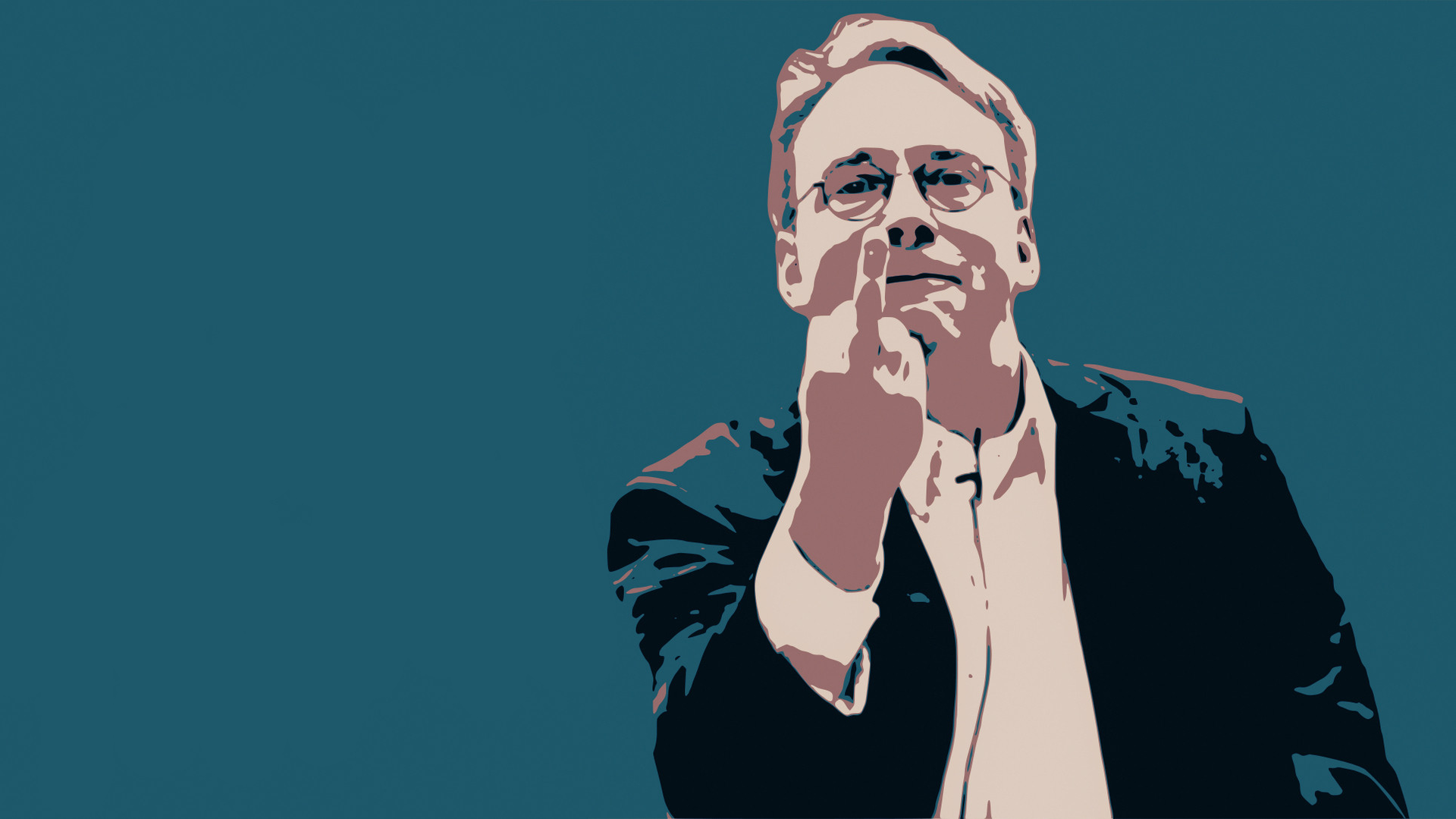
The image is a stylized digital portrait of Michel Foucault, the prominent French philosopher, social theorist, historian, and critic. It’s rendered in a flat, vector-style graphic. The background is a solid teal color, creating a stark contrast with the subject. Foucault is depicted from the chest up, angled slightly. He is wearing a suit and tie. His hands are clasped together in front of his face, almost as if in deep thought or a gesture of contemplation. The use of color is limited and somewhat muted; shades of beige, brown, and black define his face and clothing. The image appears to be inspired by pop art or political poster aesthetic. There are no shadows or gradients, contributing to the flat, graphic quality.
Foucauldian Genealogical Discourse Analysis
This image is powerfully suited for a Foucauldian analysis, given the subject is Michel Foucault himself.
- Discourse & Power/Knowledge: The image is a discourse in itself. It's a specific representation of Foucault, created and circulated within a network of power/knowledge. Who created this image, and what ideas do they want to convey? Is this image aiming to establish Foucault as a solemn thinker, an intellectual authority? The very act of portraying him in this particular way constructs him as a specific figure, rather than simply reflecting a pre-existing reality.
- Genealogy: A genealogical analysis would look at how representations of intellectuals (like Foucault) have evolved over time. How has the image of the "philosopher" been historically constructed, and what power dynamics are embedded in that construction? This image may be referencing or reacting to earlier representations.
- Subjectivation: The image also touches on how subjects (like Foucault, or those viewing the image) are formed through discourse. The image, as a marker of authority, might call upon existing perceptions and expectations of what an intellectual should look like or how they should behave. It participates in the "subjectivation" of both Foucault (as a historical figure) and those who encounter this representation.
- Disciplinary Power: While not directly depicted, the image indirectly hints at the themes of discipline that Foucault explored in his work. The stern, thoughtful pose could be interpreted as reflecting the self-discipline and rigorous thinking associated with intellectual work.
Critical Theory
Critical Theory, building from the Frankfurt School, centers on analyzing societal power structures and challenging hegemonic ideologies.
- Representation & Ideology: The image functions as a representation of intellectual authority. A Critical Theory perspective would question whose authority is being presented. Is the image reinforcing a specific, dominant notion of what intellectual work looks like? It could be seen as an attempt to legitimize certain forms of knowledge and silence others.
- Commodification of Ideas: In the modern context, this image (like any media representation) can be seen as part of the commodification of intellectual work. Foucault's ideas have become a brand, and this image contributes to that branding.
- Critique of Enlightenment Reason: Foucault himself critiqued the Enlightenment emphasis on reason and universality. Therefore, this image, as a representation of a critical thinker, inherently subverts traditional notions of power.
Postmodernism
The very style of the image is rooted in postmodern aesthetics.
- Deconstruction: The flat, vector style and limited color palette break from traditional representational modes. It "deconstructs" the idea of a realistic portrait.
- Simulacra & Simulation: The image itself is a simulacrum – a copy without an original. It's a representation of a representation, divorced from any "authentic" reality.
- Blurring Boundaries: The image blurs the boundaries between art, propaganda, and intellectual portraiture. It acknowledges its own constructed nature.
Let me know if you'd like me to elaborate on any of these points!
simple-description (llama3.2-vision)
This meme is an image of a man with a puzzled expression, captioned "I can explain it better than you can". The image is likely a screenshot from a TV show or movie, but the exact source is not specified. The caption suggests that the speaker is trying to convey a complex idea or concept, but is struggling to explain it in a way that others can understand.
tesseract-ocr
Go \ f _ Lae i. a* 4. wo — ) yee ff ae e . f j 1 5 : x ' | \ |