First Seen
2023-05-10T21:03:43+00:00
simple-description (qwen3.5_2b-q8_0)
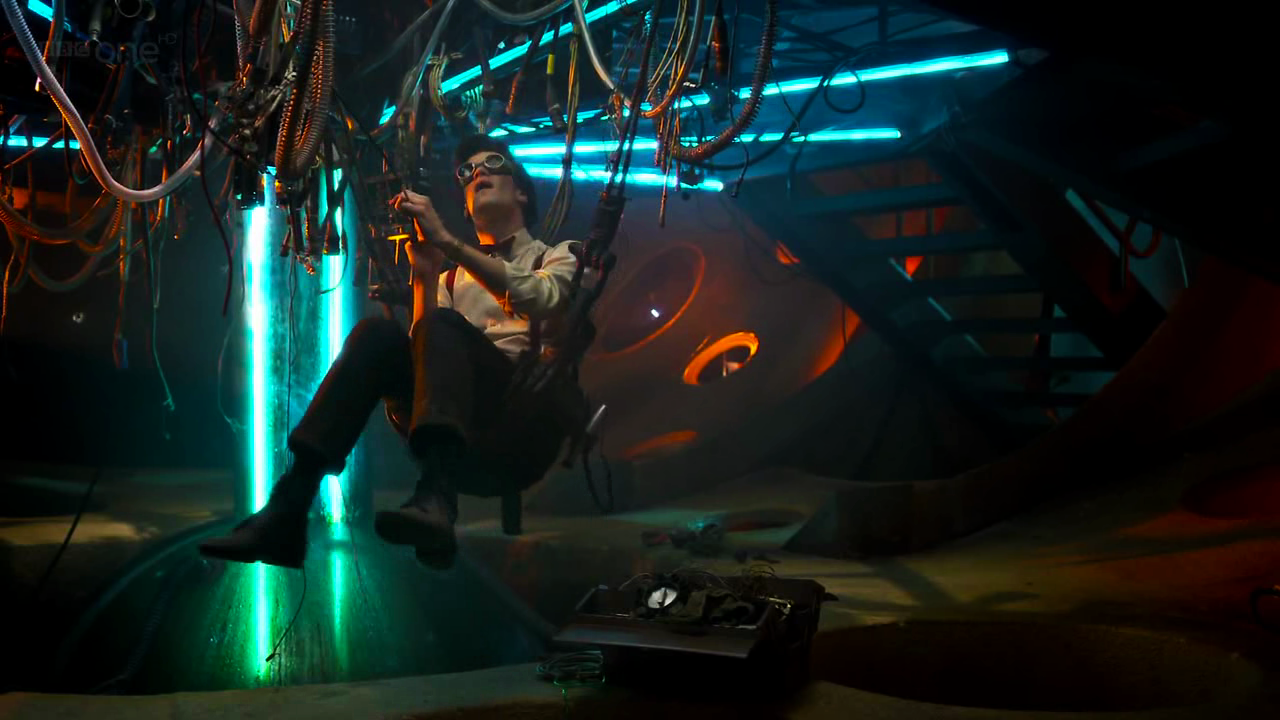
The meme "Papes - Dark" refers to the terrifyingly dark and hazardous interior of the TARDIS, the time-traveling spaceship from the show Doctor Who. The TARDIS's inner world is often a source of panic due to its chaotic nature and unknown dangers, fitting the "dark" description perfectly. You can also see the "BBC one HD" logo in the upper left corner.
simple-description (llama3.2-vision_11b)
The meme appears to be an image of a character from the TV show "Pope" from the category "Dark". The image shows a character with a dark and ominous tone, and the text overlay reads "Pope" in a bold, gothic font. The meme is likely referencing the show's dark and mysterious tone, and the character's eerie presence is being used to convey a sense of foreboding or unease.
detailed-analysis (gemma3-27b-vision)
Okay, here’s an analysis of the image, broken down into the requested sections. It's important to note that these are interpretations based on the visual elements and can be expanded upon. Some sections will be more prominent than others, given the imagery.
Visual Description
The image depicts a person suspended in a dark, complex, and futuristic or industrial setting. The person is dressed in what appears to be a button-down shirt and pants, with suspenders. They're seemingly restrained or suspended by a network of thick, dark cables or cords that crisscross the space above. The person is in a somewhat contorted, vulnerable pose, legs dangling and head tilted upwards.
The surrounding environment is stark and dramatic, featuring metallic platforms and intense, artificial lighting in shades of blue, orange, and red. A prominent feature is a bright, vertical column of cyan light intersecting with the subject. The atmosphere is dark, dystopian, and suggests control, confinement, and possibly interrogation or experimentation. There is a sense of being watched, enhanced by a blurry figure visible in the background, likely captured through a surveillance system. The cables are not purely functional, but seem to create a deliberate aesthetic of claustrophobia.
Foucauldian Genealogical Discourse Analysis
This image is incredibly strong for a Foucauldian analysis, specifically regarding power dynamics and discipline.
-
Panopticism: The surrounding cables and the vague presence of a surveillance system (the figure in the background) directly evoke the Panopticon. The subject could be observed at any moment, even if not being actively watched. This creates self-discipline – the person internalizes the potential for observation and modifies their behavior accordingly. The network of cables becomes the structural embodiment of that power.
-
Discipline & Punishment: The pose of the subject, suspended and vulnerable, is reminiscent of historical forms of punishment and control. The cables aren't simply restraining but are a system of control, representing a disciplinary regime. It’s not necessarily physical torture, but a psychological and structural holding.
-
Genealogy of Power: The image doesn't present a single power figure. Instead, it emphasizes the network of control. The lineage of power isn’t located in one individual but is embedded within the system of cables, lights, and surveillance. This is critical – it’s about the structures that enable power, not just the exercise of it.
-
Subjectivation: The person is being "subjected" to this system, becoming a "subject" through the imposition of control. They aren’t simply an individual, but a product of the power dynamics at play.
Critical Theory
The image lends itself to broader Critical Theory frameworks, focusing on ideology and alienation.
-
Alienation: The person’s posture and the setting create a strong sense of alienation. They are disconnected from their environment, physically restrained, and seemingly isolated. This resonates with Marxist concepts of alienation from labor and the self.
-
Ideology & Control: The setting can be interpreted as a metaphor for the ways in which ideology operates. The cables and systems of control aren't just physical restraints but represent the invisible structures that shape our thoughts, beliefs, and behaviors.
-
Dehumanization: The image suggests the dehumanizing potential of systems that prioritize control over individual freedom and autonomy. The person is reduced to an object within a larger, impersonal machine.
Marxist Conflict Theory
While not explicitly overt, conflict theory can be applied:
-
Power Imbalance: The image showcases a dramatic power imbalance. The subject is entirely at the mercy of an unseen, overarching power structure. This reflects the core of conflict theory – the struggle between those who possess power and those who are subjected to it.
-
Oppression: The suspension and confinement represent a form of oppression, albeit a symbolic one. The subject is denied agency and freedom.
-
Class Struggle (Interpretive): One could interpret the image as a metaphor for the alienation of the working class within a capitalist system, where individuals are reduced to cogs in a machine.
Postmodernism
The image can be interpreted through a Postmodern lens, particularly in its challenging of traditional notions of control and truth:
-
Simulacra and Simulation: The environment isn’t necessarily ‘real’ but a constructed simulation of control. It creates a hyperreality where the lines between authentic experience and artificial representation are blurred.
-
Deconstruction of Authority: The ambiguity of the power structure – we don’t see who controls the system – challenges the notion of a centralized, absolute authority. It's a diffuse, pervasive control.
-
Fragmentation and Disorientation: The chaotic network of cables and the disorienting lighting contribute to a sense of fragmentation and a lack of coherent meaning. This aligns with Postmodern themes of uncertainty and the breakdown of grand narratives.
Queer Feminist Intersectional Analysis
This section is less explicitly represented but can still be applied:
-
Bodily Control & Surveillance: The image directly speaks to the ways in which bodies are often subject to control, scrutiny, and surveillance, particularly marginalized bodies. This resonates with feminist concerns about patriarchal control over women's bodies.
-
Vulnerability & Power Dynamics: The vulnerable posture of the subject highlights the power imbalances inherent in many social structures.
-
Intersectional Interpretation: One could interpret the imagery as representing the interlocking systems of oppression (race, gender, class, sexuality, etc.) that contribute to individual and collective vulnerability.
-
Breaking binaries: The subject is not positioned in a traditionally "masculine" or "feminine" pose, which could be interpreted as challenging gender norms.
It's important to remember that these are interpretations, and the image can be analyzed through other lenses as well. The richness of the image lies in its ambiguity and the multiple layers of meaning it evokes.
simple-description (llama3.2-vision)
The meme is an image of a character from the TV show "Doctor Who" (played by Matt Smith) sitting in a chair, looking frustrated and surrounded by a mess of wires and electronics. The text overlay on the image reads "When you finally get the Wi-Fi password but it's still not working".
tesseract-ocr
ara 0) cd ates ted fa) oe) oR A E aa eS aaa ar i> aks aa (aes ve 5 4 i "| JA ag ie a eg HX qt Any | any | wt fi mw y oN \ ( : . y Be ) i 7 "= i = | i. a "