First Seen
2023-05-10T21:03:43+00:00
simple-description (qwen3.5_2b-q8_0)
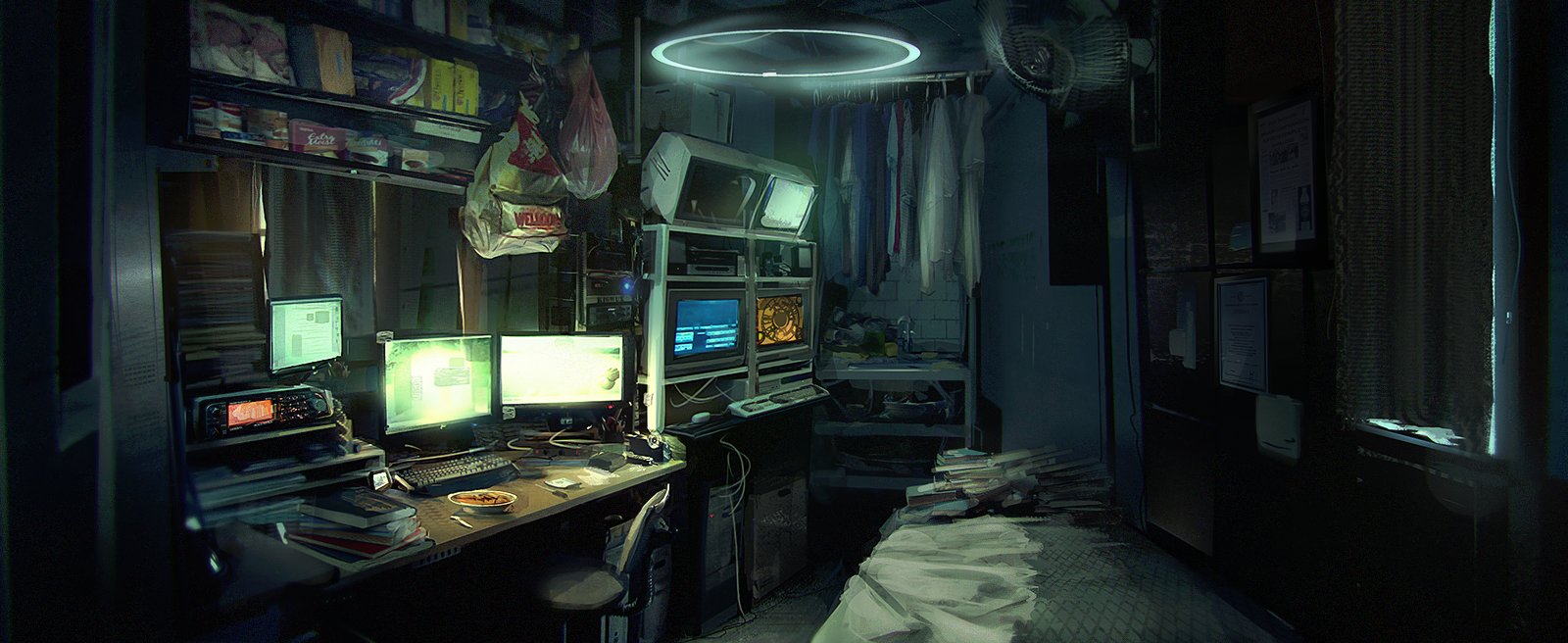
Based on the visual evidence, this image likely represents a "Dark Room" aesthetic or a specific internet meme format (referenced as "Papes - Dark") that showcases a dimly lit, moody environment. Visually, it depicts a cluttered space—resembling a basement office or a cramped apartment—where the ambient darkness is broken up by the cool, artificial light of several computer monitors. The scene includes text on various items in the background, such as a box labeled "Extra" and a bag with "WELCOME" written on it, adding to the sense of a lived-in, chaotic workspace where the glow of the screens illuminates the gloomy surroundings.
simple-description (llama3.2-vision_11b)
The meme appears to be a screenshot from a video game, specifically a dark and gritty game with a futuristic setting. The image shows a dimly lit room with a computer setup, and the text "Papes" is displayed on the screen. The meme is likely a reference to the game's dark and gritty atmosphere, with "Papes" being a humorous way to describe the game's setting.
detailed-analysis (gemma3-27b-vision)
Okay, here's an analysis of the image, broken down into the requested theoretical frameworks, only applying those that seem relevant to the scene depicted. The image is heavily suggestive and layered, so multiple interpretations are possible.
Visual Description
The image depicts a claustrophobic, intensely cluttered room that appears to be some kind of surveillance or data analysis center. The space is defined by a pervasive darkness broken by the glow of multiple computer monitors and a single, circular fluorescent light fixture. The room is stacked floor-to-ceiling with obsolete electronic equipment – old CRT monitors, rack-mounted devices, and tangled wires. There are walls covered with what appears to be fast food packaging and other discarded items. A partially made, messy bed fills the far right corner. The overall aesthetic is dystopian, gritty, and suggests a kind of isolated, low-budget operation. It feels lived-in, and abandoned. The composition pushes the viewer's eye from the front desk with the many monitors to the back, where a messy bed is visible.
Foucauldian Genealogical Discourse Analysis
This image is ripe for a Foucauldian analysis. The room is a panoptic space – though not in the classical, perfect geometric sense. The array of monitors, presumably displaying feeds from surveillance cameras, suggests a system of observation and control. The individual within this space – implied, but unseen – is both an observer and, potentially, observed. This space embodies power dynamics. The monitors aren't simply about "seeing" – they create knowledge, classify information, and define what is considered "normal" or "deviant".
A genealogy of this space would trace the history of surveillance technology, information gathering, and the growing need for constant monitoring in contemporary society. The obsolescence of the equipment suggests a cycle of technological innovation and discard, where older systems are replaced, but their underlying logic of control persists. The sheer accumulation of 'junk' (fast food containers, discarded tech) reflects the proliferation of data and the ephemeral nature of information in a late-capitalist society.
The focus is not necessarily on who is being surveilled, but the practices of surveillance themselves – how they construct reality and shape behavior. The implication is that this space is used to construct truth, but the truth is created through the surveillance and data manipulation within.
Critical Theory
From a Critical Theory perspective, the image represents the alienation and dehumanization inherent in late capitalism. The room embodies a kind of technocratic isolation. The accumulation of obsolete technology speaks to the wasteful and unsustainable aspects of consumer culture. The clutter and disorder suggest a breakdown of rational organization and a loss of control. The implied figure inhabiting the space seems overwhelmed and consumed by the flow of information.
This space isn't just about technology, but about the rationalization of life, where everything is measured, categorized, and controlled. The figure within the room is subject to the demands of a system that prioritizes efficiency and surveillance over human needs. The scene suggests that individuals become mere nodes in a larger network, losing their agency and autonomy. This is further underscored by the messy bed, an indication of a disrupted life with basic needs unfulfilled.
Marxist Conflict Theory
From a Marxist viewpoint, the image suggests a power imbalance and the exploitation of labor within a capitalist system. The room could be interpreted as a site of information control used by a ruling class to maintain its dominance. The accumulation of obsolete technology and clutter could be seen as a symptom of the inherent contradictions of capitalism – the constant drive for innovation that leads to waste and obsolescence.
The isolated and cluttered nature of the space might reflect the conditions of precarious labor – the increasing number of people working in low-wage, insecure jobs. The implied individual within this space could be a low-level worker tasked with monitoring data and maintaining the surveillance system, while the owners of the system reap the profits. This setup emphasizes the exploitation of labor under a class structure.
Postmodernism
The image can be analyzed through a postmodern lens as a representation of the breakdown of grand narratives and the increasing fragmentation of reality. The clutter and disorder reflect the loss of a unified, coherent worldview. The juxtaposition of obsolete technology and advanced surveillance systems suggests a kind of pastiche – a mixing of different eras and styles.
The image embodies the concept of the simulacrum. The monitors display representations of reality, but these representations are increasingly detached from any original source. This creates a sense of hyperreality – a world where simulations replace the real, and it becomes difficult to distinguish between the two. The ambiguity of the scene – the lack of a clear narrative or purpose – further reinforces this sense of fragmentation and uncertainty.
Queer Feminist Intersectional Analysis
While not immediately obvious, this area could be used to examine power structures within the context of surveillance. The constant monitoring implied could disproportionately affect marginalized groups (based on gender, sexuality, race, etc.). The assumption of surveillance can perpetuate systems of control and discrimination. Who is being watched through the monitors would be a crucial aspect of this analysis. The room itself can be seen as a claustrophobic and potentially oppressive space, reflective of societal constraints. The messy bed could indicate a disruption of domesticity or self-care, especially in the context of being constantly monitored or controlled.
Let me know if you'd like me to elaborate on any of these interpretations!
simple-description (llama3.2-vision)
The meme is a screenshot of a computer desktop, but the screens are all black with a white "ERROR" message. The caption reads "when you finally understand the code but the computer still doesn't".
tesseract-ocr
re <a 00 = > 4! ae ay te fn x \ , a Lz " im 3 ; mi Hy | ee | eee ‘ = a ee Pe ib =: i, - Ik = a ‘ i ' y !