First Seen
2023-05-10T21:03:43+00:00
simple-description (qwen3.5_2b-q8_0)
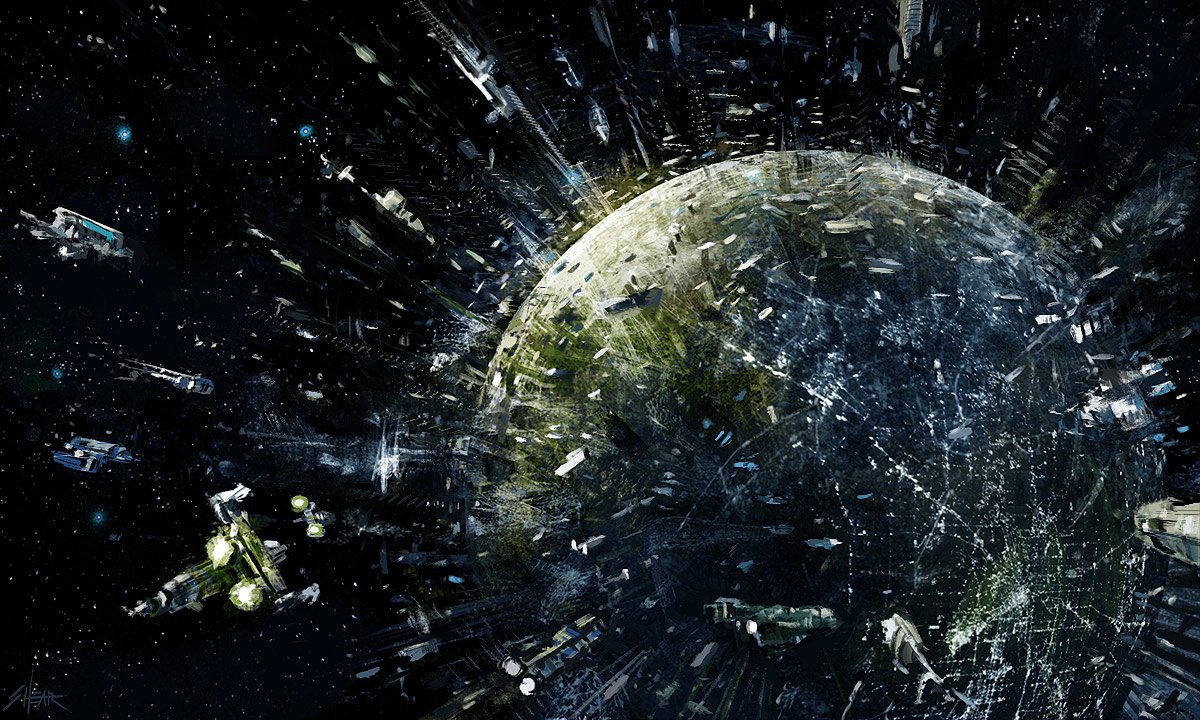
This image depicts a chaotic cosmic disaster where a massive planet is being torn apart by a swirling swarm of debris and spacecraft.
This visual serves as an example of the "Papes are dark" meme, a reference to a chaotic and villainous event in a video game that implies even powerful heroes can't stop the apocalypse. The meme describes "dark" scenarios, and this image illustrates that concept by showing a planet being destroyed in absolute, violent chaos.
simple-description (llama3.2-vision_11b)
The meme appears to be a screenshot of a video game, likely from the series "Papers, Please," which is known for its dark and satirical take on bureaucratic systems. The image shows a character's face with a caption "I'm not a paper, I'm a person" in a sarcastic tone, implying that the character is being treated like a piece of paperwork rather than a human being.
detailed-analysis (gemma3-27b-vision)
Okay, let's break down this dramatic space scene image through the lenses of several theoretical frameworks.
Visual Description
The image depicts a dramatic scene of orbital warfare or catastrophic destruction around a planet. A pale, mottled planet dominates the center, its surface showing hints of continents and possible cloud cover, though significantly damaged and appearing almost scarred. Surrounding the planet is a chaotic debris field – countless fragments of what appear to be spacecraft, structures, and other unidentified objects are strewn throughout space.
The lighting is stark and directional, with intense highlights on the edges of debris and the planet’s contours, emphasizing the immense scale of the conflict. Small bursts of light suggest active weapon fire and explosions. Several recognizable (presumably fighter-type) spacecraft are visible, positioned as if engaged in combat. The background is a deep, black expanse punctuated by faint stars, reinforcing the vastness and isolation of the scene. The overall effect is one of intense destruction, loss, and the fragility of civilization, suggesting a major, potentially apocalyptic, event. The image relies heavily on a dynamic composition, with debris and craft appearing to stream around the planet, creating a sense of movement and instability.
Foucauldian Genealogical Discourse Analysis
This image can be analyzed through Foucault's lens by examining the discourses embedded within it about conflict, power, and the construction of "enemy."
- Discourses of Warfare: The image is saturated with the discourse of modern warfare. The spaceship designs, the debris field, and the visual cues of combat reinforce the normalized narratives of aggression, defense, and destruction as inherently connected to technological advancement.
- Construction of the "Other": Although we don't see who is fighting, the image inherently positions an “us” versus “them” scenario. The destruction could be interpreted as a justification for further aggression or the enforcement of power structures. The image doesn't show motivations – it simply presents destruction as a fact, inviting viewers to fill in the narrative with their own biases and assumptions.
- Power/Knowledge: The image can be seen as a manifestation of power/knowledge. Those who control the technologies depicted (spaceships, weaponry) exert power through their ability to inflict destruction. The knowledge embedded in the technology is inseparable from its power – it's not simply about what the technology can do, but who controls it and how it is deployed.
- Genealogical Lineage: We can trace a “genealogy” of this image back to previous depictions of warfare – battleships in naval paintings, aerial dogfights from WWI, nuclear explosions. Each iteration builds upon the previous, shaping our understanding of conflict and its imagery.
Marxist Conflict Theory
This image screams conflict theory. From a Marxist perspective, the scene is an obvious representation of class struggle extended into the cosmos, or a struggle over resources.
- Material Conflict: The destruction isn't abstract; it's of material objects – ships, infrastructure. This emphasizes the material basis of conflict. The fight is likely over resources (space, minerals, technological advantage) or control of a strategically important planet.
- Class/Faction Struggle: While the specifics are unknown, the conflict likely represents a struggle between competing factions or classes. The spaceship designs could symbolize different social groups with differing ideologies or access to resources.
- Exploitation and Domination: The image suggests an imbalance of power. One side may be seeking to exploit the resources of the planet or dominate its population. The destruction is a consequence of that power dynamic.
- Alienation and Reification: The scale of destruction highlights the alienation of individuals from the means of production (in this case, the technology used for war) and the reification of these tools as objects of power rather than instruments for human flourishing.
Postmodernism
The image lends itself to a postmodern reading in several ways:
- Fragmentation and Loss of Grand Narratives: The shattered debris field symbolizes the fragmentation of traditional values, beliefs, and the "grand narratives" (like the inevitability of progress or the triumph of good over evil). The scene suggests a collapse of order and meaning.
- Simulacra and Hyperreality: The scene could be seen as a "simulacrum" – a copy without an original. Is this a real battle or a simulation? The image lacks context, blurring the lines between reality and representation. It could be a spectacle divorced from any underlying moral or political purpose.
- Deconstruction of Power Structures: The image challenges the idea of a unified, authoritative power. The destruction of infrastructure suggests a breakdown of control and the erosion of hierarchical structures.
- Questioning of Truth & Objectivity: The lack of context forces the viewer to create their own interpretation. This emphasizes the subjective nature of truth and the impossibility of objective representation.
Critical Theory
From a critical theory perspective, this image reveals much about the societal structures and ideologies that generate conflict.
- Ideology of War: The image perpetuates the idea that war is a natural or inevitable part of human existence. The focus on action and destruction obscures the underlying causes of the conflict and the interests it serves.
- Commodification of Conflict: The spectacle of destruction is itself a commodity, consumed by audiences as entertainment or a form of vicarious thrill. The image reinforces a culture of violence and desensitization.
- Power Dynamics and Oppression: The image implies an imbalance of power and the potential for oppression. The destruction may be a result of systemic inequalities and the exploitation of vulnerable populations.
- Critique of Technological Determinism: While technology is central to the image, critical theory would question the idea that technology is neutral or inherently progressive. Technology is shaped by social forces and can be used to reinforce existing power structures.
Let me know if you'd like me to expand on any of these analyses or explore other theoretical perspectives!
simple-description (llama3.2-vision)
This meme is an image of a person sitting on a couch, looking dejected and surrounded by a mess of broken appliances and electronics. The text "I'm not lazy, I'm just on energy-saving mode" appears in a speech bubble above the person's head, implying that they're not being lazy, but rather conserving energy like a phone or computer would.
tesseract-ocr
o bad RS, 5 ren sh ae | ens [eer oe at eae ne Poe i \ ha | ad \d (isle ae : ae P aa q : ela qe F oe By ok, ie. NY ge ones Ye oe Bere : a XS 2 Serge On ae e pepe - fae ; age Ne aN RE vat cee te ee & 5 en a a = Va std Se SS ‘ 7 fe Ce ee eee § , : 7 maha es Ree Rs ne ge 2a ec < a i ° os en ee. - at > eee Greene Ae ee Nae Z a Ce re ae FO Ses ae soma : F Ce en AT aN ro ae ee eae 4 ee oe. ei, ie ap aa te cae eee Cm oom hs Peg . oy Rr ca oe . = s aS Nieeee io Ro. ’ Aegis rae oe ae Bye 5 aR Sores yr 2 na as ea a meme sy A . : ¢ BS Oe ee ae ae, Eee Se ae a Re we te a en ON. Pea Bets i ee ae c Ses i ne ’ eee ies : 2 BP ae a LR BR a ae eo Pieme Nie eS Soe a Re)” < ae A 9 Bin A | ve Peds 5 sea tole ey lam x he