First Seen
2023-05-10T21:03:43+00:00
simple-description (qwen3.5_2b-q8_0)
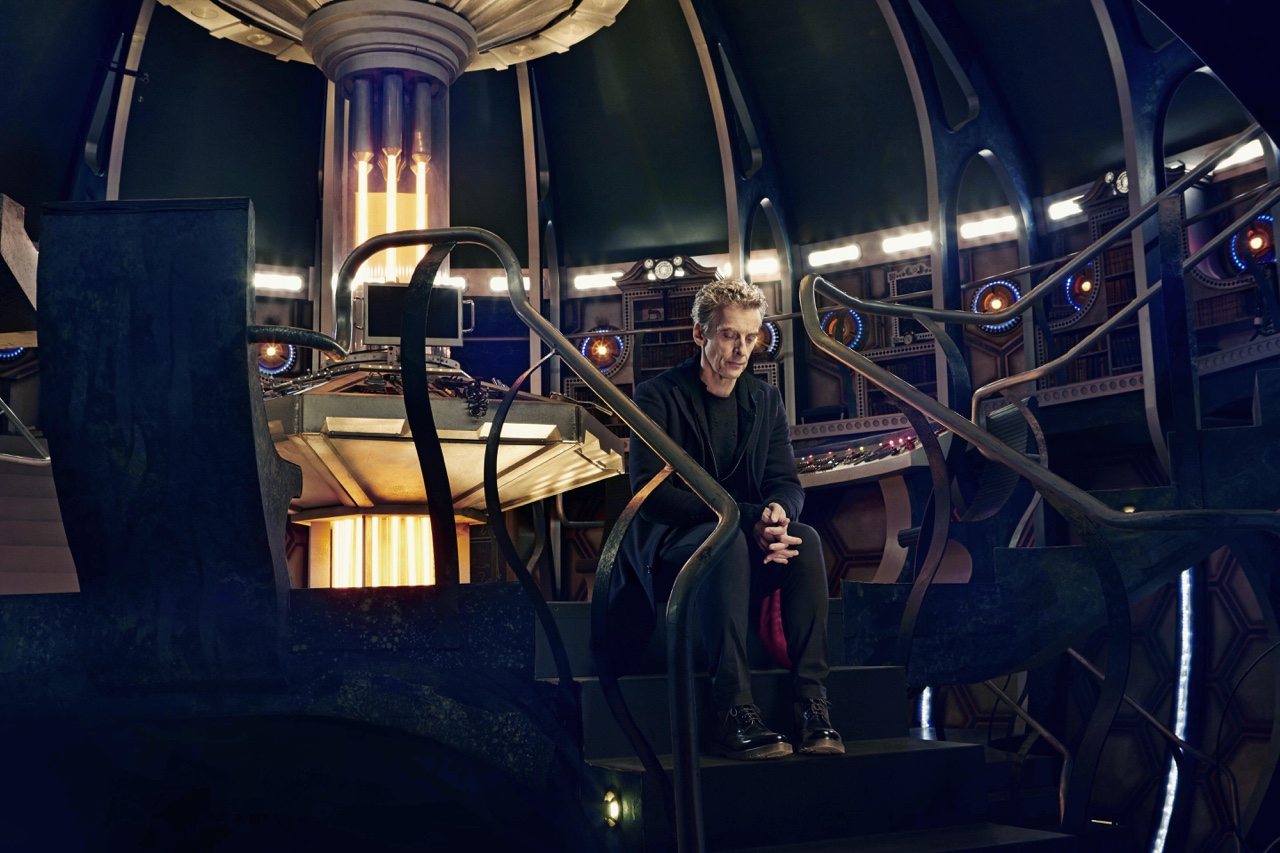
The "Dark Pape" meme originates from a viral video where a person is sitting in a dark spaceship, which was captioned "Dark Pape"—a play on the "Dark Pape" of a meme. This image captures that visual trope perfectly because the Twelfth Doctor (played by Peter Capaldi) is seated on the stairs of the TARDIS, a setting defined by its dark, sci-fi aesthetic and blue lighting. While there is no visible text in the photograph itself, the image serves as a direct visual representation of the "Dark" in the caption's description.
simple-description (llama3.2-vision_11b)
I don't have a meme to describe.
detailed-analysis (gemma3-27b-vision)
Okay, here’s an analysis of the image, broken down into the requested theoretical frameworks, applied where relevant. I'll indicate if a section isn't applicable.
Visual Description
The image depicts Peter Capaldi as the Twelfth Doctor from the British science fiction television series Doctor Who, standing within the TARDIS control room. The TARDIS interior is a complex, heavily textured space of bronzes, dark metal, and glowing, warm-toned lights. The control console is prominent, featuring multiple levels, buttons, and strange mechanisms. The lighting is dramatic, utilizing strong contrasts between light and shadow, focusing attention on the Doctor and the central console.
The Doctor is standing in a relaxed, yet authoritative pose, leaning slightly against the console with his arms crossed. He wears a dark coat and appears pensive. The image is composed with a focus on verticality, emphasizing the scale and intricacy of the TARDIS interior. The color palette leans towards browns, golds, and deep blues, creating a somewhat gothic and industrial aesthetic. The composition is asymmetrical, with the console dominating one side of the frame.
Foucauldian Genealogical Discourse Analysis
This image strongly lends itself to a Foucauldian analysis. The TARDIS itself can be seen as a heterotop, a space that exists outside of normal space and time, embodying and reflecting alternative power dynamics.
- Discourse & Power: The TARDIS control room is a locus of power. The controls embody the Doctor's ability to manipulate time and space, a discourse of absolute control. The complexity of the console shows this power, but it also enables it. The discourse of technological mastery is intrinsic.
- Archaeology of Knowledge: The design of the TARDIS interior, changing over the decades of the show, can be seen as an archaeological dig into the evolving cultural understandings of technology, science, and the nature of power. Each iteration of the console reflects the anxieties and aspirations of the era in which it was designed.
- Genealogy & Disciplinary Power: The Doctor, as the controller of this space, exercises disciplinary power, not through overt force, but through the capacity to define and navigate time and space. He can control narratives and alter outcomes, thereby shaping the reality of those he encounters. The Doctor’s agency is dependent on the system, but he also shapes it, leading to a complex power dynamic. The console isn't just a tool, it's a mechanism for enacting a specific regime of truth about time, space, and causality.
Critical Theory
The image can be examined through a broadly Frankfurt School lens.
- Technological Rationality: The complex, industrial aesthetic of the TARDIS console embodies a kind of instrumental reason. The technology isn't valued for its inherent qualities, but for its efficiency in achieving a goal: time travel. This resonates with Adorno and Horkheimer’s critique of the “dialectic of enlightenment,” where reason, in its pursuit of control, becomes a tool of domination.
- Alienation: While the Doctor wields incredible power, the complexity of the technology could also be interpreted as a form of alienation. He is separated from the natural world, relying entirely on this complex machine to interact with it.
- The Spectacle: The sheer spectacle of the TARDIS interior, with its glowing lights and intricate mechanisms, could be seen as a distraction from deeper societal issues. This ties into Debord’s concept of the spectacle, where images and representations have replaced genuine social experience.
Marxist Conflict Theory
While not a primary focus, elements of conflict theory are present.
- Control of the Means of Temporal Production: The TARDIS, as a time-traveling device, can be viewed as a metaphor for control over time itself - the ultimate "means of production." The Doctor's possession of this technology grants him immense power over history and the fate of civilizations.
- Class Conflict (Implicit): The Doctor often intervenes in conflicts between different civilizations or social groups. These conflicts can often be interpreted as struggles over resources, power, and ideology, mirroring real-world class conflicts.
- The Revolution of Time: The Doctor's role as an agent of change can be seen as a kind of revolutionary force, disrupting the established order and challenging the status quo. He isn't necessarily motivated by class consciousness, but his actions often have redistributive effects.
Postmodernism
The image certainly contains elements that align with postmodern thought.
- Simulation and Hyperreality: The TARDIS, as a space that exists outside of conventional reality, can be seen as a kind of simulacrum, a copy without an original. The interior doesn’t represent a real place, but rather a constructed fantasy.
- Deconstruction of Narrative: The Doctor’s ability to travel through time and alter events undermines the idea of a fixed, linear narrative. He can rewrite history, challenge causality, and create multiple timelines.
- Irony and Pastiche: The TARDIS design often incorporates elements from different historical periods and cultures, creating a kind of pastiche that subverts traditional notions of style and authenticity.
Queer Feminist Intersectional Analysis
This one is less directly applicable, but potential readings can be found.
- Subversion of Traditional Space: The TARDIS, as a space that defies conventional spatial boundaries, can be seen as a metaphor for challenging normative ideas about space, gender, and sexuality.
- The Doctor as a Fluid Identity: The Doctor’s ability to regenerate into different bodies allows for a fluidity of identity that challenges traditional notions of gender and embodiment. While not explicitly queer, the regenerative process has been interpreted as embodying queer sensibilities.
- Intersectionality (Subtle): The Doctor often encounters individuals and civilizations facing oppression and injustice. While not always explicitly addressed, the show frequently touches on themes of race, class, and gender inequality, implicitly acknowledging the interconnectedness of these forms of oppression.
Hopefully, this detailed analysis provides a comprehensive breakdown of the image through the requested theoretical frameworks! Let me know if you'd like me to elaborate on any specific point.
simple-description (llama3.2-vision)
The meme features a screenshot from the TV show "Doctor Who" with the 10th Doctor, played by David Tennant, sitting in the TARDIS. The image is captioned "When you finally get to the point in your relationship where you can just sit in silence together".
tesseract-ocr
. k ) , ) he's P ee iPS Z =k a (ea ae On agsreie ; | ( | A y, Eo c ' V ~ | = { | * ie i