First Seen
2023-05-10T21:03:43+00:00
simple-description (qwen3.5_2b-q8_0)
This image serves as a visual representation of the "Papes - Dark" meme, which humorously refers to a "dark" shade of blue. In the Pape community, the word "Dark" actually signifies a dark blue color, whereas in standard English, it means black. While you can read numbers like 200028 0 and 200062 9 on the metal walls, the overall darkness of the photo makes the color difficult to distinguish, effectively reinforcing the joke that the "Dark" text is intended to be black.
simple-description (llama3.2-vision_11b)
The meme appears to be a screenshot of a Wikipedia page with a list of popes, but with all the names and dates replaced with the word "Dark". The image is likely a humorous example of a Wikipedia page that has been "hacked" or "vandalized" with a consistent theme of "Dark" replacing all the actual information. The meme pokes fun at the idea of a Wikipedia page being taken over by a single theme or idea.
detailed-analysis (gemma3-27b-vision)
Okay, let's break down this image through the lenses you've requested. Given the subject matter (shipping containers), some of these lenses will be more relevant and developed than others.
Visual Description
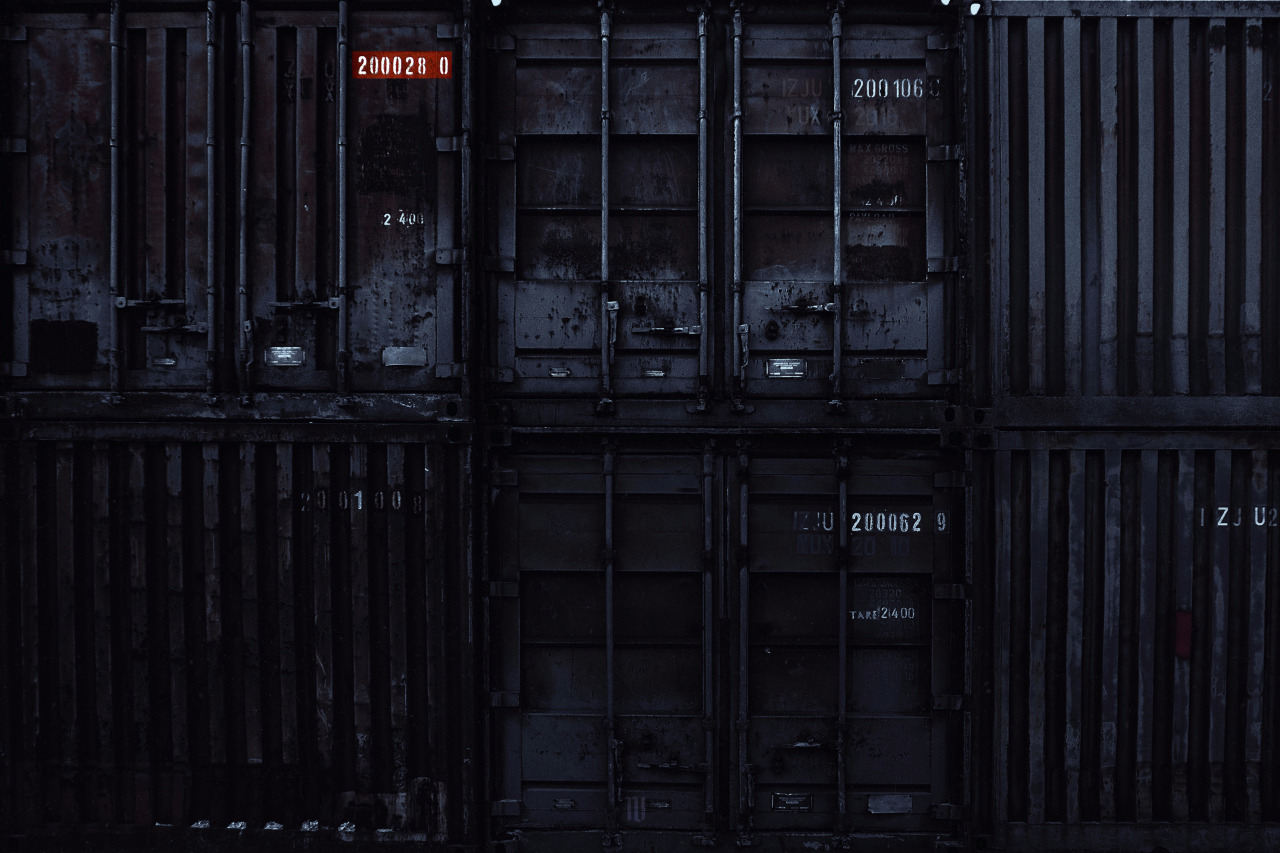
The image depicts a close-up view of a stack of corrugated metal shipping containers, appearing at night or in very low light. The containers are predominantly dark, with shades of black and deep gray. The metal appears weathered, showing signs of rust, dents, and wear. The stark corrugated lines dominate the composition, creating a sense of repetitive geometry and industrial texture. Visible on some containers are alphanumeric codes and numbers, painted in white or a faded color. The lighting emphasizes the texture and the ruggedness of the metal, casting deep shadows. There’s a slight sense of claustrophobia and a monumental, somewhat foreboding, atmosphere. The containers appear stacked high, partially obscured by shadow, emphasizing their size and density. The image leans towards a gritty, industrial aesthetic.
Foucauldian Genealogical Discourse Analysis
This image lends itself strongly to a Foucauldian reading. Shipping containers aren’t just vessels for goods; they are sites where power operates, and a genealogy of these containers reveals a shift in control and discourse.
- Discipline & Surveillance: The container itself embodies a logic of enclosure and control. It's a unit of standardized, quantifiable space – perfect for the categorization and disciplinary control of goods. Historically, the move to containerization shifted the focus of surveillance from the dock worker to the container itself. The container becomes a "black box" - we assume what’s inside is as declared, but we don’t directly see. This relies on trust in systems, rather than direct observation.
- Power/Knowledge: The alphanumeric codes visible on the containers exemplify power/knowledge. These codes are not neutral; they constitute the flow of goods, defining what is legitimate, what is trackable, and ultimately, what is controlled. Knowledge is embedded within the system of containerization.
- Genealogy of Control: A genealogical exploration would reveal how containerization developed as a solution to specific economic and political problems (reducing labor costs, increasing efficiency, securing supply chains). Each stage in its development reflects a particular exercise of power, shaping the flow of goods and redefining the relationship between producers, consumers, and regulators. The development of barcode scanning and digital tracking further reinforce this system of control.
- Normalization: The ubiquity of containers—they’re everywhere—demonstrates a process of normalization. They’ve become so commonplace that their underlying function as sites of power and control becomes invisible, accepted as “just the way things are”.
Marxist Conflict Theory
The image speaks directly to Marxist themes of capitalism, commodity fetishism, and the exploitation of labor.
- Commodification & Alienation: The containers represent the ultimate encapsulation of commodification. They hold goods produced through labor, and these goods, once inside, become divorced from the labor that created them. The container facilitates the exchange value of these commodities, masking the use value and the human cost of production.
- Global Capital & Unequal Exchange: The containers are central to the mechanisms of global capitalism. They enable the movement of goods across vast distances, facilitating the exploitation of labor in developing nations and the transfer of wealth to the core capitalist countries. The image silently speaks to the inequalities embedded within the global supply chain.
- Infrastructure of Exploitation: The containers are not neutral vessels; they are an integral part of the infrastructure of exploitation. They facilitate the movement of cheap goods produced under often harsh conditions, enabling profit accumulation for a small number of powerful actors.
- The Hidden Labor: The containers conceal the conditions under which the goods were produced. They are a physical manifestation of the "hidden labor" that is integral to the capitalist system.
Postmodernism
While not immediately as dominant as the Marxist or Foucauldian readings, postmodern themes can be seen:
- Deconstruction of Meaning: The repetitive, anonymous nature of the containers can be read as a deconstruction of meaning. They are devoid of individual identity, representing a homogenization of goods and a blurring of origins.
- Hyperreality & Simulation: The container can be seen as a symbol of hyperreality, where the representation of goods (through branding, marketing, etc.) becomes more important than the goods themselves. The container facilitates this process by obscuring the material reality of production.
- Loss of Grand Narratives: The image challenges the idea of a single, unified narrative of progress or economic development. It highlights the fragmented, chaotic, and often exploitative nature of the global economy.
Queer Feminist Intersectional Analysis (Less directly applicable but still possible)
This lens requires more interpretive work, but can be applied.
- Spatial Control and Boundaries: Containers, as enclosed spaces, can be metaphorically linked to control over bodies and boundaries. Historically, marginalized groups have faced restrictions on movement and access to spaces – the container, as a symbol of enclosure and control, can resonate with this theme.
- Invisible Labor (and Gendered Labor): The majority of labor involved in the production and movement of goods contained within these vessels is often underpaid and/or performed by women and racialized groups. The container conceals this labor, mirroring the ways in which marginalized groups are often rendered invisible within patriarchal and capitalist structures.
- Intersectional Vulnerability: The conditions of labor within the global supply chain disproportionately affect women of color, creating intersectional vulnerabilities. The container represents a system that perpetuates these inequalities.
In summary: This image is rich in symbolic meaning, and can be read through multiple theoretical lenses. The Foucauldian and Marxist interpretations are particularly strong, highlighting the ways in which the container embodies power, control, and exploitation.
Let me know if you'd like me to elaborate on any of these points or explore a different theoretical angle!
simple-description (llama3.2-vision)
The meme is an image of a dark, abandoned warehouse with rows of old shipping containers stacked on top of each other. The text "I'm not arguing, I'm just explaining why I'm right" appears in the corner of the image, implying that the speaker is trying to justify their position in a heated conversation. The image's dark and industrial setting adds to the sense of tension and conflict.
tesseract-ocr
les ae ea lode a & Se Sseolearcal TTI f " | = Th | INR ede Ve Pies a e F rr Ca a ; é — ar ST al! [ a aA lead d ‘ea r i of i Pt n ee ee “a [ee Pia <i! “8 Bei see fet | || RE et | -4 : 5 fs) Sea ees | Ct sagt HERE a i 7 ee SEP as ore J ——___—— Sen — Ti aa TIT ae Ell ia i eEaT ha Es fe uy h : i. Hi apr on i " ea Be ale H : HH mu Pee puad z if tan it | : Hf vei Hy -ranti2i400 lL i 1 Fi h ete Te a | a No j | 280 | laa Ny nae ae, fae | } HEE ie t Es bs oer x i ea a ‘ i | el Ate Geeesiem a ee a TERY an Pte ag