First Seen
2023-05-10T21:03:43+00:00
simple-description (qwen3.5_2b-q8_0)
The "Papes - Dark" meme is a well-known internet joke where the phrase is often used to express confusion, disbelief, or dismissal (similar to "What?"). The visual connection to the wolf in the image serves a secondary purpose, reinforcing the "Dark" aspect.
Here is an explanation based on the provided category:
-
The Meme ("Papes, Dark"): This phrase is a play on words often associated with the phrase "Papers." In internet slang, "Papes, dark?" is frequently used to express "What is going on?" or to dismiss something with a dismissive tone. It implies that the situation or the subject matter is strange, confusing, or perhaps "dark" in a negative or mysterious way.
-
Visual Association ("Dark"): The wolf in the image fits the "Dark" part of the meme perfectly. The wolf is described as being in a dark, forest-like setting, with lighting that highlights the fur texture rather than creating a bright, open scene. The "dark" atmosphere of the forest setting visually reinforces the "dark" aspect of the meme tag.
-
Text in the Image: While the photo of the wolf is a black and white image of a "wolf" (which can also be a dog), there is no text visible in the actual image itself. The only text associated with this visual in the context of this category is the meme title "Papes - Dark," which acts as the caption or tag for the post.
In summary: The meme "Papes - Dark" is a dismissive phrase often used to mean "What?" or "No," and this specific wolf image is used to fit the "Dark" theme by showing a moody, dark-wolf in a shadowy setting.
simple-description (llama3.2-vision_11b)
The meme is a black and white image of a dog with the caption "Papes - Dark" in a playful, sarcastic tone. The image is likely a humorous representation of a dog being referred to as a "pape" (a colloquialism for a dog) in a dark or edgy context. The meme is poking fun at the idea of a dog being associated with something dark or edgy, and is likely intended to be humorous or ironic.
detailed-analysis (gemma3-27b-vision)
Okay, here's a breakdown of the image based on the requested theoretical frameworks. Not all frameworks apply directly, so those that do not will be skipped with explanation.
Image Analysis: Wolf Portrait
1. Visual Description
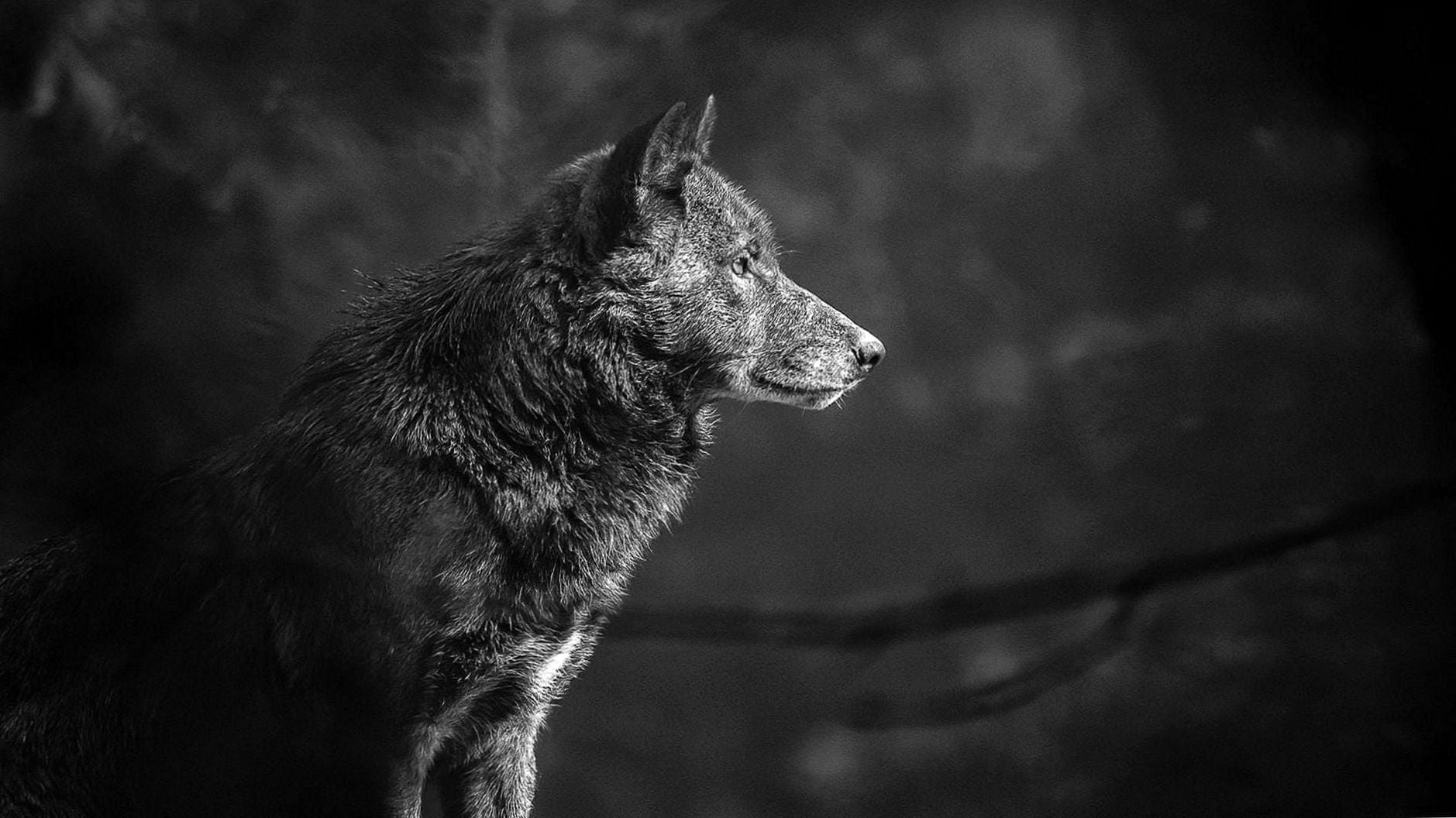
The image is a stark, black and white portrait of a wolf in profile. The wolf is the primary subject, occupying the left half of the frame. Its coat appears thick and textured, rendered in shades of gray, suggesting a healthy winter coat. The wolf’s face is partially illuminated, showing detail around the muzzle, eye, and ear. The eye is dark and appears to be focused in the distance, conveying a sense of alertness and intelligence. The background is entirely dark, out of focus, and seemingly dense with foliage or shadows, effectively isolating the wolf as the central focal point. The composition uses high contrast and dramatic lighting to emphasize the wolf's form and create a mood of mystery, wildness, and perhaps even vulnerability. The angle of the wolf's gaze to the right indicates anticipation or awareness of something beyond the frame.
2. Foucauldian Genealogical Discourse Analysis
This image lends itself well to a Foucauldian analysis. Traditionally, the wolf has been constructed within Western discourse as ‘other’. Over centuries, narratives have painted the wolf as dangerous, savage, and a threat to human civilization—a figure of villainy in folklore and often a symbol of untamed nature needing to be controlled.
- Discursive Formation: The way the wolf is spoken about – as a predator, a pest, a symbol of wilderness—has shaped our understanding of it. This image challenges that singular construction, as it presents a portrait devoid of specific context and allows for multiple interpretations. The emphasis on the wolf's gaze, intelligence, and power subverts the simplistic trope of the bloodthirsty predator.
- Power/Knowledge: Historically, the "knowledge" about wolves has been used as a tool of power. Early narratives justified the extermination of wolves as a means of protecting livestock and expanding human settlements. This image disrupts that power dynamic by focusing on the wolf's dignity and inherent value. It presents the wolf not as something to be controlled, but as a subject with its own agency and intelligence.
- Genealogy: A genealogical analysis would trace the historical shifts in the representation of wolves—from revered figures in indigenous cultures to feared monsters in European folklore. It would examine how these shifting narratives have been tied to changing social, political, and economic forces. This image feels like a deliberate attempt to reclaim the wolf from those negative constructions and present a more nuanced, complex understanding.
3. Critical Theory
From a critical theory perspective, this image can be seen as a challenge to anthropocentrism – the human-centered view of the world.
- Domination of Nature: Western thought has traditionally positioned nature as something to be dominated and exploited for human benefit. The wolf, as a symbol of the wild, represents everything that is ‘outside’ of human control. This image, by presenting the wolf as a subject of respect and admiration, implicitly questions that dominion.
- Deconstruction of Binaries: The traditional framing of ‘civilization’ versus ‘wilderness’ is deconstructed. The image doesn't present the wolf as something inherently ‘savage’ but as a being of inherent dignity and intelligence, blurring the boundaries between these binaries.
- Subjectivity & Agency: The wolf's intense gaze suggests a subjectivity – an inner life and a capacity for thought and feeling. This challenges the objectification of animals in Western thought and demands that we recognize their agency as living beings.
4. Marxist Conflict Theory
While less direct, a Marxist reading is possible through the lens of historical landscape control and resource disputes. The wolf, historically, has been eradicated from certain territories due to conflict with human economic interests (farming, livestock, land use). This image can be interpreted as a symbolic representation of the ongoing conflict between humanity and the natural world, and the historical suppression of wild species to serve capitalist goals. The wolf's isolated presence might symbolize the diminishing space allocated to non-human life.
5. Postmodernism
The image aligns with some Postmodern themes.
- Rejection of Grand Narratives: The image avoids a specific narrative. It doesn't tell a story or offer a moral lesson. Instead, it presents a fragmented, ambiguous representation of the wolf, rejecting the idea of a single, authoritative meaning.
- Emphasis on Subjectivity & Interpretation: The image relies heavily on the viewer's own interpretation and experiences. There is no inherent meaning, only the meaning that the viewer projects onto it.
- Blurring Boundaries: The stark contrast and dramatic lighting create a sense of ambiguity, blurring the boundaries between reality and representation.
6. Queer Feminist Intersectional Analysis
This framework is the least applicable to the image itself, but could be extended through metaphor. The wolf has historically been positioned as “other” in many cultures, similar to how marginalized groups are often constructed as outside the norm. Therefore, the image could be read as a metaphorical representation of resisting dominant norms and reclaiming agency. However, this reading is more abstract and requires a deliberate effort to connect the image to the themes of queer feminism. It's important to note that the image doesn’t inherently address issues of gender, sexuality, or intersectionality.
Let me know if you would like me to expand on any particular theoretical framework or aspect of this analysis!
simple-description (llama3.2-vision)
The meme is an image of a wolf with a caption "I can smell the desperation in your profile picture". The image is likely a humorous take on the common internet trend of people sharing their profile pictures on social media, with the wolf's caption implying that it can sense the emotional state of the person behind the picture.
tesseract-ocr
a Peaiae : eee 25. p 2 i eg pe oe ws eee SS ee pe PS — Wy ei ee here Gai Sak. N SH og LG d Sd RUM A cece (Gee ZEA bf RNS. WW en Se ae o GA! BNR. SESS ose | LA ARN 4 Yan NNT Sree SS ee aT eS. ~ NN SS oe i. SN A PEIN S Cb aU CN Ay a INN \S , EM ie WR 77 Z E NS =a y SSS ee a ee 5: ae ae. , ve ‘ ZH Wi YY yA ee