First Seen
2015-12-18T09:30:09+00:00
simple-description (llama3.2-vision_11b)
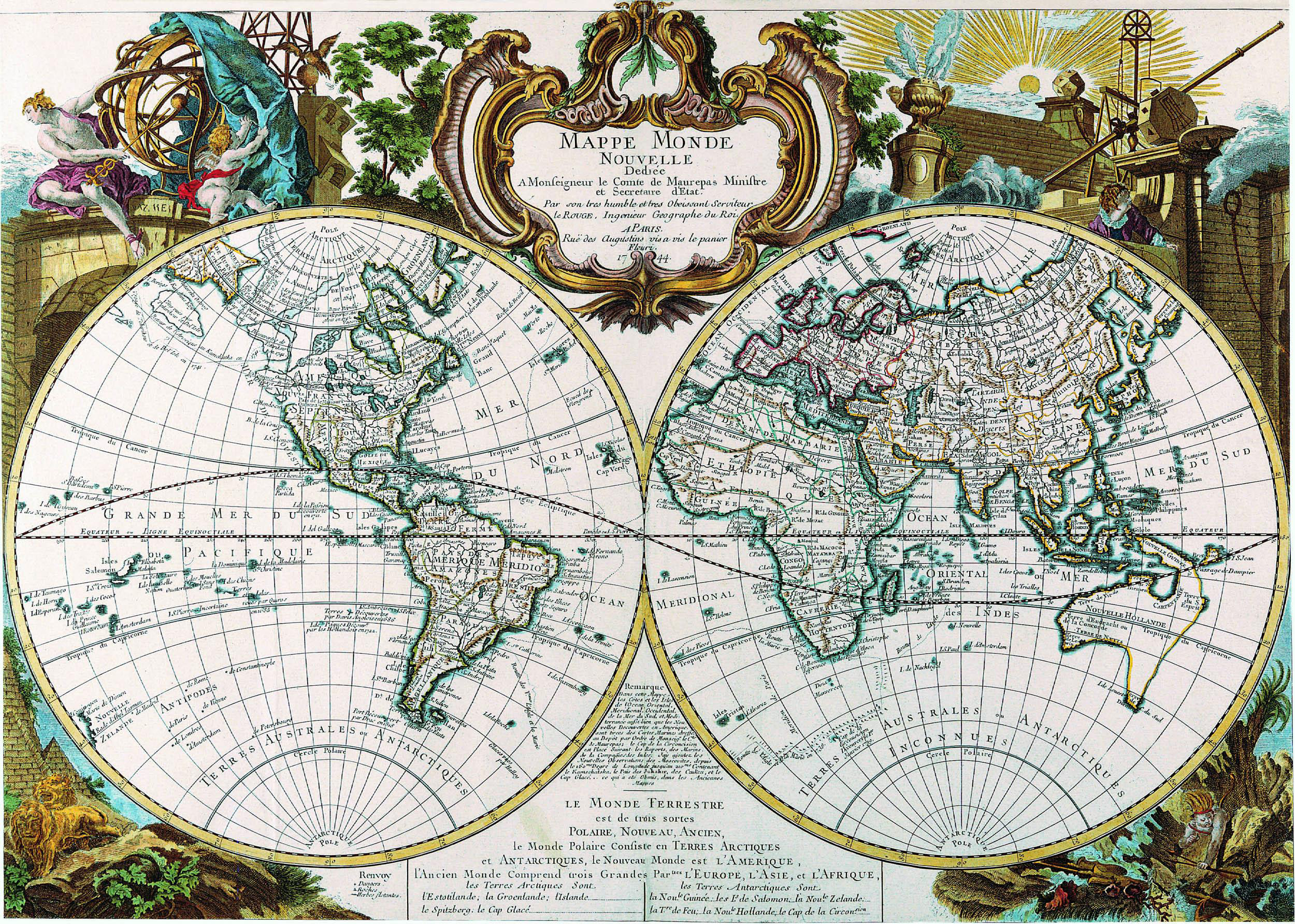
The meme is a screenshot of a vintage map of the world, specifically a 1755 map by Guillaume-Denis Coquemans. The map features a fantastical depiction of the world, with mythical creatures and exaggerated geographical features. The text "Papes" is likely a caption or a title, but its meaning is unclear without more context.
detailed-analysis (gemma3-27b-vision)
Okay, here's an analysis of the image of the 17th-century world map, broken down into sections as requested. Some sections will be shorter or absent if the topic isn't strongly applicable.
Visual Description
This is a beautifully ornate, antique world map, likely dating from the late 17th or early 18th century. It’s presented in a cartographic style typical of the period – detailed, but with inaccuracies by modern standards.
- Projection: The map employs a modified heart-shaped projection (a variation of Mollweide or similar), which attempts to represent the entire globe on a flat surface, distorting shapes and sizes.
- Cartography: Coastlines are intricately drawn, and inland areas are filled with stylized depictions of mountains, forests, and cities. Place names are written in elaborate calligraphy, primarily in French (as evidenced by the title: “MAPPE NOUVELLE”).
- Decoration: The map is heavily decorated. There are elaborate cartouches (decorative title blocks) featuring allegorical figures (likely personifications of continents or the Earth itself) and coats of arms, as well as baroque embellishments in the ocean areas (sea monsters, sailing ships, and wind-heads are common motifs). The corners feature vignettes of the seasons.
- Color Palette: The map uses a muted but rich color palette— browns, ochres, greens, and blues— with some areas highlighted in gold or red.
- Geographic Representation: The Americas are present but not fully understood; the western extent of the Americas appears much less detailed. Australia is shown as ‘Terra Australis Incognita’ (Unknown Southern Land). Asia and Europe are more detailed. Africa, while present, lacks the level of detail in other areas.
Foucauldian Genealogical Discourse Analysis
This map, viewed through a Foucauldian lens, is not simply a neutral representation of the world but a discourse that produces knowledge and power relations.
- Episteme: The map embodies the episteme (underlying rules and conditions of knowledge) of the late 17th/early 18th centuries. The very act of mapping the world—of attempting to define and classify it—reflects a desire for order, control, and a perceived right to categorize the “other.”
- Power/Knowledge: The map is a potent instrument of power/knowledge. The act of mapping is an act of claiming ownership, defining territories, and establishing legitimacy. The map constructs “discovery,” justifying colonial ambitions. The map does not reveal the world; it creates a version of it that serves specific interests.
- Disciplinary Power: The categorization of landmasses, the naming of territories, and the visual emphasis on certain areas over others contribute to a disciplinary regime that establishes and reinforces hierarchies. The emphasis on Europe and the relatively limited depiction of other regions signifies a Eurocentric worldview.
- Genealogy: A genealogical analysis would trace the historical lineage of mapping techniques and the assumptions that underpin them, revealing how the map is not a timeless, objective representation but a product of specific historical conditions.
Critical Theory
The map can be analyzed through the lens of Critical Theory, specifically Frankfurt School thought, to reveal its ideological functions.
- Ideology: The map operates as an ideological tool, naturalizing the power dynamics of the era. It presents a particular vision of the world as natural and inevitable, masking the historical and political forces that shaped it.
- Domination: The map implicitly supports colonial domination. The detailed depiction of areas under European control contrasts with the limited representation of areas that were not, suggesting an unequal power relationship.
- Enlightenment & Reason: The map exemplifies the Enlightenment's reliance on reason and scientific observation. However, Critical Theory would question whether this "reason" is truly objective or whether it is entangled with the interests of the dominant social groups.
- Instrumental Reason: The map can be seen as a product of “instrumental reason,” the pursuit of knowledge and control without ethical considerations. The map’s purpose is not simply to understand the world but to manage and exploit it.
Marxist Conflict Theory
From a Marxist perspective, the map is deeply intertwined with the economic and political conflicts of the era.
- Imperialism & Colonialism: The map is a visual manifestation of the burgeoning capitalist world-system. It reflects the competitive drive of European nations to expand their economic and political influence through colonialism.
- Division of Labor: The map reveals the emergence of a global division of labor, with Europe as the center of manufacturing and commerce, and colonies as sources of raw materials and cheap labor.
- Class Struggle: While not directly visible on the map, the exploitation of colonized populations and the accumulation of wealth in Europe are driven by class struggle. The map is a tool used to justify and maintain these unequal power relations.
- Resource Control: The map highlights areas rich in resources that were being exploited by European powers. The depiction of these regions is often tied to their economic value.
Postmodernism
Postmodern analysis would challenge the map’s claim to objectivity and truth.
- Deconstruction: A postmodern reading would “deconstruct” the map, revealing the underlying assumptions and biases that shape its representation of the world. The map is not a neutral depiction but a construction based on a particular worldview.
- Relativism: Postmodernism would emphasize the relativity of knowledge and truth. The map represents one possible interpretation of the world, not the definitive one.
- Simulacra & Simulation: The map can be seen as a simulacrum, a copy that has become divorced from its original. The map represents a world that is itself a construct, a “simulation” of reality.
- Meta-Narratives: The map is part of a larger “meta-narrative” of European expansion and dominance. Postmodernism would challenge this narrative, highlighting its exclusionary and oppressive aspects.
Queer Feminist Intersectional Analysis
This is the most challenging lens to apply directly to the map, as it doesn't inherently depict gender or sexuality, but we can extrapolate.
- Spatial Politics: Maps, as tools of representation, are inherently involved in the construction of space and the regulation of bodies within that space. The map creates boundaries and defines territories, which have implications for the control of movement and the policing of bodies – particularly those deemed “other” (racial, gender, sexual).
- Colonial Violence & Gender/Sexuality: Colonialism was deeply intertwined with the suppression of indigenous gender and sexual practices. While the map doesn’t show this, the power relations it represents facilitated the imposition of European norms and the erasure of diverse forms of expression.
- Intersectional Power Dynamics: The map represents a world built on multiple intersecting forms of oppression— colonialism, capitalism, and patriarchy. Indigenous women, racialized bodies, and individuals with non-normative sexualities were disproportionately affected by these forces.
- Challenging Eurocentric Gaze: The map embodies a Eurocentric and patriarchal gaze, which has historically marginalized and silenced the voices of people from the Global South and those with marginalized gender and sexual identities.
Hopefully, this provides a detailed analysis of the map through the requested theoretical frameworks. Let me know if you'd like me to elaborate on any specific point.
simple-description (llama3.2-vision)
This meme is a humorous image of a world map, specifically the Mercator projection, which is known for its distorted representation of countries' sizes and shapes. The text that appears in the image is "I can see for miles and miles and miles and miles...".
tesseract-ocr
Sy Ss ee ER NY 7 i a TREE Ty SS SE ESE Sen ay >, ™®,/x on, oii ate SSS AN ee ; ZH remADIA 2 SR Tay «& . a a SS I bone , OA pew = Ean CR, L 5 i IIR WEN ‘ RS NSS RW) ee ZO ? COE ae (Or SE. | Vz. i TE heen a Poe Fo - MI a4 Ny, WW Ae + YZ Ce Ea Me AA Bae Sac ae F/ Ge LOLA ij} JN VaN No ‘a ae ee \iyee | ee em OA SAS NA I} CLI Vi». ee . = AN Kae GOT é Poe a ll oe Ser SSR CN \\i" | ee ee aM ] oe ; = = ~ NS pvp JZ Gace 2 Marre Monnet 4 ow = Sea } Sg LEO a Be CE Vi 5 ie he NouveLLe i ae a =, <A 0 ae ek aly : 2 ae ice Sees Sey \ \ AMon(eigneur le cae de Maurepas Miniftre j Es § Eas fe eeu j ry ieee ae Sa 4 ey i ee ae ee = a =, WS — Par son Le heeetS nee ‘i gy Eas tg oe a y _ i ae lll £ 4 a2 : oe. ee a BR ee eS. GO 4 Ch LR Sa EF Kg See ZEN Sd a yA, ya CERT ee ‘Core Oe x Ov GY So AE pe LED oe Syed y SS se Ti / oy lg Cs gist estes ot aN \ fe cere ao Lae: Hep RS Aas “Ae Ke os 4 7 / sh fee, ef, [ey seer SARC oo ee \\ LE RES PIG pee MO) are a Sy / ve “fe RL : CS see \ ee goes Oe EARS N a. a a er \ 6 ES Oe NO ACI ORYS Se Le 7) | A Eee Oe Aaa Se We ee ON eR i SS er SS > Ea [4 Cnty 2 VEEN EEN Seay : ( VA I ito eS Cree ag Beg lope eh) et hi aN ey / Fh ee PG. eee A, [sf ss Do CNR ei A ry c 4\- ape a VX Sy | a oe | ihe oe Ae ce \ Ve Pres fee LL. ene all alee Vee 2 g Se Mul ae a. =| | [SSS ae “a MeO ee eee a VTS mate ee Fe ence ALS a6 - \ f es fk EG i i 5 on Reel k ne | eee ey EAS Way eae co sie \\ Bl tee, = TATE 9a gz". | Bislier | caper’ Y Fe GE Beth wis, IE f= LSA fp ee la PB ei aie oe SU \ a Pie iting la ] [Sie i vfs Mie Pe | je es a Sy ae mos re Aye ST es fee ME Bec hic De, Manel See. Ve ee ae es oo ae a | | ee i Soe i ; Gi Ue JE U a ee ; Py ey < A Ne faggot si mecca A rst Ceo. ee ET TT Ao Senet, sof et St EN pc, pee ep ote A se Wei | | nn a i ene =: Sl I al gsc ana Orcs} | elt ie mee egress | ONES ees Ss Sa || A ct ee EE, otra | Rew erie il | a AEE) ER REX TA! : a NEE | : Nor org \ jest \ j Eg sail al 2 Nokes $e IE, 4 [i tebiader gt. hi Sige er ‘G pea eae nh Sg | | legate Er eof Na Pera PX Sie ee ea fe | | re a pit tS g ee ‘ : % Reve ye Pe NEST Nag pe Mang BF Ef re fi (ee q I¥DEs j anap a ee ees Sp enh pel / | Roe pm eee Te er caer) ENS } aa\, ee eee \ \ \ 1 TMT d ple les y | a fir eee oa % Poe i Ta] J / BA | \ [ “ee ye Ree Pm hINN eS =<¥ eS a, Le f fe Gee \ 0. i. Near aa\ea\ 104 EE fj ; wo ra Ay) =a mA y it a Sale ee | fe 4 a af Premargic \ < \ Le ff f = ) Be \ ote hook a Sees, * Pe artINN Le ae ew WE \ SA Na SEN, st als Els ol AP [9 Fee *4 fe ff poser ieee cnc eN x le /. wi on A | ea ae Lf 4a; e ‘s Y fare N AAS Ee és : Soe. \ Ses A / J, ff Sesh tered, ee tte is NG ereC 6M c pS 1 fp 2. a, Bos SSS FASS JOE XK x xk PLACING “ah dy) Gel gee Re WY S S cE Poraine, NoWEAU, vcs aS Le bs) a A ll , = eee le Monde Polaire Confiste en TERRES Ancrigves S es Sg SS ] a é ie | ecient Conca ui Cramtee Para Boom Ac = eee IS oe. oe onde pmnd mg Grandes eh Lonony Arc eArniee] lag a a a ma ad eee ete mm | Ue sealande; la Grocnlande; sland. 20) reached he pr ae aes atic tae oe ae ee Ss kg re, ale cia PT Mi | pict fe ip ace | ate et Noto ap la Coe "neg ee eo eg ae