First Seen
2015-12-18T09:30:09+00:00
simple-description (llama3.2-vision_11b)
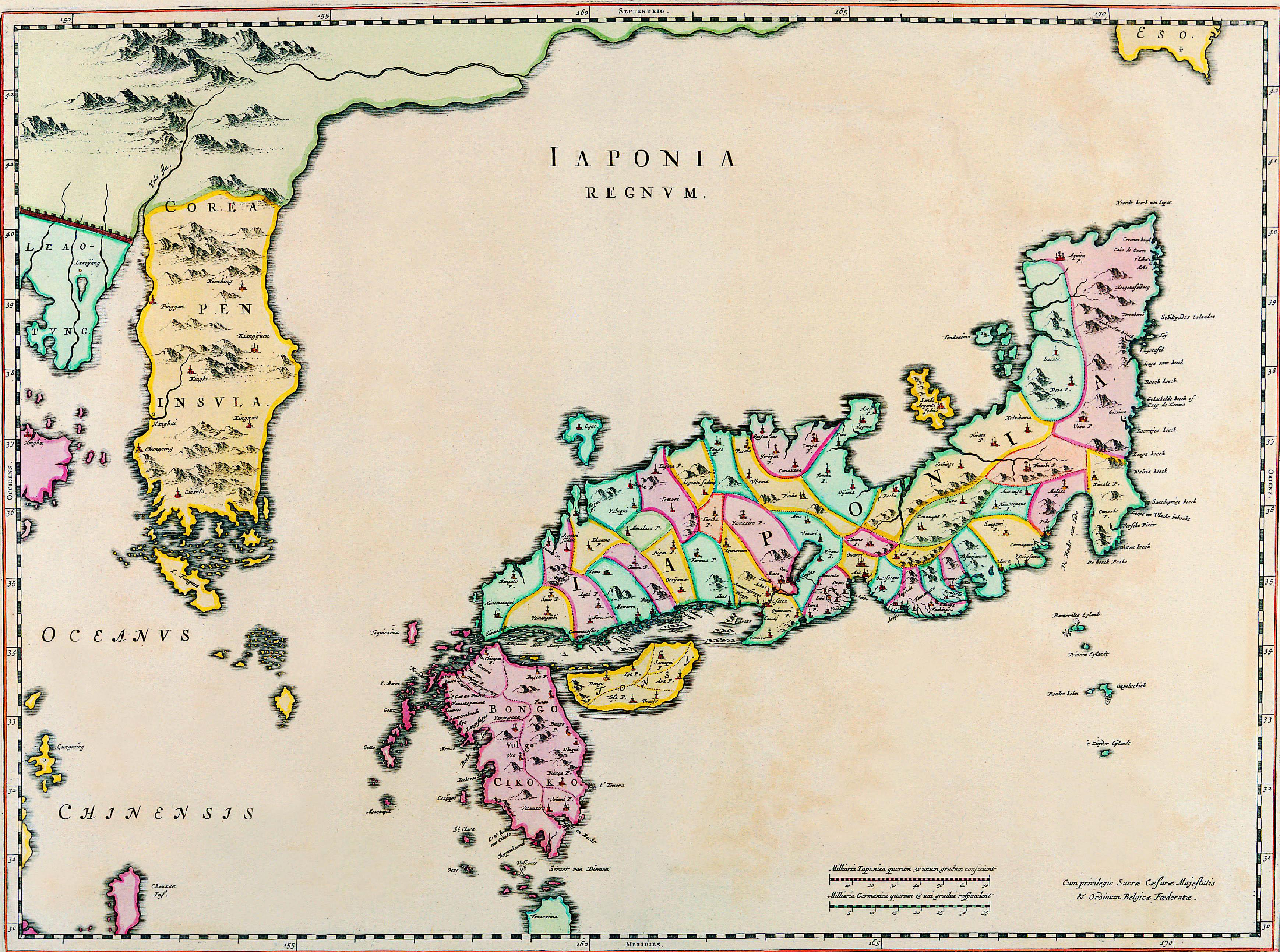
This meme is an image of a 17th-century map of the world, specifically the "Carte du Monde" by Guillaume Delaunay, featuring the "Papes" (a French term for "Papists" or "Catholics") and their territories. The map shows the geographical boundaries of the Papes in Europe and Asia, highlighting their control over the regions. The text "Papes" appears on the map, indicating the territory of the Catholic Church in Europe.
detailed-analysis (gemma3-27b-vision)
Okay, let's break down this 17th-century map of Japan ("Iaponie Regnum") through several analytical lenses. I'll structure the response as requested, focusing on relevant areas where these theoretical frameworks apply.
1. Visual Description
The map depicts Japan as understood by European cartographers in the 17th century. It’s a hand-colored engraving, likely copperplate, rendered in a style characteristic of the period. Several things stand out:
- Shape & Geography: The overall shape of Japan is recognizable, but significantly distorted compared to modern maps. Kyushu and Shikoku are depicted relatively accurately, but Honshu is elongated and distorted, as well as Hokkaido, which is largely uncharted.
- Color Coding: The map uses color to delineate "provinces" or regions (fiefdoms). Each province is brightly colored, creating a patchwork effect. These colors are not necessarily geographically meaningful.
- Text & Calligraphy: The map is filled with text in Latin and possibly other languages (hard to discern without closer inspection). This includes the names of provinces, settlements, and geographical features. The lettering is ornate and stylized.
- Ornamentation: The map includes decorative elements like a compass rose, depictions of mountains (rendered as stylized peaks), and small illustrations (possibly of people, animals, or landmarks, though these are often generic).
- Oceanography: The oceans surrounding Japan are labeled with Latin names (“Oceanus”). The seas are depicted with decorative waves and ships.
2. Foucauldian Genealogical Discourse Analysis
This map isn’t just a representation of geography; it's a product of a specific discourse about Japan created by European powers. A Foucauldian approach focuses on the power/knowledge relation embedded in the map.
- Episteme: The map reflects the 17th-century episteme – the underlying framework of knowledge and understanding – that shaped how Europeans perceived the world. Japan is categorized, classified, and segmented into discrete provinces—an approach reflecting European feudal structures and a need to organize and control information.
- Power Relations: The act of mapping itself is an exercise of power. By defining the borders and categorizing the regions, the map asserts a certain control over the understanding of Japan. The map creates a narrative of “order” and “legibility” imposed upon a foreign land. The categorization of provinces serves to enable European trade and ultimately colonisation.
- Genealogy of Knowledge: The map isn't a neutral depiction of reality. It is part of a genealogical history of European representations of Japan. Early maps built upon rumors, explorers' accounts, and a combination of facts and fantasies. The colours and divisions are less about reflecting the actual geography and more about making the land legible to European traders, and future powers.
- Disciplinary Power: The map's categorization and organization of Japan anticipate attempts to “govern” or “manage” the territory. The detailed labeling and demarcation of regions suggests a desire to understand and exert influence over the land and its inhabitants.
3. Marxist Conflict Theory
The map can be examined through a Marxist lens focusing on the economic and political conflicts that underpin its creation.
- Mode of Production: The map is linked to the expansion of mercantilism and the search for new trade routes and resources. European powers were actively seeking to establish trade relations with Japan to benefit their own economies.
- Class Struggle: While not directly visible on the map, it can be inferred that the map was created by and for the ruling classes of European nations. The information it contains would have been used to facilitate economic exploitation and political domination of Japan. The delineation of provinces can be seen as a way to identify potential resources and control their flow.
- Imperialism/Colonialism: The map is a precursor to European colonial ambitions in Asia. By mapping and classifying Japan, European powers were laying the groundwork for future exploitation and control. The map's emphasis on identifiable “provinces” could facilitate the establishment of unequal treaties or the imposition of political control.
- False Consciousness: The map presents a specific interpretation of Japan – one that serves the interests of European powers. It may obscure the complexity of Japanese society and culture.
4. Postmodernism
From a postmodern perspective, the map challenges the idea of a singular, objective truth.
- Deconstruction of Representation: The map is not a "true" representation of Japan but a constructed image based on limited information, cultural biases, and political agendas.
- Simulation & Hyperreality: The map creates a "simulation" of Japan that may have little relationship to the actual lived reality of the country. It's a hyperreal image that is more about European perceptions than Japanese reality.
- Rejection of Grand Narratives: The map can be seen as part of a larger European "grand narrative" of exploration, conquest, and domination. A postmodern critique would question the validity of this narrative.
- Subjectivity & Fragmentation: The map's distorted geography and subjective categorization reflect the fragmented and subjective nature of knowledge.
I've tried to provide a comprehensive analysis across these theoretical lenses. Let me know if you'd like me to elaborate on any particular aspect or explore other analytical frameworks.
simple-description (llama3.2-vision)
The meme appears to be a humorous image of a person who is extremely tired and is about to fall asleep. The image shows a person with their head on their desk, surrounded by coffee cups and papers, with a caption that reads "I'm not lazy, I'm just on energy saving mode".
tesseract-ocr
Se ee = ae a RR ne eminence ge | A : 7 eee ee BORN ee SS eee ee nr 3 SO. aa ll eles ee pe ee ae EL = 1 mn s Ei Se eee a Sh. Wen _— —.. BFP £ a : a LY | OS ee ee es = Ay : e H = 7 eee. s Sh re gee 5 1 AA ‘ t TAPONTA 7 B By 2 SS a ‘e | | A ince TEE REGNVM. i | f ea We A >"O R.ECA= ie Moore aoe nae Tapa J Real, fi -= Ba. a a i ; : . fs ete She é Pe ~~ = Vi | = Pa oben E SJ FF He? oF | = Ss A ae Se. 2 ~~ 7 as r L il 4 dente po af EE a s ee aaa ff = 4 z 4 PPE p= Sg ye: Eas a a Q ‘fe 3 eS mE 4 . y i = i = cae Ee. = \ £ RH a 33 S E ZF Ping g ax PEN = — r y | a: og Mes Te: A) F 2 t Paks a 2 J aatem %& aa Trot Ye Schiby idee Erlanden ; tS a A era 2s ee hat . ar’ 1 | Lue) . i .- | I Ee 4 ( gh Te 7) [Ne i‘. sl bs l oe ( : 2 < a gas dL Rerccck hocct es ZINSVLA ge: on S Pos” | 7. ) I | «= x ue je —— a a Ae ons . «fp \ BS, Bete” i a jtighl Sy aS ie aS r= @= 7 3 ‘oe I 70 ” “ a ne l Pipe a ZF Bats Be a ire | Caz Pree a “7 ey bp | mle Pg 3, ot ee ee 12 © _. A Pet SS a “=? ee ‘Zoe l an Ber ras =e Fy et Cie = Zi, te E | | £4 a ae ax Bata E “2— A: : 4 e a i | ape | | oll ; ae Bs ASE? LHe — 4% d - z pene | NE mel of yi ee ges Nt aS eer 13] foo =f. ree 228 et ty Bp ys eek pct SEF BY A gine > Eo HS | = = =o y ae ‘a Wi zx te” tgs BD - tue Be e e BS oO ; ND ee] » Z . oe} * Be Sonesayrgze dacok | i | ES (See af 2° ae “4 \ ae. 3% . we fh Bee oy a ale ir I 7 = mee SS es IS 7 2 é a ae V3, pra SS Y OASE. , é ae 3 4 2 Sah ‘ Le ke eRe las = De keeck Boske nf ae | = E a 2a in = a _ -% ‘ 3 P E ay I oe) Rene oe Q a] : 3%) PUR | SOND ate Fi | ! ae . 2 : i ee Bin face 7 A “yf oS ne Baroy Eslnde fl | f| . O CEANVS Sore Seba A ee ee ee om oF ee “i y | : SS 3 _ ae eee See Se FIZ 0 a = pa Ol Se — ot j yike ia) ila BF =_ 4 Lies See eT Te te = A | OE 3 see i Yeo -eear +0 = = : ] es ; a Se eg’ pe Oo SSS eS g Hi ae a0) a? / \ | | = ge OE, i Boe i. if BE come aN, wo oe CS | | ice eo Fite oe i | 1 os “ue 93 OP ed = 1 | | <= se Fie 2 H | a = gece ci om... VI le CHIN 6X S 755 = Shas UN Stee na : Bos : | oop = _ = FS. Ba oes 5 | a y z S 6 ely a= ' £ ae j ie ee as ' 34 a a a Set vn Din LB ei ategitegprenen sprteenyned honey fees E it | 1 fl 2 Eo ae = See Cumproilegio Sacra Cafare Mapefatis H I > | =e ~All Corns ploris tt ret Poffo © Oflu Bebice Pedirate LY i : sf og) 4 =a = | [eer — es — es rs pp — se a a as — ee ee es ee pe es es es ps ep se ee es tt ss — py ee o Sa aa eee Tg | SOM RR yw rw ten ee esd SS re ee ers See ee Tae] eet: