First Seen
2015-12-18T09:30:09+00:00
simple-description (llama3.2-vision_11b)
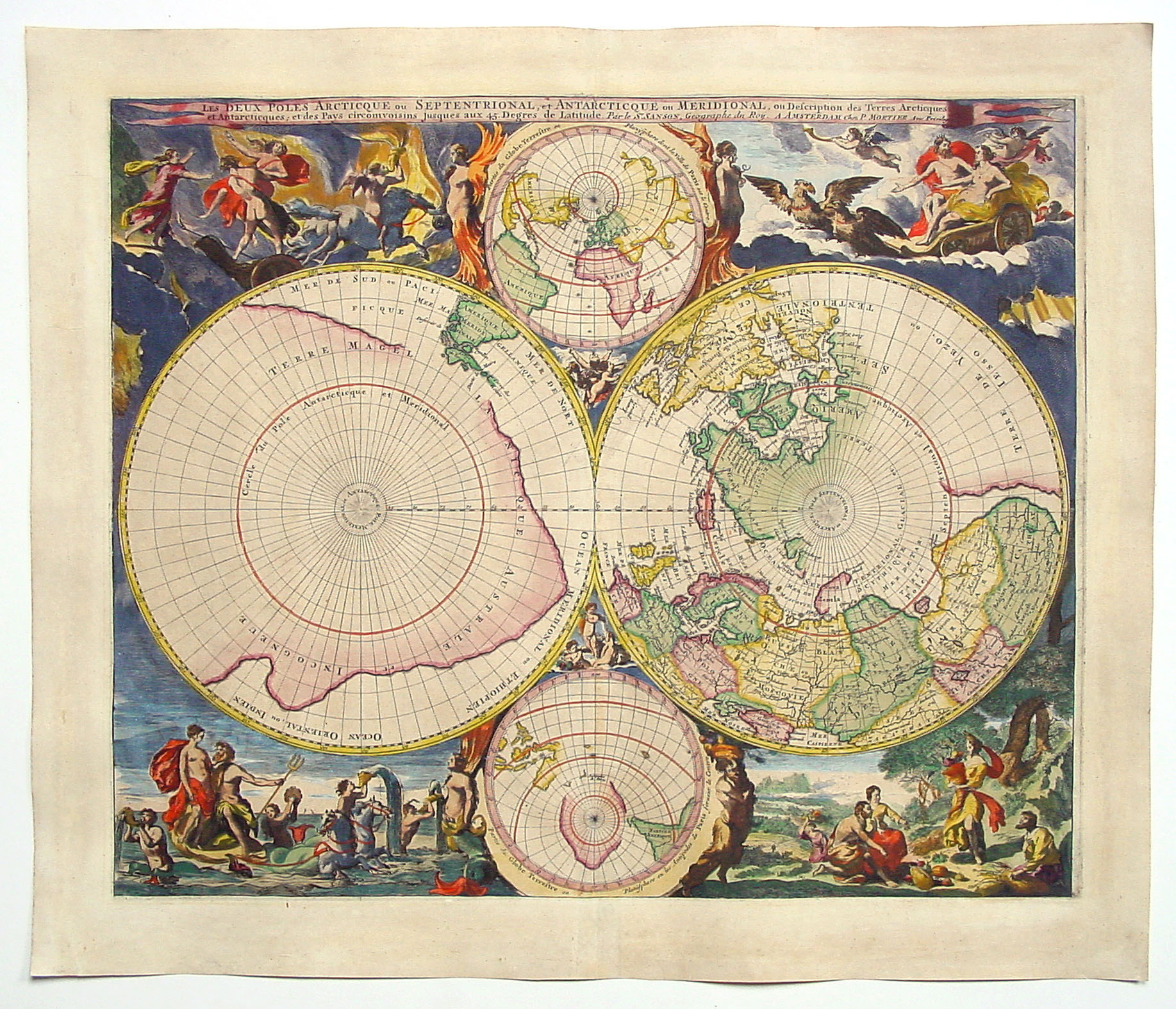
The meme appears to be an old, hand-drawn map of the world from the 18th century. The map features elaborate illustrations of mythological creatures and landscapes, with text in a language that appears to be French. The image is captioned "Papes" and the text reads "Les Papes".
detailed-analysis (gemma3-27b-vision)
Okay, let's analyze this fascinating 17th-century map (likely by Willem Blaeu or a similar cartographer). It's complex, visually striking, and brimming with ideological implications. Here’s a breakdown addressing your requested theoretical lenses.
Visual Description
The image presents a double-hemisphere map, showcasing both the Arctic and Antarctic poles, set within an ornate decorative framework. The projections are polar azimuthal, with the poles at the center of each hemisphere.
- Geographical Representation: The map displays continents, coastlines, and some inland features. The cartography is detailed for its time, but clearly reflects the limited knowledge of these polar regions. The interior of Antarctica is largely imagined/speculative.
- Ornamentation: The map is surrounded by allegorical scenes featuring classical figures. These are not simply decorative; they’re illustrative of prevailing beliefs about climate, the cosmos, and the exploration of the world. There are scenes of putti, personified winds, and depictions of the seasons.
- Color & Style: The map utilizes hand-coloring techniques typical of the era – greens, browns, blues, and reds denote landmasses and bodies of water. The style is baroque, emphasizing ornamentation, dramatic composition, and a sense of grandeur.
- Text: The map features cartouches (decorative frames) containing text in Latin and possibly other languages. This would include titles, explanations, and the names of cartographers/publishers. The text is important because it frames the knowledge presented within the map.
Foucauldian Genealogical Discourse Analysis
This map is an archive – not just of geographical knowledge, but of the discourse surrounding exploration, cosmology, and the "discovery" of the world. A Foucauldian approach focuses on how knowledge about these regions was produced, legitimized, and used to exert power.
- Power/Knowledge: The map isn’t simply a neutral depiction of the world. It is an instrument of power. Those who created it – the cartographers, the sponsoring institutions (often royal courts or trading companies) – held the power to define these regions. This definition was tied to claims of ownership, control, and resource extraction. The map’s representation of Antarctica as largely unexplored/imaginary justifies future claims because it's presented as 'empty' and ready for appropriation.
- Discursive Formations: The map demonstrates a discursive formation centered on the “Age of Discovery.” This formation includes the idea that Europeans had a right to explore, map, and claim new territories. The allegorical figures and emphasis on classical learning reinforce this discourse. The map naturalizes this European entitlement.
- Genealogy: Tracing the genealogy of this map reveals the historical shifts in understanding of polar regions. Earlier maps might have been based on myth or speculation. This map represents a refinement of (still imperfect) empirical observation combined with existing cosmological beliefs. Examining changes in mapping practices over time would expose how knowledge was constructed and revised.
- Disciplinary Power: The very act of mapping contributes to disciplinary power. By dividing the world into quantifiable spaces, and by creating boundaries, the map facilitates control and regulation.
Critical Theory (Frankfurt School)
From a critical theory perspective, this map represents the ‘instrumental reason’ of the Enlightenment and the early modern period. It emphasizes:
- Domination of Nature: The map signifies a desire to understand and control nature. By mapping these regions, the Europeans sought to overcome the “unknown” and bring it within the realm of calculation and control. This aligns with the Enlightenment’s project of dominating nature through reason and technology.
- Objectification: The map objectifies both the land and any potential inhabitants. The focus is on quantifiable features – coastline, latitude – rather than the lived experiences or cultural values of people who might inhabit these areas. This is a hallmark of instrumental rationality.
- Ideology: The map operates as an ideological tool, naturalizing a worldview centered on European exploration and dominance. The grandeur and ornamentation serve to mask the underlying power dynamics.
- Commodification: The map itself is a commodity, produced and sold as a symbol of status, knowledge, and European power. The underlying goal of many explorations mapped was economic – to find resources, establish trade routes, and expand colonial economies.
Marxist Conflict Theory
A Marxist analysis would focus on the economic and class-based motivations behind the map’s creation and dissemination.
- Colonial Expansion: The map is a product of and a tool for colonial expansion. The desire to find new resources (timber, minerals, spices, trade routes) drove the exploration of these regions. Mapping was a crucial step in facilitating this process.
- Capital Accumulation: The map facilitated the accumulation of capital for European powers. New territories meant access to resources that could be exploited and converted into profit.
- Class Relations: The map reflects the interests of the ruling classes – the monarchs, merchants, and wealthy elites who funded the explorations. The map prioritizes their economic and political goals over the rights or needs of any indigenous populations.
- Unequal Exchange: The map illustrates the unequal exchange between colonizers and colonized. The Europeans extracted resources and imposed their worldview, while the indigenous populations often suffered exploitation, displacement, and cultural destruction.
- Hegemony: The map's dissemination contributes to the establishment of European hegemony – the dominance of European culture, ideas, and power – over the rest of the world.
Postmodernism
A postmodern reading would deconstruct the map’s claims to objectivity and truth.
- Narrative Construction: The map isn't a neutral representation of reality; it’s a narrative constructed from a particular perspective. It’s a story about the world, not the world itself.
- Relativism: The map’s depiction of the polar regions is relative to the knowledge and biases of the European cartographers. Other cultures might have had very different understandings of these areas.
- Simulacra and Simulation: The map can be seen as a simulacrum – a representation that has become detached from the reality it purports to represent. The map’s imaginary depiction of Antarctica creates a reality that doesn’t exist.
- Deconstruction of Authority: The map’s authority is based on the power of the institutions that created it, not on objective truth. Postmodernism would challenge this authority and question the map’s claims to legitimacy.
- Fragmentation & Plurality: The map attempts to impose a unified vision on a complex and diverse world. Postmodernism would emphasize the fragmentation and plurality of perspectives.
Queer Feminist Intersectional Analysis
This is the most complex to apply to this particular map, as it doesn't directly depict gender or sexuality, but we can find subtle implications:
- The "Empty" Space & Gendered Exploration: The emphasis on the "empty" nature of these regions aligns with a historical tendency to construct non-European spaces as "feminine" – passive, receptive, and available for "penetration" (colonization). This resonates with patriarchal power dynamics.
- Masculinity & Exploration: The act of exploration itself was historically associated with masculinity. Mapping and conquering were seen as heroic, masculine pursuits. The map reinforces this association.
- Erasure of Indigenous Knowledge: The map’s focus on European exploration erases the knowledge and experiences of any indigenous populations who might have inhabited these regions. This erasure often intersects with gendered and racialized forms of oppression.
- Intersectional Power Dynamics: Colonialism involved multiple interlocking systems of oppression – racism, sexism, classism. The map is a product of these intersecting systems. Any potential impacts on women or LGBTQ+ individuals in colonized regions would be obscured.
- Challenging the "Gaze": A queer feminist analysis would challenge the map’s dominant gaze – the perspective of the European cartographer. It would ask who is excluded from this gaze and how this exclusion shapes the representation of the world.
I hope this detailed analysis addresses your request. Let me know if you'd like me to elaborate on any particular aspect or theoretical lens!
simple-description (llama3.2-vision)
This meme is an image of a vintage-style map of the world, but with the continents and oceans rearranged to resemble a face with a shocked expression. The text at the top of the image reads "World's Okayest Map" and at the bottom, "Because you can't even get the whole world right, let alone your own face".
tesseract-ocr
= ! : UN T TARCTICOUR ou SEPTENT SAL er ANTARCTICOUE ov MER NAIL. ou Deleription des Terres Archajund Sa | erate oes eacrsi fanned sex Des Ue alee casas deems Ae Lasse oe nee Pea Se cas De Se a, f — = Ree a ie meee Vee EE fee = a Ze <\ OPS Dike 5 it =< pe ay Fy ke ba wes ie: NU ~) SIDER ee Ss R SF we ee al: fe, = ie Fe: H AER ORR aa en a pe Si Se | A ont ey By ikea * LE) i eS 2 ei : : a i ete 6 ET = ANY ie a oe [ ue ae Se i oe Coa PN <a af GPa Kk SS One AY AL =a ee a \ 7 Seas = Se Sel Tat) RS i oe i, sony = Wie A 2 PERE aD SANS ie { 5 om pd SUD) | RE Vinee RRS So. =< | ~ ea as\t 7 ale eas = SS Necpy Tali Be AP Zoe a | leslee ey EON a Ne ere || thc leas fF chor ee KE Ky i ea RO Ea | | = Mi le RXV A ttre sie DEINE mer Se ee Baas SET at tay Pe * y \ “ eye, / NG x Vey cS > Rapa } A) pea? Oe AP ah \ | | Pi APRS Sa aN as ‘3 We, Beara Sipe aN Sy ah) hii ie a, y meeps XS SCN OK LER / PY pe) he IG (elt FE. BS Rite [7 SL SL Bee SO EE OR ONS fel } Lipa entered | / Feo N LESS SRN PY SEL 7 SONNE SS P* CAD IE Cr PIL NO LO DSKSEA TT TERRI ONES SEN ECP TE PIR ON NN ay KOIKE VT FALE \ OA SKY EH St VL IO RN b Sis Key WT TK LR SPINY ae EN ee || /, XS ‘ FIO Ni BSN Dee tc hina! // PN es TORS AWWW EE DRE ALM PEL o\ ee Binary QO in, LES Sear i i ~&S aie ey ly Lie VN BA ROW" \- 1 Ree RGESS SWZ ear i io SS FSS QW earl at ER re PLS IY mE \ os ih Ds SS Nati SA pt a SNe eee SS = ee afd a eee ee SS ee Sy | eed St A Ne 7m SSS NT aK Nae fea YN Sse} Sans SESE ene x REE IIh\ Ne tes ee TT ASS een eX SPLITTERS FSF MS NC ETN eee PTL aE a aS ee 7 Se SOE BOA HN RMA clare SG ON ae hee NA KS / [FPS NS XS LENS # \ DRO ees 7 Nf Be st eed Mts 5 j ae NN Ld NV WSs OR Nac Ce A Eay nah eee Oye piel 4 | Re LL | LIMES ASD She Ne tat S Pot a AS ented de fed, dj i OO FO PLT DENSE Psi o ¢ AO SSeS y GI, , ANI OS Foor T*N ENS SH a SR OM, Hp REP eg < ee } oO CIF / PPA VNAON OG x fee Se USO Nl pe A us SIN os ay Sage TV \ \AASSS ‘ WR 9. ph 4 ay B59 NO ee | No LLC So Zee RES Pee Sapte eT TT Lie | ~ ALTA ASSAF EL) NSERC aves Eg oY a [- Be A | \ A Oe ESR: eS UGE [= P| log \_ Leslee BA ASS i ae oe Fa Es Ci ee nn nn Ce yD Chas, Lt TINY / SSE ee ee eee eS VA ih 7 et) Be of eS ge RNs Feat Wa ee A PATS ‘CS a ae Qa oF Maa ROR OO AD oN ade S | — Soe nL 4 C Vata PO aii =< 2 by RE RecieWeere Cia.) («Qe Fee oe a WW i ' ‘u 13 we Ramee) st || RA Si Neo ‘Sp ee e Ee ea sg if eee SONS fi head a aK Ww 4 le Oe SA aN y = =) . TD 8 a Kaa Se 6 ieee, ee Ny See 63 2 = " z 4 [Ee pein ig a ete ie is Sg, oe IE nant a IE Ae ed SSS st - = Nib Se a ~—s i ~ we . : - : 7 See