First Seen
2015-12-18T09:30:09+00:00
simple-description (llama3.2-vision_11b)
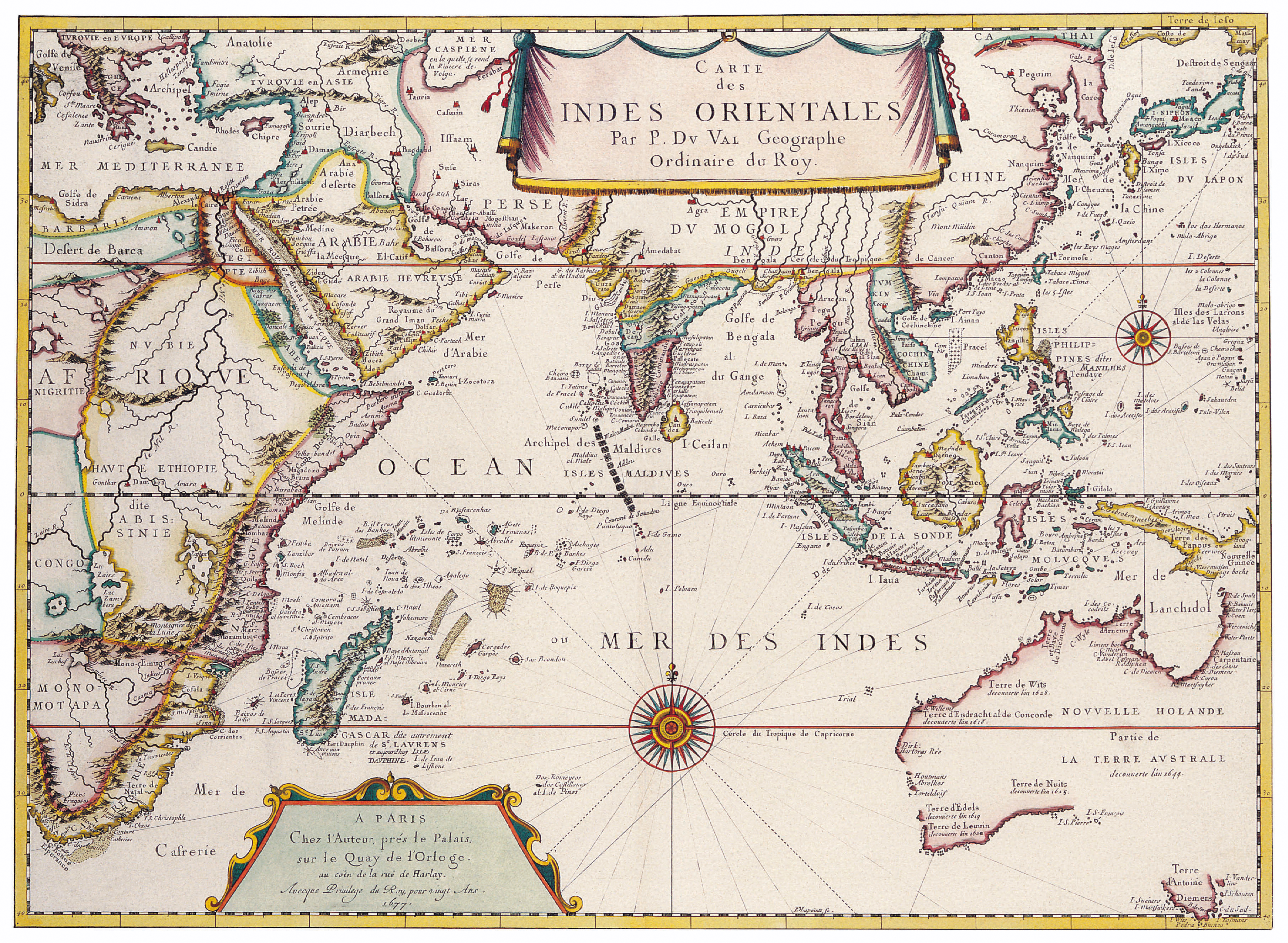
This meme is an image of a 17th-century world map, specifically the 1720 "Carte de l'Empire de la France dans les Moutons" by Guillaume de L'Estage. The map is an example of a "carte" or a map of the world from the early 18th century. The text at the top of the map reads "Carte de l'Empire de la France dans les Moutons" and the map shows the French Empire in the 18th century.
detailed-analysis (gemma3-27b-vision)
Okay, let's break down this 17th/18th-century map of the "Indes Orientales" (East Indies) through several analytical lenses. The level of detail in each section will vary based on how well the specific theory applies to the image.
Visual Description
This is a hand-colored copperplate map, likely from the late 17th or early 18th century, depicting a region encompassing parts of Africa, the Middle East, the Indian Subcontinent, and Southeast Asia. The map is presented in French, with text and labels throughout.
- Cartographic Style: The map features a relatively detailed coastline, but inland areas are less precisely defined. Topography is indicated with hill-like shading. Rivers are prominent.
- Color Palette: The dominant colors are muted greens, yellows, blues, and reds. The oceans are a light blue. Regions are differentiated by washes of color.
- Decorative Elements: There is a prominent compass rose in the Indian Ocean. Illustrations of cities (often stylized buildings) are scattered throughout. There’s also a cartouche with ornate decorative elements in the lower left corner.
- Political Boundaries: The map displays a patchwork of "empires" and regions, often with French transliterations of names. The "Empire du Mogol" (Mughal Empire) is prominently labeled in India, as are various other kingdoms and territories.
- Key Features: The map highlights major cities, rivers, and coastal features. It showcases the area from the eastern coast of Africa to parts of Southeast Asia. It shows Ethiopia, Arabia, Persia (Iran) and India.
Foucauldian Genealogical Discourse Analysis
This map is a powerful example of how knowledge is produced and circulated to establish power. Applying a Foucauldian lens, we can see the map as a discourse that constructs the "East" (the "Indes Orientales") as a knowable, mappable, and ultimately, controllable space.
- Power/Knowledge: The act of mapping is itself an exercise of power. By defining boundaries, naming places, and categorizing regions, the map-maker (likely a European authority) imposes a particular order on the world. This order is presented as objective truth, but is inherently shaped by European interests and perspectives.
- Genealogy of Control: Tracing the "genealogy" of this map reveals how European cartographic practices evolved alongside colonialism and trade. The map isn’t just about representing the East; it actively participates in the creation of the East as a space for European exploitation. The desire to map and control, the map’s structure, and the selection of what is highlighted all reveal the underlying colonial project.
- Disciplinary Power: The map contributes to the discipline of the East, defining its geography and making it subject to European understanding. By creating a visual and intellectual framework, the map makes it easier to administer, regulate, and ultimately, control the region.
- Absent Voices: Importantly, the map silences the perspectives of the people who actually inhabit these regions. There are no indigenous names or cultural representations (beyond broad generalizations). The map is constructed for and by Europeans, and its purpose is to serve European interests.
Marxist Conflict Theory
From a Marxist perspective, this map visualizes the early stages of imperial expansion and the resulting conflicts inherent in the pursuit of wealth and power.
- Economic Foundations: The map's focus on coastal areas and trade routes suggests the economic motives driving exploration and mapping. The "Indes Orientales" were rich sources of spices, textiles, and other commodities. The map represents a visual inventory of potential wealth.
- Class Conflict: The map implicitly displays the power dynamics between European colonial powers and the existing political structures in the East. The delineation of "empires" is less about accurate representation and more about outlining potential spheres of influence and conflict. The map lays the groundwork for future clashes between European powers and local rulers, and the exploitation of labor and resources.
- Mode of Production: The map implicitly reflects the transition from feudalism in Europe to a capitalist mode of production fueled by colonial trade. The acquisition of resources from the East played a vital role in accumulating capital and driving economic growth in Europe.
- Hegemony: The act of mapping can be seen as a form of ideological hegemony. By constructing a particular representation of the East, the map reinforces European dominance and justifies colonial expansion. The map claims a kind of authority and objectivity that masks the underlying economic and political interests.
Postmodernism
A postmodern lens examines the map as a constructed and inherently unstable representation of reality.
- Deconstruction of Truth: Postmodernism challenges the notion of objective truth. The map, far from being a neutral depiction of the East, is a subjective interpretation shaped by the biases and assumptions of its creator. The selection of what to include and how to represent it is an act of interpretation.
- Simulacra and Simulation: The map can be seen as a simulacrum, a copy without an original. It’s a representation of a representation, removed from the lived experiences of the people it depicts. It creates a simulated reality that influences perceptions and actions.
- Fragmentation & Hybridity: The map’s patchwork of “empires” and regions reflects the complex and fragmented nature of the East. It highlights the interaction and collision of different cultures and political systems, blurring clear boundaries and challenging fixed identities.
- Metanarratives: The map participates in a larger “metanarrative” of European exploration and colonialism. Postmodernism critiques these overarching narratives, exposing their inherent biases and power dynamics.
(Limited Application) Queer Feminist Intersectional Analysis
While not a primary focus, a queer feminist intersectional analysis can reveal some underlying assumptions.
- Silencing of Indigenous Knowledge: The map's exclusive focus on European perspectives and nomenclature silences the voices and knowledge of indigenous populations, particularly women and marginalized groups. The cartographer fails to acknowledge their unique experiences and perspectives.
- Power Dynamics: The map reinforces traditional power dynamics that privilege European (male) authority and control. It implicitly assumes that European interests are paramount.
- Mapping as Domination: The act of mapping itself can be seen as a form of patriarchal domination, imposing a Western gaze on non-Western cultures and territories.
- Spatialization of Power: The map visually reinforces the spatialization of power, defining certain areas as "controllable" and others as "peripheral." This reinforces hierarchical relationships between Europe and the East.
In conclusion: This 17th/18th-century map is far more than just a geographical depiction. It’s a complex artifact that reflects the power dynamics, ideologies, and interests of a specific historical moment. Through the lenses of Foucauldian discourse, Marxist conflict theory, and postmodernism, we can uncover the hidden layers of meaning embedded within its lines, colors, and labels.
simple-description (llama3.2-vision)
This meme is a screenshot of a map from a 17th-century atlas, specifically the "Carte des Indes Orientales" by Guillaume Delahaye. The image shows a stylized map of the Indian Ocean and surrounding regions, with various countries and cities labeled in French. At the top of the image, a banner reads "Carte des Indes Orientales" in French, and at the bottom, a smaller text says "In the year 1690, the French East India Company was established".
tesseract-ocr
a Sayer 3 TV aot . G Pee a ih olfe dy Sno Soa ; Pe Piha Peony we *% o f natolie Re NBD on ep ihe anni 7 eres or . ¢ laure 2 5 4@Archi: SR : Eira a : | efalenie a eg he chipel Bik ee ia a ae a 4 ee ea $ mine IVR Res ce - ee | a @ es ne 3 * en ov — gi M got | Ree oN ss o aes ES Naa rn ae were A ee Re so : paws ma, 2% 2% i? ve ear eB eo Le nefnie ae og erie PIENE wa t— erete 7 U > ? g i = | = q Mt cergee a = Ateece i bie ile geile fa rere, ce 5 iE e Sites Pes ae Volga. de, R i \ {r= oe l M ode: te h rx |<: . yee fr LY) — ED Candi. SS chi ‘amage ae Bir Ae i ee efi {| ‘ ; y et ae L NS a eee Benn, G eee oe eet a. {oS SSA ral ms. ee foe RAN a Di ee cee . pas =| ee 7 fast * Bees Sor dar ‘ afeai 4 \ —F ve eee See a ee a fy AD egge arbech\ « &UR =O ae Sp eeeeS BB a Merten wv at cre. ; a b WAS: : fe Petes BA R d ‘ i BY yi Tf fe AWN: ——— A ase | a — ar 15 Nestea sip ead Ay eM es a mlbBagiih If VA AR aA oP Lee ao Pe: ttl eae dahd aair \ “ TE == IDE se Ye ico ey FinteK 4 abic - , x NY D Al oe ae eee 8 SES BREA sabi rabia OE my es ie 3 | i Bar X vis oe ee ‘ oe : ma \ . y; Cea aa See | || rate Sai ce 3 1 tae fe orien ae : (3 i ma * ii - R aj) AO ime = Ble ee | as ae es ge Ocal ee, iis Tks Sa bSira ar P ia fi " Lie aa = =n = A e — so c ae ESN Se ie EE Medine ta Abadan at: r-Rich ¢y t eee ess ae Dv V, cr + pg J LH AI 4g See = ~ 5 a: es - he a path Sees “ np : ey = fh | Dare ae ee mao Begita A erin s AT con A O AL AL 7 Ge ¢ F SFipekeie de aa | v J FSP Nice, sof Ra pict site als i eeet PE Roa G yA at Peoui baa as x ies eel ie = Eee oo fe eel aR z inai e00 HH guim Bie | i = : : e 1 ae d ai S n oO i Z E * TN aMe Baht e apabe ke Mo E ra oi = | = | ae in 2 ge bein fre SS ere ed phe Sy) aa | f 4 = iat be ae BS El-Catif B 1 OF a aS Fie ze SS iT R 7 jj f \ : 1 D = N eet aH att all pd “ M: re fi § « fies: : aS Cuba Pit Bl ae fora. cer ate Make ae, oO ik Teas oe eltro: ios ‘ = ee (ok BN oi: ARAB ne vty. Ae Bi a ron Zs, : r yi do ienitths ‘Cone | itde’S enc ie . a iy yagi By: POE 1 argstas poate haec iy adt Lee aT TTY A Z pie e 1 : aa ee {] ye , a mn oe vtacare “2 IE HE vac Be Golf. se fon fe S a een a - A Sang wo pone Tendoxima oe | “Tan ee eB ue! Poe REVS Murai eae oF “4 ee WDHB) = 4 morte afte; re 9 ‘onda, © riod | y ar “ede. % a ee =e fee! denn rad : D EN AO eg tA os 2 Be as A ons | F eS ZA ce aff in 3 Cortat dh Pe PR andi & Vi = AE A TRI LA g° te alg a , pr ingot scot | | I 03 Sia: oe S ibi 0 ee, © di eee ‘A fee ( s Pagie we Peconsgchy rf P| ree Soe cuentas ge 0 ea Be ate th OG mee IN Nangeieal le og eiia eee f | fl Gas 2, oe ge al a » ieee ale SF: fect oe T x OR TG nh aoe : “hy S =p ij i ale i Aan rie | : ne: Geer Fant Foe : Garages bat ee ¥: foe ae ty nee > EDarne | ; 5. racer EL Ake sore aa ras ae a Cast Ee 3 ps BE quam duchy eae Se pierre) | > ere a)Feg 5 Sigh 2b BC: ihe Bee ere ef : 40° on Gee ‘ ae roe Ongelabich, | y SS oe occa _ F Chihir Fartch Mex 3 Sy Le cee 9 2 ae a ‘enti gre 7.0 a rere si) vied ; gor Fro PA ids Fliers Das py Me til oi ee lone Mtiiela oo ee oe care DI uy fe aren | | e ether ae 2 yt iAeaLyi Lili si FEE, Maen jocohs jee : + lin i Bi aT \ an 8S ude D fi yt | 5 Nv Tate of Bebeb core Le om thea) wo Waters 5 f beng = EFIATE™, By que a 3 e fe ae £. SR Re $ Tanaxi emer Vi. ” | € Pos ancl se eae “the Te ; eo oe ey Aga) She Be de C BSc, 6 a tide Fuegh. fa a 1S i APON || | A \e Bagee Pst 2 oe aa 3 \ Beery = & s oe si s een arate ss E h af | a Bee at eC: nin 2 \ Efeoe as : 5 S ‘ ASL. Ques eae / Ei " —— ETHIO - eo ye Bais fee ; ahs ee 1) Bee L re z fee B £ Fege 4 +3 Jane ae P_ set “Biles Be ONS tne i f LF ; a t PIE ee PS re 4) Bi ea - a eng yr i dae oe Vi cso ita eee peunees eee i Mea E ee Sai LAS Sees a : ary i Rae pic gala 4 Rete ag fed fp ‘A ene ee dos Hermanas I f dite eit 2 3 SG cS el hee ‘ ne ae 4 Pee < Inichpotrou al; Pregl (gash “re TA Loan soe we es Miguel : / rige ! 4 A = fs ere ft Cubitt BRC ges Fen: : i bic pisten % me BC a colt rata thle coin er 7 ; Poe bo fag ; : ne eS plea edt # Bi ain, pe Eile Berge A sfc alos rT 1 GS tNI : A “C ae vice) Sc isi pean ange * Flug cats = ee my ee aN j USCS r ! je J eis ian : : ay Etenars Be ali as ~ = tan ye oh Lee ae \ / or ee Tel 4 : tei ae , aaa at oi : i chipel $i he eM pas Mndamacn $24 3 a as, eae Cum eco eS etree pais * | Be. RS re ae a M Sole d Seis > N des lid cand eer Caraicub, hy 2 & Ogle pCHINE ges race! - ISLE cee eS , / la Deferte A | : ee domba 5 c ll : e aes Maldr y Galle Sh ficale bar, * \ om a rch HF th Se 2 <a . \8 | oy oe be SS elinde moet “fate lialdices | canines * ih cot Wig chic) intr grin QI? L tnloptige Vy fi Bs Z Ja > or. We a \ Is tres 1 Ce; ‘ pace Pa” é ate 2 aes ae LIP: ye fs adel ee ee | l eo j ec? Bee ey Rap eer” = re ye Ceil kes = es oe 6 hor imahan ou PI a e\ ae Vel fe aa Zam-f 0 Er ae Pal Gon Hee oe ales, si g Hgfearrent ne @ an cubar | cf Borde ie. en abe 22.8: NES dé 4! | eee a | : erate ig eee Ae, ae: CBairim BES. et =- © ai = o eB) ALD Ahi Aen g ing Falst +2 so oa? ee — =a dites {7 WS Angloire ** B | | fl ‘Se pec hee mae cant Ba Fino Hg SS ee IVES ie ene Se jetta he ee 5 » mae NS pene va; 1 | p — am a Lp et ae ae Sirians pee! Al eae ean fal Owl SE o en ante / : = Ltianat ‘ aye 5 reel @ Che regia FB fxs aoe ee a 2 Ls POs ’ Lire De atibad 2g erty 5 Bivins ; a lide Di a ure ue ae ete Biles a Ce Loria: $i me <dyane ene f lee ye opr ey = iy emir. agp hee ey, he ar Site ree Se ? ey & eel east ee ‘sae ee 2 Me gate Tease de f no Pager @ fl | ae ee ae pA eth a er ea anual nf: . t irene ees i = < , o « Deli! _— me pe tS Cla f WF : r | f aap ee P yim Li a x Fs rs f ts Heel Finely oy Heed cots 2 eer ne : Seandoe ilgne a = i bce £ bathe # = ae = s a} faire Feels Pat "Eragon H 7 = DS Se e 3 Le ante a a wm + oe " sa s gos z te Ps po usp otti — ger a Se e Merete AM Nir . BM a ji idle jalan § OS im as ae jane, Ei ieaat ia a eel aN tS eae Bee ee Se) ae ds Bis peo (hiner in aye es toe a tek ] MO a E mug on re if ete cul ha pe eee See eae t Fede Gay f / Mintao a te Sir 4 el Ore ft p Mio Bess Lal Arseg Bi Sahau ae {| | Zo sou S Kg “des Up _ SA Chegp Sele Sls CTL a ~ fea ty EDK < iy 10 lL ft Ae = fee iti ‘ ae + Feame. Se ie Pal : ooo we t M ie B om PR lacey IT Sa spirit rw ae y SA sive ay SF Garcit™ secah is artane cli Se ee 7b : °F Sige or lines | alo Vil F | Om eer, ms i "aad = oe = ipirite : ee eFohemaro ea Zz See Blick ‘anda ves fe, peers 0 Tambi at eee Pe renguil Se ee Ste | ert (| : ee dl ete alee hel? o iS Re F 8 7 io Joule Roquepiz \ afl? ee Toa et tree coh,” Sian 8 5, lao an ee ae Sit ene , PE = ca : i , ) ter ae ss ‘ es a eet ef: ie Nagace ; oe * ' j SLES Rok” pe Bale of i Oe : 1 es Lee = eats maf es Baye di a oe m \ / fs gaa tos ape us? SB eg Bridor a a Le er se ae le "sith Pe . Ni eee / Wek: SON ra page me baat Gi I a cz Ses ge ered pf ane pfteel AF : . - / 1 ees el ©] ae ! |Z ig i Lalor de ae Part aig Cor : “abn PES ND 4p A Backien ae 1 : y ua ¢ Bees cent @ de LS peer: 1 Ga ~gado.r % / hrved & ‘ote es a? ~ f > ys - a ey fer Se ; Bs Gen cae pepsi: me ou \ sue See. x Fe seen So Lucene cig ae te iy aly ere ae segs ff SLE a ta ~ ie Nea ee tec m sh machzar , oo, ee w ealt Gutllunme Gass te Pe a e os eee za 8 pe Bi ire te = c R f ated fo ao] fost egy, des “Beton aboyre ee a sateen, ae Dx Py R : ‘ ae ; = . f eit ide t * 4 ‘01 . ‘se 6, Dae: end , lo | Lr ee ee Pe = a Rake? SEL woe Sr DA= ee 1 — s \ / es 1 Chebs Pe or Apatite olay? y Lake Fells @ Pimpettion OF : 2 | Cees ages Terre dell , ae oer GA afcarenhe. ‘ Nem a 3 ZOD ey fe 4 ata £OLV oe, A OE es trues | ile a : SS fatal ar Seep ~ nae S Ne Mazel Ss . 7 f ” oy poe pee CQ ete 1, ie REE NPe oh 1 | ) eam a ees ie Soe 4 : Peo os te a. Sd | : af eT La a Si LA uttretn S \ An u ot Sigjie® Ss pie ee are es ie iss Regi Sie oe ee OK Ce IND a as ee bal. aah x ae 5 me Chré q AT, Li aes ot 4 S : r en L | eae a ee” ne Fd . Ou oe zs DE er | dee Gorell | E ee ated whine can g ae lib RSs Ly ee S ; yap aS sual ; fl ogee a 3 fone — [=¥ iy Oe f qs leg Eo: é Sit bots | fl afreri e = 2 \B —— oo pee aa +s = gi82 potencrs anchid ye MBRde 5 Bro] aS A : ie , —! vie ——Tria Ges a rs. 8 Ay Mirnemsd ido Rade alt H $ me D. - Z tat s py G 3, R-Bataui B er PoAS | os Ro Be OP i | Cér aos t9 Ge | aka a ' oe TAGE RI$ 7 “ ie Caption 7 eS A iN SY Mes cle dic Tr é wy ni a = eee 4 erly — Z q K- all. oye Sth, X <S = opi . -s Jf iligirg: | Pel¥, es le uC eusipre 3 S de Pines ere WS eee pique de Capri Pr: Terre de Wi RA Pal Jae LU 6 oa e Qu I es be Pal i re 4 Say pricorne = Tene PeELIU EA Rillen « oe = a * So . \ Z y dipher £ po 6 jeeeiaed ae de tod ais, ~< eee Gere jerre dE ndracht ald 28. CileDien Bm L pore ¢ a ; / Vn aneniecs Fi si = ; 7 fccgee Ee pee Hoge eS / PONS | chtalde Concorde NO he | I malege ant - ne y Varro . rtoras Ri Vv “| Maes arort at BE - ee A en f \ \ A: . he | Sioee ee oA da Roy, p ays i: es J \ © * ee VELLE yker r fee ore Spee a oc : i r oe a 1 a, ff \ ase er, oO 120) eg My es Smee ; week pe . \ - *. thor etree Pa Battie 13 VA : ; Me ortelduif’ TeAGee Tar £ I | = b | \ . i T. JER ee — \ \ Ter Terre d 2 RE “Bed pas) a G \ ‘ = Bias dEdels pepo Nui d AVS f eae oo s 1 arte ich in 162. ecouue e TeREA: ™ a : % Ape d ee : rte lan 16; Lee i ae a | - $B cleco: e Leuwus SS Yh: SA ae . + nenerse fin rr | — | Stet — si Ne 35 is 1625 % - nat — \ *, s ath CSE | er \ © bi t% TS Pierre pete f eee ae ‘ j ; ae Ree 3 x et ee a / ~ Sas er : = Ee 2 =e 2 Terre | ae c= aS dAntoin B — — Tas iba Be me ¥ LV, , — ucfaihetds 2 en ‘eiehinde eq Sea e et ven fT . 2 Be, ae dasad- ff