First Seen
2015-12-18T09:30:09+00:00
simple-description (llama3.2-vision_11b)
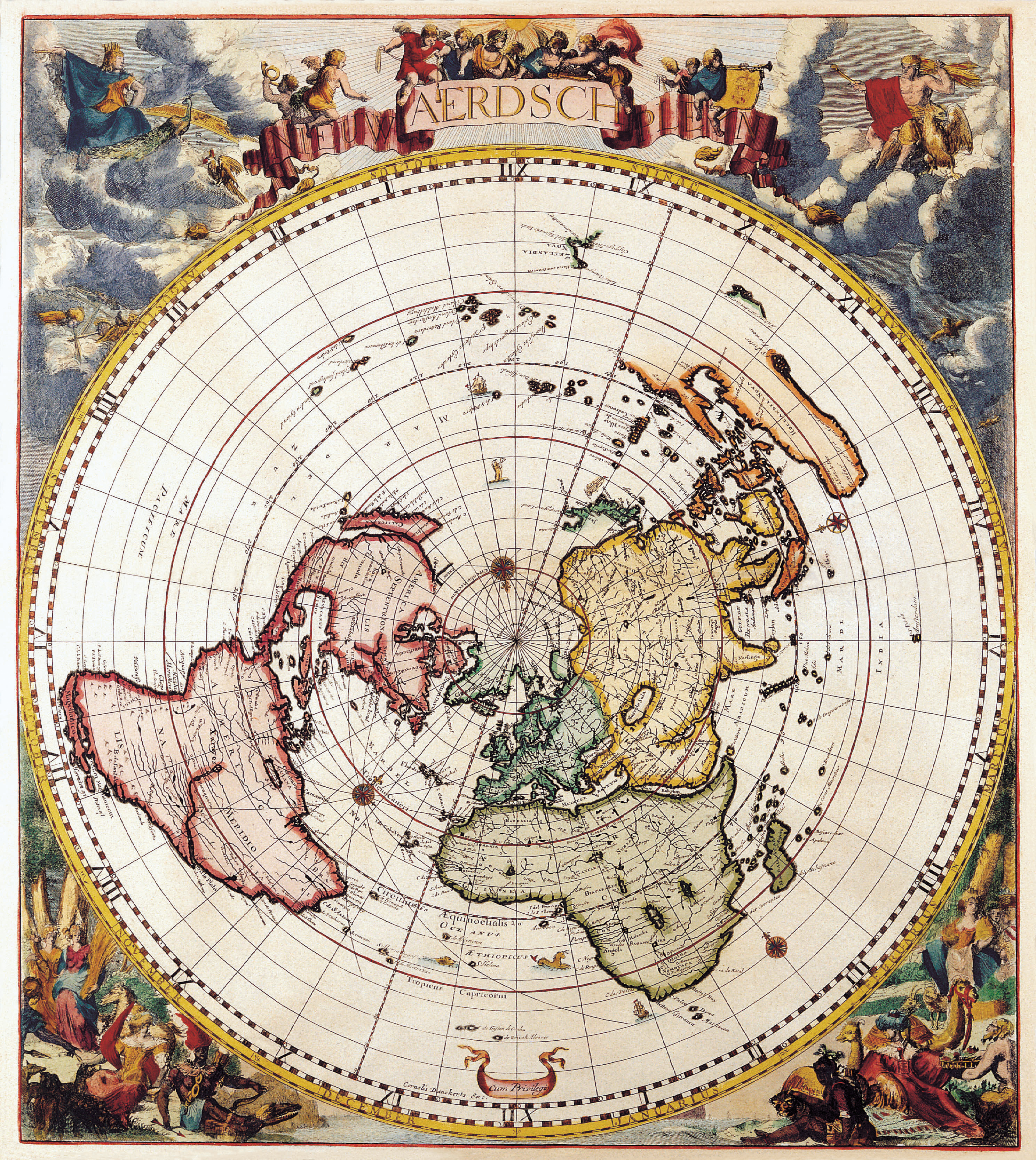
The meme is an image of an old map of the world, specifically a 17th-century map of the world created by the Dutch cartographer Willem Jansz. Blaeu. The map is surrounded by elaborate illustrations of mythological creatures and celestial bodies. The text at the top of the map reads "Aerthys" and "Nova Terra" in Latin, which translates to "New Earth".
detailed-analysis (gemma3-27b-vision)
Okay, let's break down this fascinating 17th-century world map, applying various theoretical frameworks. It’s important to note that applying all these lenses is a complex task, and interpretations can overlap.
Visual Description
This is a hand-colored copperplate map depicting the world as understood in the late 17th or early 18th century. The map is presented in an azimuthal equidistant projection, centered roughly on the North Pole. Key features include:
- Projection & Grid: The map uses a circular, radiating projection, emphasizing the North Pole as a central point. Lines of latitude and longitude are depicted as a radial grid, emanating from the pole. The lines appear more dense near the poles.
- Continental Shapes: While continents are recognizable (Europe, Asia, Africa, North and South America), their shapes are significantly different from modern maps. Coastlines are less detailed and accurate, and there are many geographical assumptions and inaccuracies. Notably, Australia appears as a much smaller, partially imagined landmass.
- Decorations: The map is richly decorated with allegorical figures, mythological scenes, and nautical imagery. Around the periphery are putti (cherubic figures) representing the winds. There are also depictions of ships, sea monsters, and scenes of trade or conquest. These are not just aesthetic additions; they convey worldview and perceptions of different regions. The top banner reads "AERDSCH."
- Coloring: The coloring is subtle, with greens and browns dominating landmasses, blues for oceans, and some use of red to highlight certain territories or political boundaries. There’s a clear aesthetic preference for embellishment and visual appeal over purely scientific accuracy.
- Cartographic Conventions: The map features typical cartographic elements of the period, such as sea monsters (indicating the unknown or dangerous areas), elaborate compass roses, and ornate border designs.
Foucauldian Genealogical Discourse Analysis
This map is a prime example of how "knowledge" is constructed through discourse and power relations. Applying a Foucauldian lens:
- Discursive Formation: This map doesn’t simply “represent” the world; it creates the world as it is understood at the time. It is a product of a specific discursive formation – the ways of thinking, speaking, and knowing about geography, cartography, and the world in the 17th/18th century.
- Power/Knowledge: The creation of this map is intimately linked to power. The map’s creators (cartographers, patrons, sponsoring empires) had the authority to define and represent the world. This representation legitimized their power. By mapping the world, they asserted ownership, control, and influence. The focus on the North Pole and Europe as central highlights a Eurocentric worldview.
- Archaeology of Knowledge: We can trace the “rules” governing this map. What made it possible for this map to be created? The rules of cartography, surveying, printing, cosmology, and the political context all shape its construction. It's a "historical a priori" – the conditions of possibility that made this map thinkable and producible.
- Genealogy: A genealogical approach would examine the origins of the map’s concepts. How did ideas about geography, exploration, and empire evolve? What earlier maps and representations influenced this one? The inaccuracies and biases reflect historical prejudices and limited knowledge.
Critical Theory
From a Critical Theory perspective (drawing on thinkers like Adorno, Horkheimer, and Marcuse):
- Instrumental Reason: The map embodies the principles of instrumental reason – the emphasis on efficiency, measurement, and control. The act of mapping is a way of making the world "knowable" and therefore controllable, turning it into an object for domination.
- Domination of Nature: Mapping is a key element in the project of dominating nature. By precisely measuring and representing the world, humans position themselves as masters of it.
- Ideology: The map is not a neutral representation of reality but embodies specific ideologies. The Eurocentric focus and emphasis on European exploration and colonization promote a particular worldview that justifies imperial expansion. The allegorical figures reinforce dominant cultural values and beliefs.
- False Consciousness: The map may contribute to a “false consciousness” among those who view it. It can mask the exploitation and oppression that were inherent in the age of exploration and colonization.
Marxist Conflict Theory
Through a Marxist lens:
- Mode of Production: The map is a product of a specific mode of production, tied to the rise of mercantilism and colonialism. It reflects the economic and political interests of the dominant European powers.
- Class Struggle: The map is a tool for furthering the interests of the ruling class. It facilitates the exploitation of resources and labor in colonized territories.
- Imperialism: The map directly illustrates the processes of imperialism. It shows European expansion and the conquest of other territories. The depiction of sea routes and trading posts highlights the economic motivations behind colonization.
- Base and Superstructure: The map can be seen as part of the “superstructure” – the cultural and ideological institutions that support the “base” (the economic system). It reinforces the existing power relations and justifies the exploitation of the working class in both Europe and the colonies.
Postmodernism
From a postmodern perspective:
- Deconstruction: The map can be “deconstructed” to reveal its underlying assumptions and biases. The seemingly objective representation of the world is shown to be a constructed narrative.
- Relativism: The map is not a “true” representation of the world but one interpretation among many. Other cultures and societies had their own maps and ways of understanding the world.
- Simulacra and Simulation: The map becomes a “simulacrum” – a copy without an original. It creates a representation of the world that is more real than the world itself.
- Fragmentation: The map can be seen as reflecting the fragmentation and uncertainty of the modern world. The inaccurate and incomplete depiction of certain regions highlights the limits of human knowledge.
Queer Feminist Intersectional Analysis
This is the most challenging to apply directly, but important to consider:
- Silencing and Erasure: The map (like many historical representations) likely silences the experiences and perspectives of marginalized groups – Indigenous peoples, women, people of color, and LGBTQ+ individuals. Their voices and knowledge are absent from the cartographic record.
- Gendered Spaces: The map might reflect gendered assumptions about space and exploration. Who were the explorers depicted? What roles were women playing (if any)? Spaces associated with women (home, domestic life) might be absent or marginalized.
- Colonial Violence and Intersectionality: Colonialism was not just about economic exploitation; it was also a system of gendered, racial, and sexual violence. A queer feminist analysis would examine how colonialism impacted the lives of marginalized groups in complex and intersecting ways. For instance, colonial projects often sought to disrupt Indigenous gender roles and sexual practices.
- Subversion: A queer feminist lens might explore how marginalized groups resisted colonial power and asserted their own knowledge and perspectives. Even in the absence of direct representation on the map, their agency and resilience should be acknowledged.
Important Note: These analyses are not mutually exclusive. They can and should be combined to provide a more nuanced and comprehensive understanding of this historical map. Each framework offers a different lens through which to examine power, knowledge, and representation.
Let me know if you'd like me to elaborate on any of these points or explore a specific theoretical perspective in more detail.
simple-description (llama3.2-vision)
The meme is an image of a vintage-style world map with a humorous caption. The map appears to be a classic example of a 17th-century world map, complete with ornate illustrations and a sense of nostalgia. The text "I can see for miles and miles and miles and miles" is written in a playful, cursive font across the top of the map.
tesseract-ocr
eee Sahih. bs oe 2 J ST ie ae ll eh IR eee net | ere keyg, |= 66 OD Aa a Se ee ee EAT RDSCHRe Air Wee f <2 ae eS en IN al Oia Eee CS |e eae Se 1 | eu (Awe u) A. Oa ey ie, Ree 4) i} ee er zy Te = 2 Bi | ee “$e {ENS a ee = Oe We oa Ge = — eee omnes, oS ae SS hls 6 Ef = ‘ my SS: SS ee iS u ae 2e 3 SSS SS ae Le L ine Sees er 3 tS 4 Wits pees =o Sees wee 72% off XQ NS SS Bete t * eS we Soy 5a sap Ax , oa E caawione une TTT Sale 7 Sy SS ~—.. yr : ae, Pe s ee) fa ee | y _ appl! ie a = Sa s& Oe = eZ YY 4 Ls Se gore Se | - XN Sy a” ae | ee) Sy , a x her a 0a S S Cae Lf / a ; ——! eg So QR \ Qe lias / /> co ae SX SRB TF 4 ee y “ a ‘ 4 ‘ J Sh Sia. aS on\ |_| es Roe LN \ a RSF YET ~~ IB la FEN SOR > oe ae Veh i By |) hie eo TM ate pe 1 Pek j 3 My CN ) SEC eR AK WEA Be || OR df 7 —~ fei f # SS Fi SARIN f SOBEL & Be 3 X \ 33 He \ | | BE TT i 7 he Cae An | || ae ea |.) th | | eee | > Fi Ban) { f ys eo eS | ; KASS [2 } | ¢ ces a | || | ih po 3 Beg oes PADS | ge ii Le ee il 3) Nua Wo Oe es CES Nae Ke a — lata: | B = Wey] = fg a An . =) eae Ric ee * se cr aS iS _ Be [pee th 4, ie ee eX ks 1b get iS RS aoe me aN GP Coat” || KS hd a lee We SY hi ae AK. é voy is S Kr ery SH } | Bf Al er aaah 4 A ec ERR DT Ta GEe CVs SI | he) he x ‘A $s" PENG GZ a (RES. VE Ga WITS 8 f AA Le Xx Wake NA nef | SERRE 5 #. mo / f ie ert Cae ys ex's ONE f pe ak, iy fe / his): ANY > Yep KOR Sa aay Eph oe Oe SR ae BD 69 A A fee aeA\ 2 \ APS. ne oe eee a IAS ae es y 49 = a4 & a ee || | Nw. . SC AN SELLS Poe Kegs aera \7 g a hn, cake e ; : ht PK S fi Af y fs Fe - LE NS®S CN “ot SO, SS ee te 0) io 4 hha ee a A NA a <s : ee ar pea OK ¥,4 Bey LET ERS aN | igre Oxy * i Neier NRE Og : S Shi Sg BheM ASA S ee oe ae SD SS le | ee .2 z Pee, fae Sse ee — Sp ; A oe ENE jog We ee Si gi ne et ey = eee = &\" a SF Gi LE e oa 4 Sy oar OS i Ek EN OD, mS | ee ee g- FL ERS Le Bi ae a Py sate ne aS < 7B = 4 a SG KN Se, a oe re ‘*. ie ; . oN, 7) Fa Tike Wes a : sal oe cn ~ : a | a Ye § te ue ee eR, {Pp |S SOT he hie as A Sal er if ee ee, QE a eZ fi Te ye Pe gee\ ae pee Uae ee A Bean F os SURO SR eS or herds Goes S pe L eo a= : Uf 3 a oe Re Bil : ae Pe a = Then UN ee *¢s ; mS ve ee i rece | eee AW er ee eS eee ee a eee |