First Seen
2015-12-18T09:30:09+00:00
simple-description (llama3.2-vision_11b)
This meme is an image of a 16th-century map of the world, specifically the "Orbis in Genus" map by Abraham Ortelius, which is a famous example of a world map from the early 16th century. The image is a reproduction of the map's title page, which reads "Orbis in Genus" in Latin. The meme is likely a humorous or ironic reference to the map's title, which is a play on the phrase "Orbis in Genus" being a Latin phrase that translates to "The World in a Single Map".
detailed-analysis (gemma3-27b-vision)
Okay, here’s an analysis of the image, broken down into sections based on the requested theoretical frameworks, only where applicable. Given the image is a historical map, some frameworks will be more fruitful than others.
Visual Description
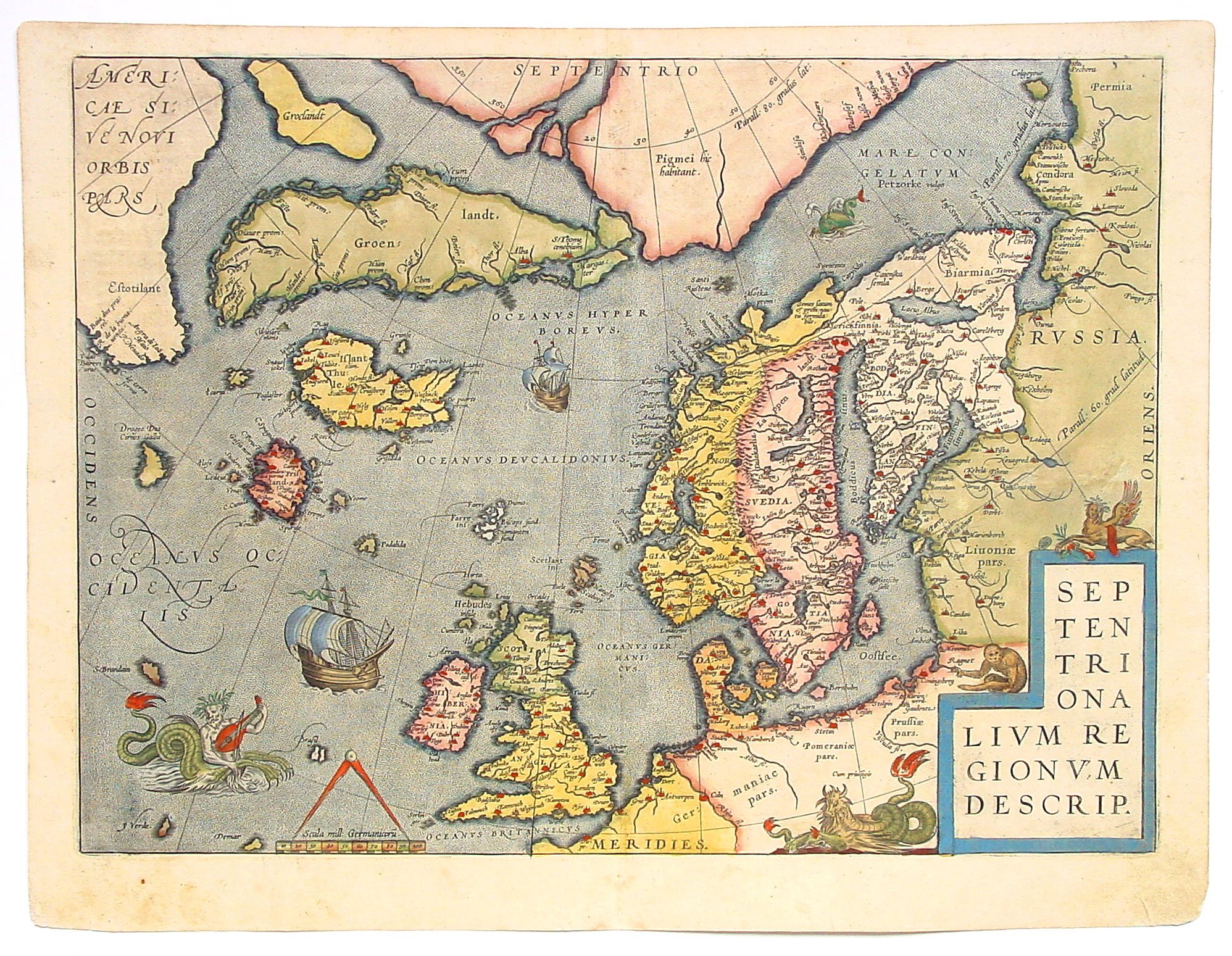
The image depicts a detailed, antique map titled "Septentrional Regionvm Descript" (Description of the Northern Regions). It appears to be a Mercator projection, showing Scandinavia, parts of Russia, and the North Atlantic islands. The map is richly illustrated with detailed geographical features (mountains, forests, rivers), settlements indicated by small cityscapes, and ships at sea.
Key Features:
- Color Palette: Dominated by muted tones of ochre, brown, green, and blue. The landmasses are mostly rendered in shades of yellow and gold, while water is various blues. There’s a distinct use of pink/rose color to highlight certain regions or possibly territories.
- Illustrative Style: The map is not simply topographic; it incorporates pictorial elements. Small drawings represent cities, forests, and geographical landmarks. The inclusion of ships suggests navigational or commercial interests.
- Calligraphy & Typography: The map utilizes elaborate, ornate calligraphy for place names, geographical features, and the title. The typography is consistent with the period.
- Compass Rose: A detailed compass rose is present, indicating cardinal directions.
- Overall Impression: The map is highly decorative and intended for display as well as for navigational use. It evokes a sense of exploration, discovery, and the growing understanding of the world during the early modern period.
- Significant geographical features: Shows islands in the Atlantic Ocean, the coastline of Scandinavia, and the northern parts of Russia. The land features are depicted in detail, with mountains, forests, and rivers.
Foucauldian Genealogical Discourse Analysis
This map provides rich material for a Foucauldian analysis focused on the construction of "North" and the discourses that shaped its representation.
- Power/Knowledge: The map isn’t a neutral representation of geography. It’s a product of specific power structures (colonial empires, cartographic institutions, wealthy patrons) that defined what was considered knowable and important. The act of mapping itself is an act of power, asserting control over space through categorization and representation.
- Discursive Practices: The map embodies specific discursive practices of the era. The detailed representation of coastal regions suggests a focus on maritime power and trade routes. The visual emphasis on settlements points to the importance of territorial control and resource extraction. The naming conventions reflect the languages and cultural perspectives of the mapmakers.
- Genealogy of "North": Tracing the historical origins of how the "North" came to be defined is important. This map contributes to the genealogy. What specific interests were served by defining these regions in this way? How did the representation of the North influence colonial ambitions or economic strategies? The map’s biases and omissions reveal the underlying assumptions about the North and its inhabitants.
- Archaeology of Knowledge: The map is a snapshot of the knowledge systems present at that time. It reveals what the cartographers knew (or thought they knew) about the North. It also exposes the gaps and silences in their knowledge, and how those gaps might be linked to systems of power.
Critical Theory
From a critical theory perspective (drawing on the Frankfurt School, Horkheimer, Adorno, etc.), this map could be viewed as a manifestation of the Enlightenment project—the belief in reason and scientific progress.
- Instrumental Reason: The map embodies the Enlightenment's attempt to systematize and categorize the world using rational principles. This pursuit of knowledge, however, can be seen as a form of instrumental reason—reason used to dominate and control nature (and, by extension, people).
- Myth of Objectivity: The map appears to present an objective picture of geography. However, a critical reading reveals that it’s far from neutral. The cartographic choices—what to include, how to represent it—are shaped by specific ideological commitments. The map, therefore, contributes to the myth of objectivity—the belief that knowledge is independent of power and social context.
- Domination of Nature: The map, by dividing and labeling the land, can be seen as contributing to the process of domination of nature. It transforms the natural world into a resource to be mapped, measured, and exploited.
Marxist Conflict Theory
From a Marxist perspective, the map reflects the economic and geopolitical conflicts of the period.
- Resource Control: The detailed mapping of coastlines, rivers, and settlements suggests an interest in resource control and trade routes. The map can be seen as a tool for identifying potential sources of wealth and establishing dominance over key territories.
- Imperial Competition: The map reflects the competition between European powers for control of the Northern regions. The highlighting of certain areas might indicate areas of strategic importance or potential colonial expansion.
- Class Relations: While not directly depicted, the map implies underlying class relations. The wealth required to commission such a map and the resources available to explorers and traders suggest a significant economic hierarchy. The map can be seen as a representation of the interests of the ruling class.
Postmodernism
A postmodern reading of the map would focus on the constructed nature of reality and the instability of meaning.
- Deconstruction of Representation: The map isn’t a “true” representation of the North; it’s a representation—a constructed image shaped by cultural conventions and ideological assumptions. A postmodern approach would deconstruct the map, revealing its underlying biases and the arbitrariness of its choices.
- Fragmentation & Simulacra: The map's division of the land into distinct territories can be seen as a form of fragmentation. The images of cities and settlements might be seen as simulacra—copies of realities that have no original.
- The End of Grand Narratives: A postmodern reading would challenge the “grand narrative” of progress and discovery that the map seems to embody. It would question the idea that mapping and exploration are inherently positive endeavors.
Note: The usefulness of some of these frameworks are greater than others. A map is a rich source for Foucauldian and Marxist readings. Postmodernism can also be applied to reveal constructed realities. Critical Theory allows for considering power relations in the pursuit of knowledge. Queer Feminist Intersectional Analysis doesn't have a particularly strong application here, as the map doesn't directly address gender, sexuality, or intersections of oppression.
Let me know if you'd like me to elaborate on any of these sections or focus on a specific theoretical framework in more detail!
simple-description (llama3.2-vision)
The meme is an image of a 17th-century map of the world, but with a humorous twist. The map has been altered to show ridiculous and absurd locations, such as "Ludovia" (a place where "ladies" go to get drunk) and "Fart Britain" (a place where "farts" come from). The text "Ludovia" is written in a corner of the map.
tesseract-ocr
nen SS = sees oe de om y a oN i + 7 ; iT 5 Grande aS = Fe P, fo Seer tI PK IAT aire De = - FEO ve es y EE eas Sd LIXF Z ay She fg ye oe St veo > GO | of . Bg Bos en Pe | A A ey f 4 7 | Fe Pe goes Fagot \ 4 vy. By A teria | ae ed 2 Bie Ee, fabitant. 4 ae ey ee b ays 2 f andt, —P Scr ye Taae 2 pes <M ACR oe se : Efocilare eS yo igs ; aS J for fee ¥ Me. _& « le aS Ba ey ey = J ‘i oe e | we ae se Se Y= eer os ey \ 4 fae fle ee Ria fondora ws Ee 2 8 es Ree ee he ne era oe ee TR eo BS: erm - Me RR Lee Te here a Ae amo > eX 8 he Sas imi rao . Fe. Be ea, ee Se Oe ee ie a ae re fe ee Zo ees aes ee ee es a Le PS 5! Oal ae ee ee DE ge NS. Se E@ Rees * Se oes omer Bis - ety eo Reman ey Se ee pene oe ine aa 0 em ¢ i BiarmiaGn~ H B Viele ve — sf 2 SS 2 iE BS qe eee ae ae.com aE ce as | Hehe Seg Cnty ged * aise? SA Belen ae Hae he Se iF f a ee se ke ee PBs et a A Kept SS A bce Coe Ps A S % ae Rigs ie Ros Re fT PR a RS ieee aie ee eS oy a wis if Y oy a pe o58 2 = a eae ss Cis ee i ae at REET PSR Nc ard be Wi SF pee ee Se ge Cia Sind Rico pet : eee Ls pes : oes wee e\ ag EN one V_S'S'D ei 7 2 ye © re te BR Sts RE eye air do“ : ee, BNE Ue weet ey 8 ears S Pao: SG NZ {rw eon oy oN. fF? bee oo Re ere a Le pafra: RS wy (OGes Noe SP ge es fo see awe ee a) ae een ) a i eae EY. ee Se poe 1 Ee a se 8 Wes tae ieee Eee Hi es se oc, Ageia ES into Paes easy AIS eS oe ae Bl re 46 K 9 oo ee ) ENG Pe oe ay fee o¢ ay te Z- ef a Ee et Is Ee Pe as | es bs pene 3 EACLE fm : = lS eee RS Bae ef Seer S eee Raahoats Ress x5 a “Ue = ee : S Vi Co RD hoe Lig eos, Ge Si Meats E fi Re S < 7 Ae Pye “SS pee oS SS ee a ees Ss , ee a 2 Se aay Liuonie ae Ses mete BeBe eS NEA | Peeve 3 OD Che saath Aes oe aS Pee B O8 1 eke Ba a] as ( 3 < eo es ares sue nea oe hg Bue (A ee pars. [> ae 2 Re Geen Py Lee fs ee gto ae Ue ae | BGs woes ed) ear eS EF ccs oe ge D>, Te ay | | Y - — Pe ae NEES A. € E ae pe ay eft Eons > & Pg oe A BS ee A P| ee, Tee eS Se Sah, Fi a RE os By e a | os = Zs yy Le on ss ee ES Re Rs Ba e ee wt Pas Ta ~ | | EN | ee oF / —N eke Oe eae oe Se s fos eel | SOE Rife ce Fess ee A “ 5 ies so Ps ; ad re | Ee, oe S&S eee pect See / .. TRI | soe Foe ae fo oF tet ger Si aise fice Sees | See ra eA, beat Bl a ele eS Bo Boe, SS XLS O | se LO I fsa alt Se cage, 3 Ri ek Pomerani 2 Rs - N A | . = leigh thee oe: Pare, cme.’ De 4 oe LI | =] ey vee / Lng Bee nts '\ @H VM RE EB = RAG (ge » | i GIO | a ane » | > Nvm | 6 BES M i 2 SS : Uae oe ye) 5 | — ee ae | A eS no CRIP. § sees PESO aa a = aS $$ $e <