First Seen
2023-05-10T21:03:42+00:00
simple-description (qwen3.5_2b-q8_0)
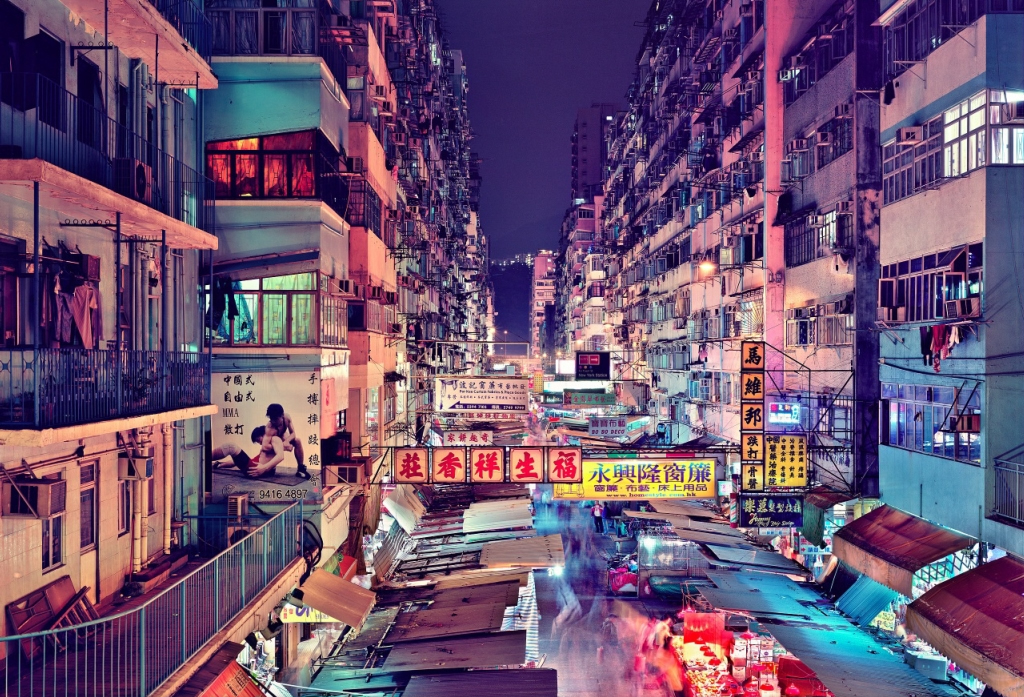
This meme is likely a typo for 'Papers'. It features the newspaper racks hanging on the left side of the street, which are a common visual motif in urban photography and meme culture. There is text on the wall, including the shop names '福興隆' and '莊香祥生福'.
simple-description (llama3.2-vision_11b)
The meme appears to be a screenshot of a Wikipedia page, specifically the article on "Pope". The image shows a Wikipedia edit history, with a user named "Pope" making an edit to the page, and the edit summary reads "I am the Pope". The meme is likely poking fun at the idea that the user is literally the Pope, and is making a humorous edit to the Wikipedia page.
detailed-analysis (gemma3-27b-vision)
Okay, let's break down this photograph with a lens toward the requested theoretical frameworks. It’s a compelling image, rich with potential for analysis.
Visual Description
The photograph captures a densely packed, urban alleyway scene, presumably in Hong Kong or a similar East Asian city. The perspective is a high-angle, almost bird's-eye view, looking down into a narrow passage between very tall, aging buildings. The buildings are crammed together, seemingly stacked upon one another, and heavily adorned with air conditioning units, washing lines draped with clothing, and signage in Chinese characters. The color palette is dominated by neon lights – blues, greens, yellows, and reds – illuminating the wet street below. The wetness suggests recent rain or a humid climate, creating reflections and intensifying the neon glow. There is a sense of claustrophobia and intense visual clutter, but also vibrant life. The composition is characterized by strong leading lines created by the alleyway itself and the verticality of the buildings. The image conveys a sense of both energy and decay, of old traditions and modern living coexisting in a limited space. Despite the density, there's a lack of visible people, creating an eerie sense of solitude within the urban sprawl.
Foucauldian Genealogical Discourse Analysis
This image is a potent site for exploring Foucault's concepts of panopticism and heterotopia. The sheer number of windows and balconies suggests a constant, potential surveillance. While we don't see anyone watching, the architecture implies the possibility of being watched, embedding a sense of self-regulation (a key aspect of the panoptic principle). The architecture itself, designed for maximum density, is a discourse - a system of power/knowledge - that governs how space is used and inhabited.
Furthermore, this alleyway operates as a heterotopia. It’s a space other to the ordered, planned city. It’s a space of deviation, of informal economy (implied by the signs and the busy activity), and a place where the rules of the "normal" city don't quite apply. The accumulated detritus, the haphazard layering of laundry and signage, the sense of being "in between" – these all contribute to its 'otherness'.
A genealogical tracing would look at how this particular spatial arrangement emerged. How did colonial legacies, economic pressures, and the need for high-density living produce this space? What forms of control and resistance are embedded within it? The image is a historical artifact, containing the layers of power relations and practices that have shaped it over time.
Critical Theory
Drawing on the Frankfurt School, this photograph exemplifies the culture industry and the alienation of urban life. The density and uniformity of the buildings suggest a loss of individuality and a homogenization of experience. The neon lights, while vibrant, can be seen as a form of commodification – turning the very fabric of the city into a spectacle for consumption.
The image reflects spatial alienation. The people who live within these structures are, in a sense, dispossessed of space. They are crammed into limited areas, lacking privacy and a sense of connection to their surroundings. The photograph conveys a feeling of being lost in a labyrinthine system, a cog in a larger, impersonal machine. The lack of visible people underscores this sense of isolation and anonymity.
The aesthetic itself—the use of vibrant neon colors—could be interpreted as a means of masking the underlying social and economic problems of the city. It's a form of spectacle that distracts from the lived realities of those who inhabit this space.
Marxist Conflict Theory
This image is a visual embodiment of class struggle and the contradictions of capitalism. The high-density housing suggests a large working-class population living in cramped conditions, while the signs and commercial activity point to the presence of a market economy that exploits their labor.
The stark contrast between the deteriorating buildings and the bright, modern signage highlights the inherent inequalities of the system. The signs represent capital accumulation, while the buildings represent the lived experience of those who are exploited by that capital.
The limited space and lack of amenities point to the commodification of housing. Shelter, a basic human need, has been transformed into a commodity, subject to the laws of supply and demand. This commodification exacerbates social inequalities, forcing the working class into substandard living conditions.
The visual clutter and density can also be interpreted as a form of spatial control. The working class is confined to a limited space, reinforcing their subordinate position in society.
Postmodernism
The photograph embodies many key tenets of postmodernism. The layered and fragmented composition reflects a rejection of grand narratives and a celebration of complexity and ambiguity. There’s a deliberate mixing of old and new—aging buildings juxtaposed with neon signage—illustrating a rejection of historical purism.
The simulacra and simulation concept is present. The neon signs, the reflections, and the overall visual clutter create a hyperreality—a simulation of reality that is more real than reality itself. The image is not a straightforward representation of the city; it’s a constructed, mediated experience.
The deconstruction of traditional urban planning is evident. The alleyway is not a rationally designed space; it’s an organic, chaotic product of incremental development and adaptation. The image challenges the modernist ideal of a planned, orderly city.
The visual excess and sensory overload suggest a postmodern fascination with spectacle and the blurring of boundaries between reality and representation.
Queer Feminist Intersectional Analysis
This one is a bit more nuanced, as the photograph doesn't explicitly depict gender or sexuality. However, a queer feminist reading can still be applied through a lens of space and marginalization. This densely packed space, while offering a sense of community, also creates vulnerabilities. The lack of privacy, the constant proximity to others, and the limited access to safe spaces can disproportionately affect marginalized groups, including women, LGBTQ+ individuals, and those experiencing economic hardship.
The architecture itself can be seen as embodying patriarchal and colonial power structures. The lack of access to green spaces, the cramped living conditions, and the lack of individual privacy can reinforce social inequalities and limit agency.
The "hidden" nature of the alleyway can also be interpreted as a space of resistance and subculture. It may serve as a safe haven for marginalized communities, allowing them to create their own spaces and identities outside the constraints of mainstream society.
A feminist lens could also focus on the gendered division of labor implied by the visual clues. Are the signs for businesses primarily owned/operated by men? Who is performing the labor of the washing lines/maintenance of the space? These questions raise broader issues of gender inequality and the social organization of labor.
I hope this detailed breakdown is helpful! Let me know if you'd like me to elaborate on any of these points.
simple-description (llama3.2-vision)
The meme is an image of a crowded and chaotic street in Hong Kong at night, with neon lights and billboards illuminating the dark sky. The text "I can smell the desperation" appears in a bold, graffiti-style font across the top of the image. The image is meant to evoke a sense of overwhelm and anxiety, with the text adding a sense of irony and humor to the scene.
tesseract-ocr
> pom) Rie o eg J fai j ot , a ; Wee ro yi ie Ve a Vine eles GL, Pa DU ep he ND be a i bl) babel at) i ries nies nD al Wide a) ap ed coy bes gh i” a The 7 =a | Tigre ella ae ghey Vee i , 1a nll l, hah a : « any, on Poe ni l 1 DOT Sane eee a S 3 7 ae. aed | we lL Cae Ariane sue Seti . & ; vi | eet t se =. = Me Ses as lies = \ 7 Wiese i i a = eo | i Y ‘ zB Ve a ( Ms x r o = << mA A |] HH eS es