First Seen
2023-05-10T21:03:42+00:00
simple-description (qwen3.5_2b-q8_0)
"Papes" refers to Michael Papandriano, a comedian infamous for mocking hypocrisy and self-deprecation. He popularized a meme using the text written on his book, Jeeses in the Morning (visible in the photo), to satirize how public figures often act hypocritically in public. The image explains the joke by showing Papandriano with the book and cigarette, linking him to the specific phrase that became his signature for critiquing the disparity between public and private life.
simple-description (llama3.2-vision_11b)
The meme is an image of a person sitting at a desk, surrounded by empty coffee cups, papers, and a laptop screen with a browser open to a Wikipedia page about the Pope. The text "Pope" is highlighted in the browser, and the person is looking at the screen with a mixture of confusion and amusement.
detailed-analysis (gemma3-27b-vision)
Okay, let's break down this photograph through the lenses you've requested. It's a rich image with a lot to unpack, and not every analytical framework will be equally applicable. I'll go through each section, outlining the relevance and then offering an analysis.
Visual Description
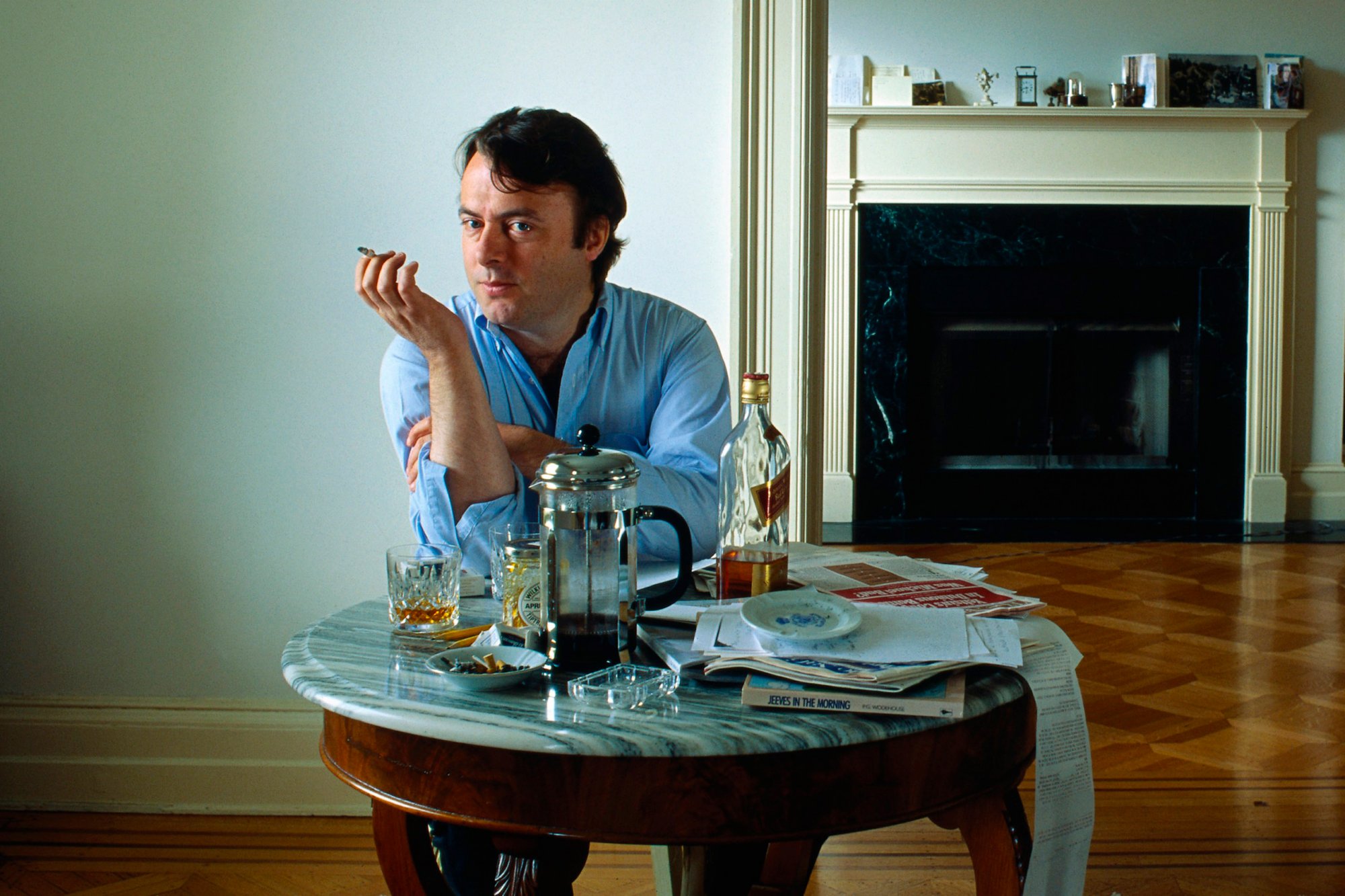
The photograph depicts a man, likely in his 40s or 50s, seated at a round marble-topped table in what appears to be a well-appointed living room. He's wearing what looks like a silk robe and button-down shirt, suggesting a casual yet affluent lifestyle. He’s smoking, holding the cigarette between his fingers, in a pensive and slightly melancholic pose, with his arms crossed. The table is cluttered with objects: several partially full glasses (likely containing alcohol), a coffee press, a bottle of liquor, newspapers scattered across the surface, and remnants of what may have been breakfast or a snack.
The room itself is classically decorated – a fireplace, molding, and hardwood floors. The lighting is soft and diffused, creating a somber mood. The colors are muted, with shades of green, gray, and brown dominating the scene. The overall impression is one of solitude, excess, and possibly a subdued sense of ennui or discontent. The photograph is high-contrast, sharply focused on the man and table, making them the primary subjects of attention.
Foucauldian Genealogical Discourse Analysis
Relevance: Foucault's work on power, knowledge, and discourse is highly relevant here. The scene suggests a system of habits and indulgences, a discourse of coping through consumption and self-isolation. We can see this through the objects present and the man’s behavior.
Analysis: This scene can be examined through the lens of the “care of the self.” Historically, Foucault explored how individuals were encouraged to cultivate particular modes of self-governance. Here, the man seems to be engaging in a form of self-treatment – not one of health or productivity, but of self-numbing. The alcohol, tobacco, and isolation aren’t random choices; they’re part of a discursive practice of dealing with internal states. The “self” he’s constructing is one of detached melancholy.
The objects are not merely possessions but artifacts of a power dynamic. The expensive room and materials (marble, silk, alcohol) signify a certain social class, and the man’s reliance on these objects indicates a dependence on the privileges afforded by that class. The genealogy of this behavior – tracing its historical roots – could reveal how such patterns of coping with privilege and boredom have been normalized and passed down through generations. The man is not necessarily a victim but a participant in a system of power/knowledge that shapes his behaviors. His self-imposed confinement is a manifestation of that power dynamic.
Critical Theory (Frankfurt School/Adorno/Horkheimer)
Relevance: The scene embodies several key themes within Critical Theory, notably alienation, the culture industry, and the critique of consumerism.
Analysis: The man’s isolated state, despite his apparent material comfort, points to alienation – a central concept in Marxist and Critical Theory. He is disconnected from meaningful social relationships and seems trapped in a cycle of consumption that doesn't fulfill him. The objects on the table – the alcohol, cigarettes, and perhaps expensive coffee – represent the seductive power of the “culture industry” – the mass production of commodities designed to distract and pacify.
The image can be interpreted as a critique of late capitalism. The man's affluence doesn't translate into happiness or genuine connection; instead, it facilitates a self-destructive pattern of behavior. His isolated existence represents a failure of the promise of consumerism – the idea that buying things will bring fulfillment. The photograph hints at the emptiness at the heart of a society obsessed with material possessions. The arrangement and clutter on the table itself represents a system of disorder, a microcosm of broader societal malaise.
Marxist Conflict Theory
Relevance: While not overtly political, the image implicitly highlights class dynamics and the consequences of material inequality.
Analysis: The man's comfortable environment speaks to his privileged social standing. He is shielded from the struggles faced by those less fortunate. The photograph indirectly points to the conflict between those who have and those who have not. His ability to indulge in these habits is a direct result of his economic position.
It is important to note that the photograph does not explicitly depict conflict. However, it represents a condition that arises from class conflict. The man's isolation and self-destructive behaviors can be seen as a symptom of a society where resources are unevenly distributed and where the interests of the ruling class are prioritized. The image highlights the alienation that can arise from a system of economic inequality. It's a subtle statement about the consequences of unchecked capitalism.
Postmodernism
Relevance: The photograph's ambiguity, fragmentation, and lack of a clear narrative resonate with postmodern themes.
Analysis: The image resists easy interpretation. It doesn't tell a clear story or offer a straightforward moral message. The cluttered table and the man's ambiguous expression contribute to a sense of fragmentation and uncertainty. This aligns with postmodern critiques of grand narratives and the rejection of singular, absolute truths.
The man’s self-imposed isolation can be seen as a reflection of the postmodern condition – a sense of alienation, fragmentation, and the loss of meaning. The photograph doesn't offer a solution or a path forward; it simply presents a snapshot of a fragmented reality. The blurring of boundaries between public and private – the visible messiness of his personal space – further reinforces the postmodern theme of deconstruction. The image rejects a clear, unified "self," portraying a subject fractured by internal contradictions.
Queer Feminist Intersectional Analysis
Relevance: This lens is the least directly applicable, as the image doesn't explicitly portray gender or sexual identity struggles. However, we can explore how patriarchal expectations might contribute to the man’s isolation and self-destructive tendencies.
Analysis: While the man’s gender isn’t the primary focus, we can examine how traditional masculine ideals—the expectation of self-reliance, stoicism, and the suppression of emotion—might contribute to his isolation. His indulgence in alcohol and smoking could be seen as a way to cope with the pressures of conforming to these norms. This is a subtle reading, but we can speculate that he is enacting a performance of masculinity that is ultimately unfulfilling.
An intersectional reading could also explore the intersection of class and gender in shaping his experience. His privileged class position allows him to indulge in these habits, but it may also isolate him from meaningful social connections. While this analysis requires some inference, it highlights the importance of considering the interplay of multiple social categories in understanding individual experiences.
Hopefully, this provides a comprehensive analysis of the photograph through the lenses you requested. It's a powerful image that lends itself to a variety of interpretations, and the specific lens we use will inevitably shape our understanding.
simple-description (llama3.2-vision)
The meme is a picture of a man sitting at a table with a cup of coffee, a cigarette, and a newspaper. He's looking directly at the camera with a mix of boredom and disinterest, as if he's been sitting there for hours. The text "I've been waiting 3 hours for my coffee to get cold" is written in a playful, sarcastic tone.
tesseract-ocr
es ' " a ; + Be ; E | i mh Hated i Ps a oe oe BN Vir | 5 ss Q ~ NY i. , A | | q 0 il y ie N Bh: 5 : as er \ ~~ Wi | —— Ml ; cE OM are ae x be . 3 ee " \ f . | ee 1 Fe My 4 \ cage oe oe ia st “= y ' ; a —— aay . ae a = Srila g rat 7 = ~ — ae = —— = — > : es \ = yi , = \ Ha} dl i 4