First Seen
2023-05-10T21:03:42+00:00
simple-description (qwen3.5_2b-q8_0)
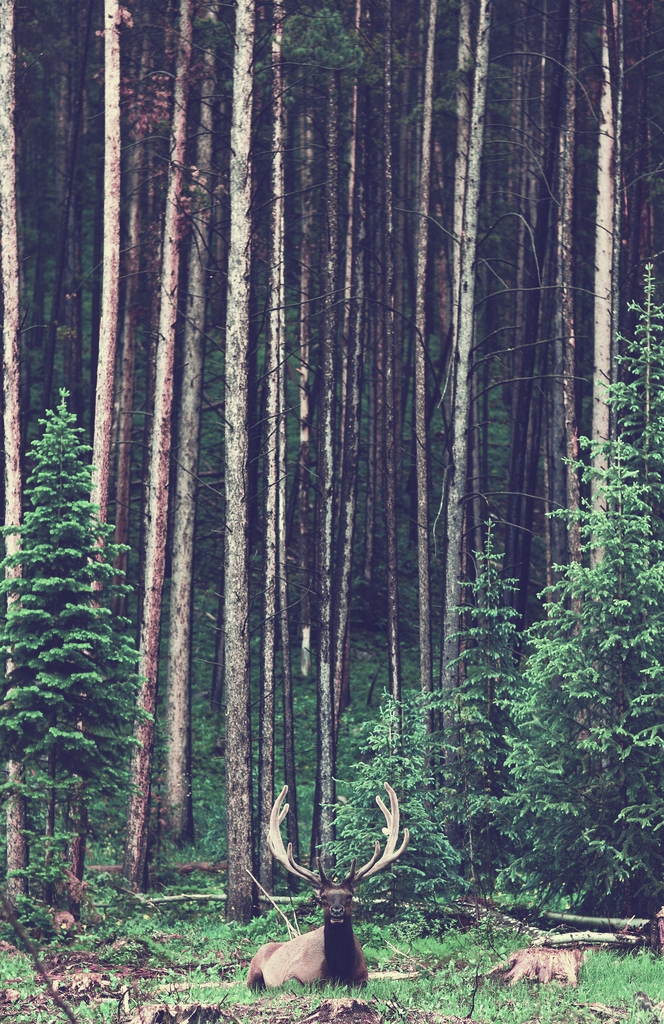
This image features a large male elk with massive, branching antlers resting in a grassy clearing within a dense forest. The background is filled with tall, slender tree trunks that reach up into a vertical canopy, framing the animal surrounded by green undergrowth. Although the prompt references a "meme," this is a natural wildlife photograph that contains no text to explain; it is simply a clear shot of an elk in its habitat.
simple-description (llama3.2-vision_11b)
The meme appears to be a humorous image of a deer with a confused expression, captioned "I can smell the desperation of a thousand midterms". The image is likely a play on the idea of a deer being overwhelmed by a stressful situation, such as a mid-term exam, and the caption is a witty commentary on the emotional state of the deer.
detailed-analysis (gemma3-27b-vision)
Okay, let's break down this image using the frameworks you've provided. It's a rich scene, so we can address several areas.
Visual Description
The photograph depicts a mature male elk (likely a bull elk given the size and complexity of the antlers) resting in a dense forest. The forest is dominated by tall, slender, light-colored trees—possibly birch or aspen—creating a visually striking vertical rhythm. These trees are tightly packed, forming a nearly impenetrable wall of white and grey. Interspersed are darker green evergreen trees, providing contrast and depth. The forest floor is covered in a layer of green vegetation, likely grasses and ferns. The elk is positioned centrally in the lower half of the frame, looking directly at the viewer. The lighting is soft, creating a sense of tranquility and perhaps even mystery. The overall tone is somewhat muted, leaning towards cool greens and grays. The elk’s large antlers stand out prominently against the backdrop of trees. There appears to be a smaller deer further back in the frame, almost obscured.
Foucauldian Genealogical Discourse Analysis
This image lends itself well to a Foucauldian analysis by examining the discourses surrounding nature, wildness, and masculinity as constructed through historical power relations.
- Discourse of Wilderness: Historically, the concept of “wilderness” is not a natural state, but a constructed category. The elk represents wildness, but is also a symbol constructed in opposition to civilization and domestication. European colonial and capitalist systems have often defined wilderness in ways that justify resource extraction and control. The elk’s presence becomes a marker in this discourse.
- Discourse of Masculinity: The bull elk, with its large antlers, is often presented as a symbol of strength, virility, and dominance. This ties into cultural constructions of masculinity. The antlers are a visual signifier of power within the elk's social structure and a symbolic parallel to patriarchal power structures in human societies. The image performs a particular idea of masculinity as natural and inherent.
- Genealogy of Control: We could trace the historical development of hunting practices, wildlife management, and even the romanticization of the wild. These practices are not neutral; they represent power relations that determine who has access to and control over natural resources. The image is a snapshot within this genealogy.
The image doesn't inherently reveal these power relations, but it becomes a text when analyzed through this lens, revealing the constructed nature of these categories.
Critical Theory
Applying Critical Theory, specifically drawing on the Frankfurt School’s ideas about the domination of nature, the image can be seen as representing the tension between humanity and the natural world.
- Instrumental Reason: The forest, while seemingly pristine, is often seen through the lens of its usefulness – timber, recreation, resource extraction. The elk itself could be valued primarily for its trophy value (hunting) or its role in ecotourism. Critical Theory questions this instrumentalizing of nature, arguing that it leads to exploitation and environmental degradation.
- The "Nature" as Other: The forest is often presented as separate from human society, as an "Other". This separation reinforces the idea that humans are superior to and have the right to dominate nature. The elk becomes an icon of this separate "Other," reinforcing the perceived boundary.
- Loss of Authenticity: The image might evoke a sense of "pristine" nature, but this is often an illusion. Modern environments are invariably shaped by human activity, even those that appear wild. Critical Theory challenges the romanticized notion of untouched wilderness.
The image, therefore, can be read as a symbolic representation of the complex and often problematic relationship between humans and the natural world, inviting us to reflect on the power dynamics inherent in that relationship.
Marxist Conflict Theory
From a Marxist perspective, this image can be analyzed through the lens of class struggle and the exploitation of natural resources.
- Control of Means of Production: The land, and therefore the forest and its inhabitants, represent the means of production. Ownership of this land is likely concentrated in the hands of a few individuals or corporations. The elk is part of a natural resource that is controlled by those with economic and political power.
- Exploitation of Nature: The forest's resources (timber, minerals, etc.) can be viewed as being exploited for profit. The elk itself might be exploited through hunting for sport or its antlers as commodities.
- Alienation: The image evokes a sense of disconnect between humans and nature. The viewer is positioned as an observer, rather than a participant in the ecosystem. This represents the alienation that Marx described as a consequence of capitalist production.
- Commodity Fetishism: The image could be used to market tourism or outdoor products, turning the natural world into a commodity. The beauty of the forest and the elk become objects of consumption.
The photograph, from this perspective, highlights the inherent conflicts and inequalities that are embedded in the relationship between humans and the natural world under a capitalist system.
Note: I didn’t apply Queer Feminist Intersectional Analysis as the image doesn't readily lend itself to direct analysis through that lens. While one could argue for broader connections related to environmental justice and the disproportionate impact of environmental degradation on marginalized communities, such an interpretation would require significant extrapolation and isn’t inherently present in the image itself.
Let me know if you’d like me to elaborate on any of these analyses or explore a different theoretical framework!
simple-description (llama3.2-vision)
The meme is a photo of a deer sitting in a forest, looking directly at the camera with a neutral expression. The text "I can smell the desperation in the air" is written above the deer's head, implying that the deer is somehow sensing the anxiety or stress of its surroundings. The overall tone of the meme is humorous and ironic, poking fun at the idea that a deer can somehow sense emotions or anxiety.
tesseract-ocr
eM eae fs ee | Io ire he } et BS ee es fe eee ‘ jae te Ove : ea | 4 ; Seer a F a een | a i Ce i Ae oo & aha ‘ t I t 2 iN Beat i RK Nig qi ae) Pe eae ee | eae mu ; : eee ie sella mes ea Poe ac ? ae ae ee hie i Ke es 4 3 a ae Y as aN ; / F 2a a + ih | fone aie Phe oe igae A a ‘ ey Lae | hs Beet ieee ae Bm eee yn ey eae 18) Eisai | ene), fa ae =< PMA ee by) sera eS Ses ee) me AP Sf ‘ i mips Ci eee a |] de eee cat | Blea ee ae be Aiea ne a Ae ee matted ee ae | aan =e Pe aes ’ < aes, a } i f fee ee a ES Pe: 3 ee ie Bes ea er aed ee rene ben te ieee eee Be, AL eo SAN wee , Re Riana ee oe eas “a Ee ae pass BSS ae i Be oe ang : te eo me PP Bees eee ie a asa Meee ie Meee oats y oan i iy eo ae ee a ee, PA sy ‘My Que? hae pha ah) BEIT A pace Toe alae se ran la