First Seen
2023-05-10T21:03:42+00:00
simple-description (qwen3.5_2b-q8_0)
Based on the image and the category "Papes" (which appears to be a typo for "Pig Poo" or "Poop"), this meme is a satirical joke often accompanied by a caption asking: "Why is there so much money in this building? Pig poop."
It plays on a common internet stereotype that skyscrapers like the one in the photo (which resembles the John Hancock Building in Chicago) are filled with corporate greed and that money is dumped in a "piggy bank" inside the building. Because "pig poop" sounds exactly like money, people use the word as a euphemism to explain why so many buildings look like giant money pits.
simple-description (llama3.2-vision_11b)
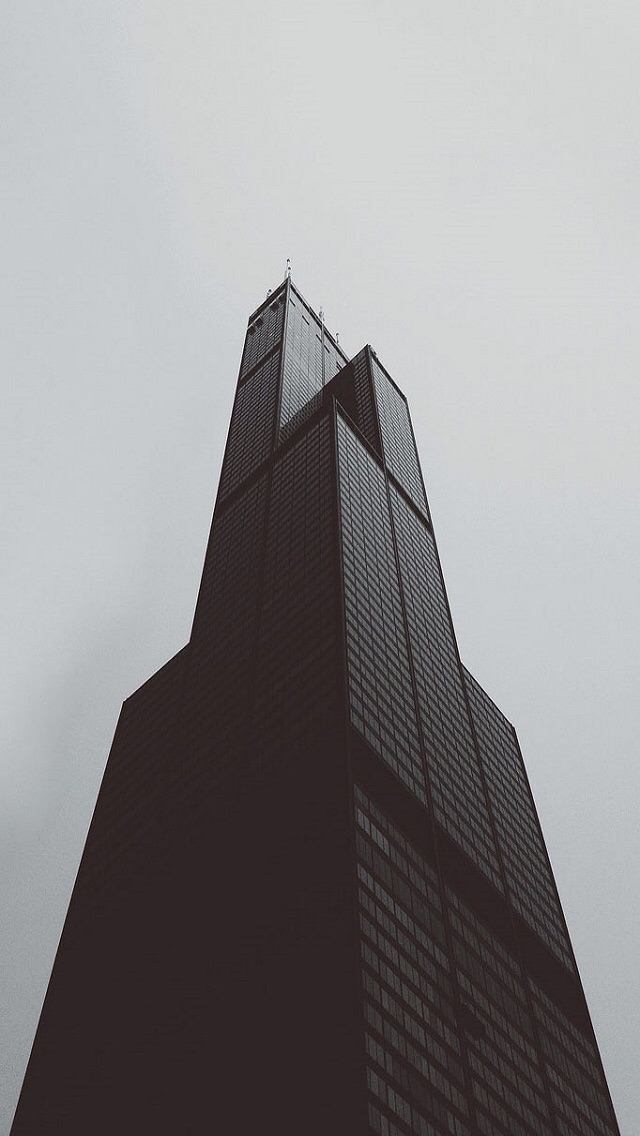
The meme is an image of the Willis Tower (formerly known as the Sears Tower) in Chicago, with a caption "I can see for miles and miles and miles..." The image is a humorous take on the tower's iconic status, exaggerating its visibility with a tongue-in-cheek comment. The text is a playful reference to the tower's famous observation deck, where visitors can indeed see for miles and miles.
detailed-analysis (gemma3-27b-vision)
Okay, here's an analysis of the image, broken down into sections addressing the requested theoretical frameworks. Some sections won't be relevant, as the image doesn't necessarily lend itself to all of them.
Visual Description
The image is a low-angle, black and white photograph of a modern skyscraper. The building has a distinctive, sharp, pyramidal or wedge-like form, with a pointed apex. It appears to be constructed primarily of glass and steel, giving it a sleek, reflective surface. The sky behind the building is a uniform, overcast grey, creating a stark contrast with the dark silhouette of the structure. The photograph emphasizes the height and imposing scale of the building, almost emphasizing an aggressive power. The image has a slightly desaturated, almost monochromatic quality. The emphasis is on form and shadow, and creates a sense of coldness and dominance.
Foucauldian Genealogical Discourse Analysis
The skyscraper, as a central element in this image, can be seen as a manifestation of power dynamics, a key concern in Michel Foucault’s work. Examining the ‘discourse’ surrounding its creation reveals interesting insights.
- Panopticism & Surveillance: Skyscrapers, by their very nature, can be understood through a panoptic lens. Each window, a potential eye, contributes to a sense of observation and control, even if that control isn’t explicitly exerted. The image's starkness contributes to this sense of cold, impersonal observation.
- The Discourse of Progress: The building's modernist design speaks to a discourse of progress, technological advancement, and economic growth. However, a Foucauldian analysis would question who defines progress and whose interests are served. The image's coldness potentially destabilizes any romantic notions of progress.
- Normalization & Discipline: Skyscrapers represent a form of spatial discipline. They dictate modes of working and living (contained within its boundaries). The rigid, angular structure reinforces this idea of enforced order.
- Genealogical Tracing: The image can be viewed as a visual endpoint of a historical trajectory of building and urban development, tracing the shift from pre-industrial forms to the modern city as a site of concentrated power.
Critical Theory (Frankfurt School)
The image lends itself well to a critique informed by the Frankfurt School, particularly in relation to the themes of alienation and reification.
- Reification: The skyscraper becomes a symbol of reification – the process by which social relations are transformed into objectified things. The building is not simply a structure, but a representation of economic and power structures, presented as an immutable, objective 'thing.'
- Alienation: The image evokes a sense of isolation and detachment. The building, despite housing many people, appears cold and impersonal. It highlights the alienation of modern life, where individuals are reduced to mere units within a larger, inhuman system.
- Instrumental Reason: The skyscraper embodies the logic of instrumental reason – the pursuit of efficiency and productivity at the expense of human values. It represents a space optimized for economic gain, devoid of warmth or personal connection.
- Mass Culture and Standardization: The homogenous appearance of the building's windows and design suggests standardization and the suppression of individuality, key concerns of the Frankfurt School’s critique of mass culture.
Marxist Conflict Theory
The skyscraper, from a Marxist perspective, is a potent symbol of class power and economic exploitation.
- Means of Production: The building represents a central location for the means of production (offices, financial institutions), concentrating wealth and power in the hands of the capitalist class.
- Symbol of Capital: The sheer scale and cost of the building embody accumulated capital, highlighting the vast economic disparities in society.
- Spatial Inequality: The building's prominent location in an urban landscape reinforces the spatial segregation of classes, with luxury and power concentrated in central areas while marginalizing lower-class communities.
- Commodification of Space: The skyscraper demonstrates the commodification of space – the transformation of land and buildings into marketable commodities driven by profit rather than social need.
- Alienated Labor: The building houses countless workers, who, according to Marxist theory, experience alienation from their labor and the products they create. The building becomes a physical manifestation of this exploitative relationship.
Postmodernism
While the building appears relatively "modernist" in design, a postmodern reading can find nuances.
- Deconstruction of Grand Narratives: The building, despite its imposing presence, can be interpreted as a rejection of traditional architectural styles, representing a break from historical norms.
- Simulacra & Simulation: The building's exterior, a smooth, reflective surface, could be seen as a simulacrum – a copy without an original. It's a representation of power and success, but lacks intrinsic meaning.
- Surface & Depth: The image emphasizes the surface of the building, highlighting its visual appeal while obscuring the complex social and economic realities it represents.
- Irony and Parody: Depending on interpretation, the building's imposing form could be seen as an ironic commentary on the aspirations of modernity, questioning the notion of progress and ultimate achievement.
Queer Feminist Intersectional Analysis
This is the least directly applicable framework, but potential interpretations exist:
- Phallic Symbolism: The sharply pointed, upright form of the skyscraper can be read as a phallic symbol, representing patriarchal power and dominance.
- Exclusionary Space: Historically, spaces of power (like skyscrapers) have been overwhelmingly dominated by men, effectively excluding women and other marginalized groups. The building can be seen as a physical manifestation of this exclusion.
- Intersectional Power Dynamics: The building is a site where various forms of oppression intersect (class, gender, race, etc.). The workers within the building may experience different forms of exploitation based on their identities.
- Spatial Control and Surveillance: The building's design can contribute to systems of control and surveillance that disproportionately affect marginalized communities. The "panoptic" element can be understood in terms of patriarchal control.
Hopefully, this detailed analysis provides a multi-layered interpretation of the image. Let me know if you'd like me to expand on any particular section or explore other theoretical frameworks!
simple-description (llama3.2-vision)
The meme is a photo of the Willis Tower (formerly known as the Sears Tower) in Chicago, with a caption that reads "I can see for miles and miles and miles and miles...". The image is likely a humorous take on the building's famous antenna, which was once the tallest in the world, and the caption is a playful reference to the building's iconic status.
tesseract-ocr
AN YIN vy \ Le ANG AW \\ \ \\\ | AY \ AX AY \\\N RAY \\\ AA \\\