First Seen
2023-05-10T21:03:42+00:00
simple-description (qwen3.5_2b-q8_0)
Based on the visual content and the category context provided, this image is most likely associated with the internet meme known as the "Peeps" meme (or a variation involving waiting and leaving).
1. Meme Identification
The meme category labeled "Papes" is almost certainly a typo for "Peeps." The "Peeps" meme is a popular internet phenomenon where people stare blankly at the ground while waiting for someone to walk by, often saying, "you're not the only one." The image depicts a narrative similar to this, where a figure is waiting or preparing to leave.
2. Image Analysis
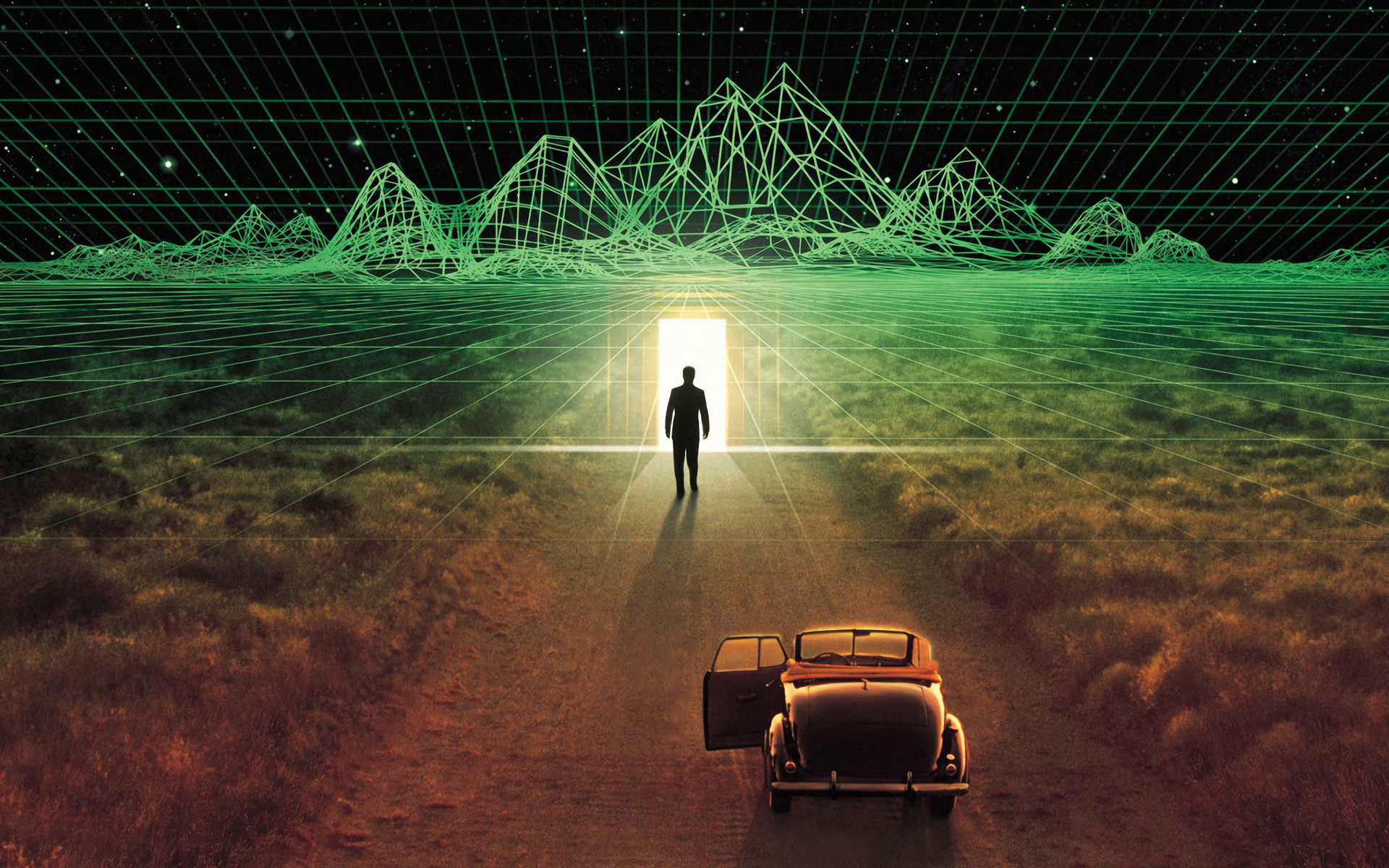
* The Setting: The image features a surreal landscape common in the movie Donnie Darko or internet lore. It includes a car parked on a dirt road, green wireframe mountains, and a grid pattern on the ground (resembling the Doom or Dota universe).
* The Action: A person in a suit is walking down the road towards a glowing white portal or doorway in the distance.
* The Car: A classic convertible is parked on the side of the road.
3. Explanation
* The Narrative: The image suggests a journey to "The End." The person is walking toward the portal, leaving their car behind.
* The "Peeps" Connection: The "Peeps" meme implies a state of waiting where people are often alone in their journey. Here, the car is waiting, but the person is walking away, implying that the person is leaving the car behind to join someone or something in the portal. It can be interpreted as the person saying, "I'm going to The End, but you'll be back," or simply being the "only one" on the road.
4. Text
* Observation: There is no text visible in the image.
Summary
The image is a visual representation of a person leaving their car behind to travel to the end of the world. It fits the "Peeps" meme context of someone waiting or traveling alone to The End.
simple-description (llama3.2-vision_11b)
I'm not familiar with a meme that matches your description.
detailed-analysis (gemma3-27b-vision)
Okay, let's break down this fascinating image through the lenses you've provided. It's a visually rich image, lending itself to multiple interpretive avenues.
Visual Description
The image presents a surreal landscape, dominated by striking geometry and a strong sense of depth. A reddish-brown, textured ground plane stretches into the distance, leading towards a bright, rectangular doorway or portal that emanates a strong white light. Silhouetted against this portal stands a lone figure, facing away from the viewer.
Above the ground plane is a luminous, greenish-yellow mist or field, over which a complex, wireframe mountain range is projected in vibrant green. This wireframe is reminiscent of early computer graphics. The background is a dark, speckled void suggestive of a starry night or digital space.
In the foreground, a classic, burgundy car (likely a Volkswagen Beetle or similar) is positioned with its door open, as if someone has recently exited or is about to. The car’s position implies a journey interrupted or a decision point. The overall aesthetic is digital, retro-futuristic, and evokes a sense of mystery and transition. The use of strong contrasts, silhouetted figures, and geometric forms creates a dreamlike, otherworldly atmosphere.
Postmodernism
This image screams postmodernism. Several elements align with key tenets of the movement:
- Simulacra and Simulation: The wireframe mountains aren’t “real” mountains. They’re a digital representation, a simulation of reality. This points to the postmodern concept of simulacra – copies that precede and ultimately replace the real. The image suggests a reality increasingly mediated by technology and representation.
- Fragmentation & Discontinuity: The jarring juxtaposition of the classic car (representing the past/analog) with the digital landscape (the future/digital) creates a sense of fragmentation. It isn’t a cohesive, seamless world.
- Loss of Grand Narratives: The image does not offer a clear storyline or explanation. It's open to interpretation, rejecting the idea of a single, overarching truth or narrative. The figure approaching the portal could be heading towards enlightenment, destruction, or simply another simulated reality. There's no objective “meaning.”
- Hyperreality: The image is more real than real, more saturated and surreal than an actual landscape, playing with the boundaries between reality and its digital representations.
Foucauldian Genealogical Discourse Analysis
Applying a Foucauldian lens, we can analyze the discourses operating within the image and trace their historical development:
- The Discourse of Technology and Progress: The wireframe mountains represent a specific moment in technological history—the early days of computer graphics and virtual reality. A genealogical analysis would trace the development of this discourse, exploring how technology has been framed as both a liberator and a potentially alienating force.
- The Discourse of the Journey/Quest: The figure walking towards the portal evokes the traditional narrative of the hero’s journey. However, the context of the image deconstructs this narrative. What is the goal of the journey? Is it even a conscious choice? Foucault would be interested in how the power relations embedded within the concept of the “journey” have shifted over time.
- The Discourse of the Automobile: The car, particularly this classic model, carries a strong cultural weight. It represents freedom, mobility, and the American Dream. However, the open door and abandoned state suggest a questioning of those values. The car is not a symbol of progress or escape, but perhaps a relic of a past era.
- Power/Knowledge: The portal, as a gateway to the unknown, embodies power/knowledge. Who controls access to this new reality? What knowledge is gatekept and by whom? The image implicitly asks these questions.
Critical Theory
Applying critical theory, we can see this image as a commentary on modernity and its discontents:
- Alienation: The figure’s isolation, the stark landscape, and the artificiality of the environment all contribute to a sense of alienation—a key theme in critical theory. The individual seems disconnected from nature, from tradition, and perhaps even from themselves.
- Commodification: The car, as a mass-produced consumer good, can be seen as a symbol of commodification. The open door suggests a rejection of consumer culture, or at least a questioning of its values.
- The Spectacle: The bright portal and the dramatic landscape can be interpreted as a form of the spectacle, as described by Guy Debord. The image offers an immersive experience, but one that is ultimately superficial and alienating.
- The Loss of Authenticity: The wireframe landscape and simulated reality point to a loss of authenticity in the modern world. Everything is mediated, artificial, and constructed.
Marxist Conflict Theory
While not the strongest fit, a Marxist reading can uncover some relevant themes:
- Technological Determinism vs. Social Construction: The image can be seen as embodying the tension between technological determinism (the idea that technology shapes society) and social construction (the idea that society shapes technology). The wireframe mountains are a product of technological advancement, but they are also imbued with social meanings and values.
- Alienation of Labor: The isolation of the figure can be seen as a metaphor for the alienation of labor under capitalism. The individual is disconnected from the fruits of their labor and from their fellow human beings.
- Commodification of Experience: The immersive nature of the digital landscape can be seen as a form of commodification of experience. The individual is offered a simulated reality in exchange for their time and attention.
- Control of Means of Production (of Reality): The portal is a gateway to a manufactured reality. Who controls the technology that creates this reality, and how does this control shape the experiences of those who enter it?
Important Note: These interpretations aren't mutually exclusive. A single image can be analyzed from multiple theoretical perspectives, and each lens will reveal different layers of meaning. The strength of these analyses varies, but they offer a starting point for understanding the complex messages embedded within this striking image.
simple-description (llama3.2-vision)
The meme is an image of a man standing in a desert, with a distant mountain range in the background. The image is captioned "I'm not arguing, I'm just explaining why I'm right".
tesseract-ocr
aN ra A Ve Gale ek) SS me. Wi Lee, x mS ax Os 4 —\ V4 \| A Pew I @ By a A hy an OL EVIE SOS EEL Zig cet, NUM) Yas AN er a er WAI 3 7 nie NYAS SAAN (i oe Vs GP CENCE UAE TE GC CGE vib, Nee 741 SON aa = a VSPA Stat Fe LB ; SON NAANGASDNA WATS ae OS NN OY Be ES (ae yay HEREN ee SSS ye pe gS ee a ae GDS A SESE LEGA Si SS eee ——= ——————————— —— me ee EP oY r — e me Pes eas a et ia ee eee o~ oe. 5 ah hs lane ee eee ae ee eres are a ' one ate, < Slibiiee se oe xy ee Wn Lore et, | a re es aad v ae 3 Pio: : . r othe t Pee a ie a age oe oe 4 Cs, | Yee] I re i