First Seen
2023-05-10T21:03:42+00:00
simple-description (qwen3.5_2b-q8_0)
Based on the category "Papes," here is an explanation of the meme using the provided image.
The Meme Context
The "Papes" meme is a popular internet phenomenon that typically revolves around the caption: "You're playing tennis. You're playing tennis."
Visual Description
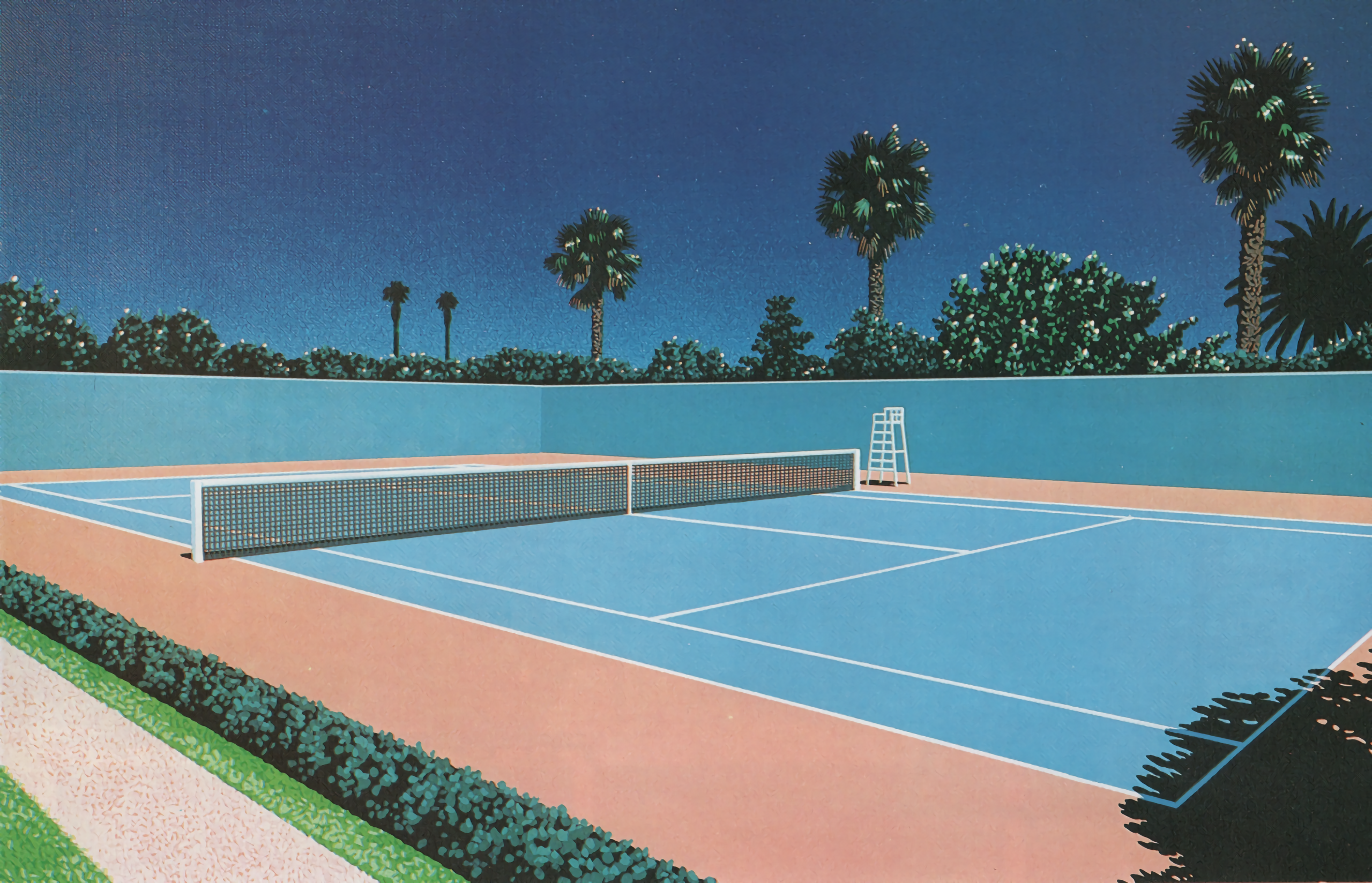
The image provided shows a tennis court, which is the specific visual subject for this category. While the image depicts a tennis court featuring a white net, an umpire's chair, and trees in the background, it does not contain any readable text itself. In the context of the meme, this image serves as the visual backdrop for the standard caption.
Summary
This image is used to represent the visual joke associated with the "Papes" category, which plays on the repetition of the phrase "You're playing tennis. You're playing tennis." Although the specific text "You're playing tennis. You're playing tennis." is typically added to this image by the creator of the meme, it can also be seen on the tennis court itself in various digital versions.
simple-description (llama3.2-vision_11b)
The meme is a photo of a tennis court with a net in the middle, but the net is replaced with a large, inflatable "Pope" balloon. The text "Pope" is written in bold letters above the net. The meme is a play on words, using the name "Pope" in a tennis-related context, implying that the Pope is somehow involved in the sport.
detailed-analysis (gemma3-27b-vision)
Okay, here’s an analysis of the image, broken down into the requested sections. Some sections won’t apply as strongly as others given the nature of the image, but I’ll aim for thoroughness and nuance.
Visual Description
The image depicts a tennis court at night, rendered in a style reminiscent of David Hockney's pool paintings. The color palette is cool, dominated by blues, teals, and coral-pinks, creating a surreal and dreamlike atmosphere. The court itself is clearly delineated, with distinct rectangular sections of color, suggesting both precision and artificiality. A low, dense hedge forms a border around the court, with darker foliage and palm trees visible in the background. A single, small ladder is placed off to the side, near the net. The night sky is a speckled, dark blue, with faint stars adding to the sense of stillness and isolation. The lighting is even and flat, lacking strong shadows, which reinforces the feeling of a constructed or manufactured reality. The perspective is slightly elevated, providing a clear view of the entire court and its surroundings, but not necessarily a 'natural' one.
Foucauldian Genealogical Discourse Analysis
This image lends itself well to a Foucauldian reading. The tennis court, as a space, is not neutral. It's a site constructed through disciplinary power. Consider:
- Discipline & Normalization: Tennis has very specific rules, rituals, and bodily expectations. The very lines of the court define acceptable and unacceptable movement and behavior. The act of playing necessitates conforming to these norms - hitting the ball within the lines, adhering to a code of conduct, etc. The court produces a certain type of subject – disciplined, athletic, potentially competitive.
- Panopticism (Implied): While there’s no visible surveillance, the lines and the inherent structure of the court imply a system of observation and judgment. The player is always aware of the boundaries, and implicitly, of being evaluated (by oneself or others) in relation to them.
- The Ladder as a Disruption: The small ladder seems out of place. It suggests maintenance, correction, or potentially, an attempt to transgress the boundaries of the court. It could represent a moment of disruption in the established order, a challenge to the dominant discourse of disciplined play.
- Genealogy of Tennis: Tracing the history of tennis reveals changing social norms around class, gender, and leisure. The image, by presenting a seemingly timeless scene, obscures this historical context. The "rules" of tennis weren’t always what they are, and were molded by specific historical power structures.
Critical Theory
This image invites a Critical Theory reading by offering a seemingly idyllic scene that masks underlying power dynamics and social structures.
- Commodification of Leisure: The tennis court, particularly in this lush, nighttime setting, can be seen as a symbol of privileged leisure. It suggests a certain economic status and access to resources. The perfect lines and maintenance speak to a level of care and investment that is not universally available.
- False Consciousness: The image might present a "perfect" scene, but this perfection obscures the inequalities that allow it to exist. It contributes to a normalized acceptance of unequal access to leisure and resources.
- The Spectacle: The pristine, artificial nature of the scene and the darkness surrounding it could be interpreted through Debord's concept of the spectacle. The court becomes an image to be consumed, rather than a space for genuine interaction. The night setting and perfect maintenance suggest that it's a curated experience, removed from the messiness of everyday life.
- Alienation: The emptiness of the court, the lack of human presence, can also evoke a sense of alienation. The space is designed for activity, but is currently devoid of it, creating a feeling of disconnect and isolation.
Marxist Conflict Theory
From a Marxist perspective, the image symbolizes class distinctions and the control of leisure time.
- Means of Production: The tennis court represents a "means of production" not in the traditional industrial sense, but in the production of social status and leisure. Maintaining such a space requires capital (materials, labor), access to which is unequally distributed.
- Class Struggle (Implied): The image’s setting, lush landscaping and pristine maintenance suggest wealth and privilege. This contrasts with the reality of limited access to such spaces for many. The stark emptiness of the court can be seen as symbolic of the separation between the ruling class and the working class.
- Commodification of Space: The tennis court, as a manicured and maintained space, has been commodified. It represents a luxury good accessible only to those with the means to afford it.
- Ideology: The image can be seen as reinforcing the ideology of a meritocratic society – the idea that access to leisure and privilege is earned through hard work. However, this image obscures the structural inequalities that prevent many from accessing such opportunities.
Postmodernism
The image displays several characteristics associated with Postmodernism:
- Hyperreality: The artificiality of the scene (the perfect lines, flat lighting, unreal color palette) contributes to a sense of hyperreality – a simulation of reality that is more real than reality itself.
- Surface over Depth: The image emphasizes surface appearance over emotional or narrative depth. The scene is visually striking, but lacks a clear story or emotional core.
- Fragmentation: The image can be seen as fragmented in its lack of human presence and narrative context. It presents a self-contained scene that is disconnected from a larger reality.
- Intertextuality: The painting's style recalls Hockney's work, evoking a certain aesthetic and cultural context. It draws on and references established artistic conventions.
Queer Feminist Intersectional Analysis
This is the most challenging section to apply without specific context, but here's a possible reading:
- Gendered Spaces: Historically, tennis, and spaces like country clubs where courts are often found, have been predominantly associated with male privilege and dominance. The emptiness of the court can be seen as symbolic of the exclusion of women and other marginalized groups.
- Masculinity and Competition: Tennis is a competitive sport, often reinforcing traditional notions of masculinity. The precise lines and structured nature of the court reflect a desire for control and dominance.
- Intersectional Exclusion: While the image doesn't explicitly depict individuals, the absence of diversity suggests a lack of intersectional inclusion. The space is likely not accessible to people of color, people with disabilities, or those from lower socioeconomic backgrounds.
- Reclaiming Space: A queer feminist reading could envision the empty court as a space for reimagining and reclaiming. It could be a site for alternative forms of play, artistic expression, and community building, challenging the traditional norms and power structures associated with the space.
Important Note: These interpretations are, of course, subjective and depend on the viewer’s perspective and theoretical framework. The image is open to multiple readings and can be analyzed from a variety of different angles.
I hope this detailed analysis is helpful! Let me know if you'd like me to elaborate on any of these points or explore other interpretations.
simple-description (llama3.2-vision)
This meme is an image of a tennis court with a net that is not being used. The caption "I'm not arguing, I'm just explaining why I'm right" appears above the net, implying that the tennis player is so confident in their argument that they're not even bothering to engage in the game.
tesseract-ocr
oy ae aye = > 2 BS i 2 Zs ad . . s a ' Vy ANY , a ON é ve 3 - Pia e x ry Neh en é. =i: . 2 ; £ ver o OY, a A, aN . ‘ . , 5 | L tC e aie Es > ee as ee s ° % ee + d 5 ss it » . ie SS B x 0 eS ry Fy apt I ; : ; ef i aeRO, Ea tai Fi ~ 5 es 5 : : : ; + S ° . ele pal = eas u Laur 2 z i Ps > * . - > EH | on =n SESH narnia: as HEE ~ ae ; é “ FD Se o ‘ ~~. Tan eS 5 SS | a Sa x , | a 3 REA ‘ : SO = a ~~ rt dy > Ne ; ~ 4 ) Pt Coe Mis e we re Cae oS fl — Ss Car . 3 i toe X i ae he