First Seen
2023-05-10T21:03:42+00:00
simple-description (qwen3.5_2b-q8_0)
The meme referenced here is likely the viral "Peppa's Pizza" trend. From the perspective of this "pizza" category, the meme works by using a slice of pepperoni to playfully represent the letter "P" (from "Peppa") or the character "Peppa Pig." The humor relies on the visual pun that the round pepperoni slice looks exactly like the letter "P." While the specific text "Peppa Pizza" isn't clearly legible on the pizza itself, this is a common caption for this specific visual, linking the image to the internet meme format.
simple-description (llama3.2-vision_11b)
The meme is an image of a slice of pizza with a bite taken out of it, but the "bite" is actually a papa (or a papa's) head, referencing the "papa" in "papa john's" (a pizza chain). The text "Papa" is written above the head, and the image is captioned "Papa John's".
detailed-analysis (gemma3-27b-vision)
Okay, here's an analysis of the image of the pepperoni pizza, broken down into the requested theoretical sections. I'll include sections only where applicable, and will attempt to integrate these frameworks meaningfully, not just apply them superficially.
Visual Description
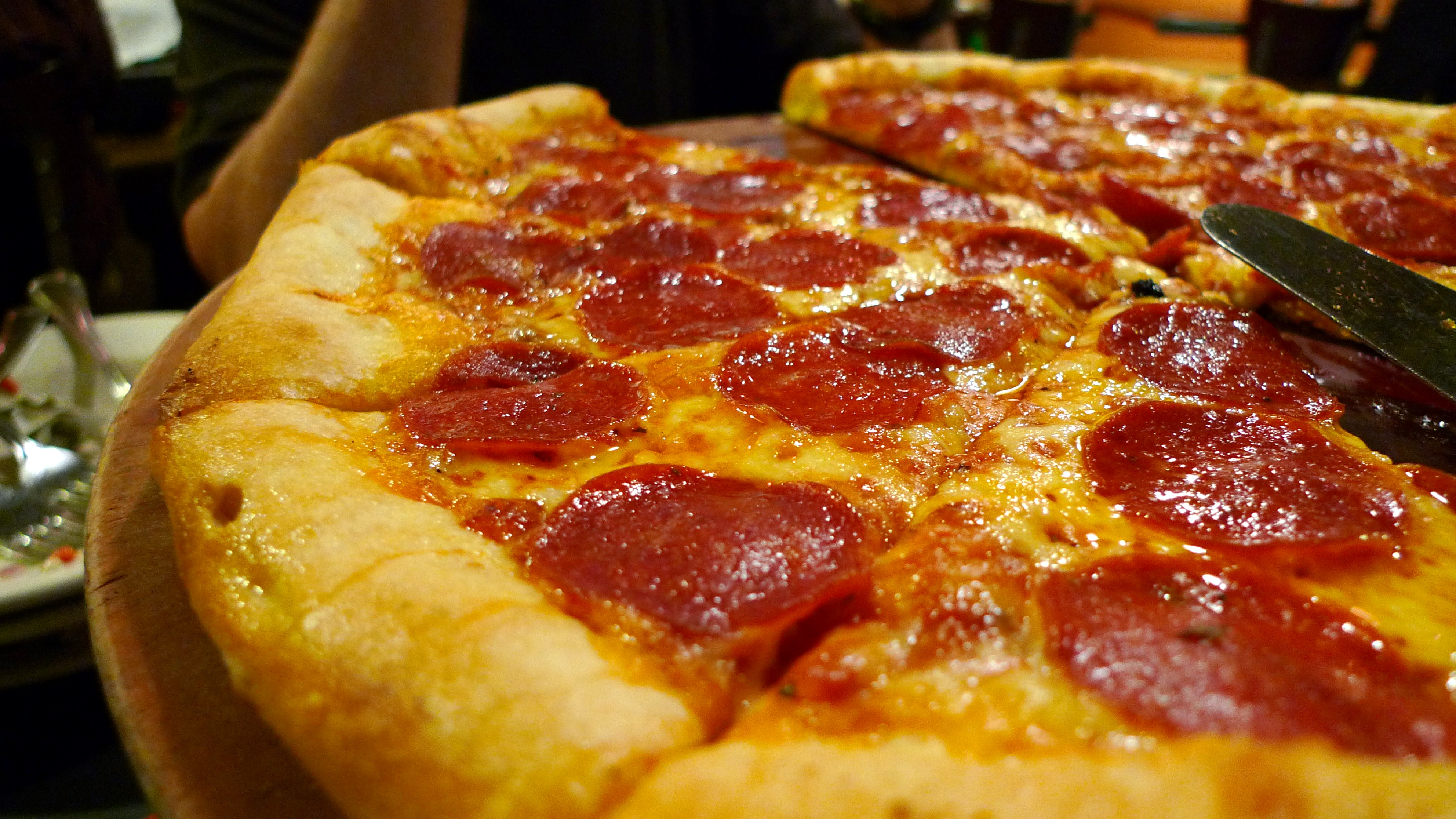
The image depicts a close-up shot of a pepperoni pizza, seemingly a large one, potentially a deep-dish style. The crust is thick and appears to be a golden-brown color, with a slightly uneven texture suggesting a handmade quality. It’s generously covered in melted mozzarella cheese with numerous, perfectly round pepperoni slices. The pepperoni are slightly curled at the edges, indicating they’ve crisped during baking. The lighting is warm and somewhat dim, casting highlights on the cheese and pepperoni, and a soft shadow suggesting the pizza is likely indoors, possibly a restaurant setting. A knife is visible towards the upper right corner, implying imminent consumption or division. The overall impression is one of indulgence and comfort.
Foucauldian Genealogical Discourse Analysis
A Foucauldian analysis would explore the discourses that have shaped our understanding of pizza as a food item. The pizza isn't simply a meal, but an artifact of historical and cultural forces.
- Origin as Power/Knowledge: The genealogy of pizza traces back to flatbreads in antiquity, yet its modern form emerged in Naples, Italy, tied to the socio-economic conditions of the 18th and 19th centuries. It was initially “food of the poor”, a street food accessible to those lacking resources. The discourse of "Italian cuisine" eventually constructed it as an object of desire and authenticity, gaining global appeal and becoming associated with a specific cultural identity.
- Normalization and Discipline: The standardized slice (implicitly present in the image’s potential for division by the knife) is a disciplinary mechanism. It dictates how pizza is consumed, creating a "normal" practice of dividing, holding, and eating.
- The Discourse of “Authenticity”: Debates over what constitutes "real" pizza (Neapolitan vs. New York vs. Chicago style) demonstrates a power struggle over the definition of the food. These definitions aren’t purely objective, but constructed through discourse and serve to create hierarchies of taste and cultural value. The perfect round pepperoni is a demonstration of industrial control and normalization.
- Panopticism: The pizza is presented for the gaze; it’s an object of observation and enjoyment, and the way it's lit, is a spectacle.
Marxist Conflict Theory
From a Marxist perspective, the image embodies several key concepts.
- Commodity Fetishism: The pizza isn’t just food; it's a commodity, removed from its labor origins. The image doesn't reveal the workers who grew the wheat for the crust, raised the cattle for the beef pepperoni, or manufactured the cheese. It obscures the exploitation embedded in the production process. The image focuses on the end product – its deliciousness – masking the unequal power dynamics involved in its creation.
- Class and Consumption: Access to pizza, particularly restaurant-quality pizza, is tied to class. It represents a disposable income and leisure time, representing the benefits of the bourgeois class. The image highlights the consumption of this commodity, rather than its production.
- Alienation: The modern food system leads to alienation. We are disconnected from the origins of our food. The pizza represents a symptom of this disconnect; it’s a standardized product, stripped of its natural context.
- The Means of Production: The ingredients of the pizza (wheat, dairy, meat) come from a network of people who often have little control over the final outcome. The profit is not shared amongst those who make it possible.
Postmodernism
From a postmodern perspective, the image subverts traditional notions of food and authenticity.
- Hyperreality and Simulation: The “perfect” pepperoni slices and the melted cheese aren't necessarily “real” in a natural sense. They are simulations of deliciousness, created through industrial processes and marketing. The image is a representation of a representation, blurring the line between what is real and what is constructed.
- Loss of Grand Narratives: There's no single, universal definition of "good" pizza. The image exists within a kaleidoscope of preferences and interpretations. Postmodernism celebrates this fragmentation and rejects the idea of a singular, authentic culinary experience.
- Pastiche: The image can be interpreted as a pastiche of different culinary traditions - Italian flatbreads, American fast food, industrial production. It’s a collage of elements that lack a cohesive origin or meaning.
- Deconstruction: The image dismantles the simple equation of "food = nourishment". The image appeals more to pleasure and indulgence than essential nutritional needs.
Let me know if you'd like me to delve deeper into any particular aspect or section.
simple-description (llama3.2-vision)
The meme is a photo of a pizza with a slice missing, implying that someone has eaten the best part. The image is captioned "When you finally get to the good stuff" and is likely used to express satisfaction or excitement when reaching a desired outcome. The meme is humorous and relatable, poking fun at the idea that the best part of a pizza is often the first bite.
tesseract-ocr
. a . a : ea ai q ” — 3 ; a an . 2 E e a ——— ’ m mh * oS ’ om : é nm Yr 3 4 one a . " - . , . * Lo Fal val , ie ve F a . of » Lo” - , oa La a wd . a > ak ae : i u ‘ | rd * ed ~ . , : a = 7 ie aie ig 9 a aw? : ‘ a i e epee ae se 1 es ¥ i co . | <i ee : oe ae bee . = af a 3 a aS R wie ie DM .” ™ , ie "e 4 ‘ 4 « « ; ——— * tia Te ae ee lied Fd id ie — ; im. : lee ha ia ; ic ' 4) 2 ee ~ teil. re ti ek ° q — ™ P.., Tea , wi r oe i. s pI iP ’ a sa hal * ‘€ a a ; ~ co a * , faa s fs psy Md ee el Mae ete = See - a. u 4 te ry 9 “’ & i vs . a . ° a ae... - » k do. Flas Hig tes « ; ; , st ; — : . m - . Pe ed , Lee Zz nd en e wt *. r = si Bee ‘ a . a OI il india ae a | ee cay >< o ‘ ee aie ie “s oii ile ‘. or no . % y ies JS, ee! SE . ; a ee te Ee aa of ee oe cf iter ee Pe ° : 4 a = Px : 7 os * ee e 4 sf i 4 ‘ * : G aah, = soe es ee a Fae * a ae —_ a rn © : , “a a < . aes mes, 4 ona i a rEg # Pa ea + ee Soe ae Nt ee ns ee Bete e, OS ae ag TEE mm : . 4 es Ge ie =; a Re =e % Sa ae ee aoe i ”, a lg os oh As s oe a a , ce pt, ota eee io =: f os rs is : e. <n >a ra a a » ; 4 F SP i Ae 7 = ia ieee 59 fe ee had aha ec nae er es cS Pi oa acs ee E is ae. f - ae : x PN Sina aaah oe ale teed ae ie : adeno es oe Sage ee aie ee So a a : eee ~ ee Cet Caer cd ys a Ben ars : Eee 7 Ae, ae eS P ae ee i . = >a = . = em ane ee E ™ * — 3 _ 07 age OS eee Tt uot aa PS dee 34 ape aia “ Ee S 7S Saeee 7 eal 2 ae a , oe _ = fae ee ee eee aS ss 5 Ro - Te sso ree ee elie ee Sse cs nee . ” sill eo ie eae = Mead? ue ee ae iJ 3 Sis aS pO a os iS , a ; ei Bn ae a S —_ al eas i a RF ‘= ee > . So Cl — — waa Sia ee eS = a a a. eS a a : eur em Ne eK ee ES pete ies eg < Rad | ae al i oe EC f — at gee es a : enn bie mt): ae - a ze Tp. be a ee eas a * as ‘ 2 i a x 3 ne Ria il ~ fe ~ Py bi eee * a eS bs ie s a _ tag a e ares ee ee eo ce a Ae oe ~~ ae ; pe oes fel ey FE on A ee 2 2 Ey a a: ae a a . i 4 . ty mE A om 3 ee a = . a a ¥ a; a ¥ ‘oe aa , ae fae at Oe OS wae : ee £5 B " is Oe nadie ¥ 4 ee nes i . g a — a ‘ ri te o * ; * PS, : " i + “_ i B . a eo —_— a a - @ . * > e x ? t- ’ : si <4 - a” he cad we % a _ cy ro 7" y ee > b ay { ; > 5 a a ee a 5 " 7. a my | a _* S 2 eee i m7 3 hd a Ps al ~~ ae. *. ¥ 2 a eran st ay : o . ss o. —_ “ ag 7 oo “ tl: y we aaa: : P iy a. i ies, B= ‘ oe * ”~ J ° 4 a , ete 4 b Q - “ Pe 3 e * . hd Fi es ¥ a e > ; a 4 E a — i Ba : * F. Bae i — | a # ~ ' Pad Ulla eS eee ° .. ee ee ao a | 5 os * Be a j i: . : al a q Sis x : % Ss - 2 * :. ‘ (<r es .Y bes » os * . : . sg —_— * . ' & — = ae ‘s a a ae = es : mS s a ; : ne # 7 - — 7 + oe ae " Ws, a As iil < i = ee ee ies : ™ . ra Sas a ot Pee Ee ie Ee ag a Sei , ae. - Ma seh: das sa: a : Ban ce i = | Siete